How to Make Your Own Herbal Preparations at Home: Teas, Infusions, Salves & More
There’s something deeply satisfying about opening a jar of chamomile you grew and dried yourself, adding a spoonful to a mug, and knowing exactly where it came from.
Growing useful herbs at home is one thing. Learning how to harvest, dry, store, and prepare them takes that knowledge one step further.
And it doesn’t have to be complicated.
Many traditional herbal preparations begin with surprisingly simple techniques: steeping dried herbs in water, infusing herbs into oil, or turning an infused oil into a basic skin salve.
You don’t need an enormous medicinal garden or shelves full of specialized equipment to begin. A few well-chosen plants, glass jars, a strainer, and some basic kitchen supplies can teach you a lot.
In this beginner-friendly guide, we’ll look at four common types of herbal preparations — teas, infusions, salves, and tinctures — along with practical ways to dry and store herbs and important safety considerations to keep in mind.
Important: Herbal preparations are not substitutes for professional medical care. Plants and herbal products can cause allergic reactions, interact with medications, or be unsuitable for certain people. Always positively identify plants before using them and seek qualified medical advice when appropriate.
1. Tea, Infusion, Salve or Tincture: What’s the Difference?
One of the first things to understand is that the word herbal remedy can describe many very different preparations.
The main difference is how compounds from the plant are extracted and how the finished preparation is used.
| Preparation | Basic Method | Common Traditional Use | Storage |
|---|---|---|---|
| Herbal Tea | Herbs steeped briefly in hot water | Everyday beverage and traditional herbal use | Best consumed fresh |
| Herbal Infusion | Herbs steeped longer in hot water | Stronger water-based preparation | Refrigerate; use promptly |
| Herbal Salve | Herb-infused oil combined with wax | External skin application | Varies by ingredients and storage |
| Herbal Tincture | Plant material extracted in alcohol or another solvent | Concentrated herbal extract | Varies considerably |
Beginner Tip
If you’re new to herbal preparation, start with tea.
It requires very little equipment and lets you become familiar with individual herbs before attempting more involved preparations.
2. How to Make a Simple Herbal Tea
Herbal tea is one of the easiest ways to begin working with familiar herbs.
Unlike true tea — which comes from Camellia sinensis — what we commonly call an herbal tea is technically an herbal infusion or tisane.
For everyday kitchen use, however, “herbal tea” is the familiar term.
What You’ll Need
- A familiar dried culinary herb suitable for tea
- Freshly boiled water
- A mug
- A tea infuser or fine strainer
- A lid or small plate
Basic Method
- Place the herb in your mug or infuser.
- Pour freshly boiled water over it.
- Cover the mug.
- Allow it to steep for several minutes according to the herb you’re using.
- Strain.
- Enjoy while warm.
Different herbs require different amounts and steeping times, so use a reliable reference for the particular plant you’re preparing rather than assuming every herb should be prepared the same way.
Why Cover the Cup?
Many aromatic herbs contain volatile compounds responsible for their characteristic fragrance.
Covering the mug while the herbs steep helps keep more of those aromatic compounds in the preparation instead of allowing them to escape with the steam.
3. Beginner-Friendly Herbs to Explore
You don’t need dozens of plants to start learning.
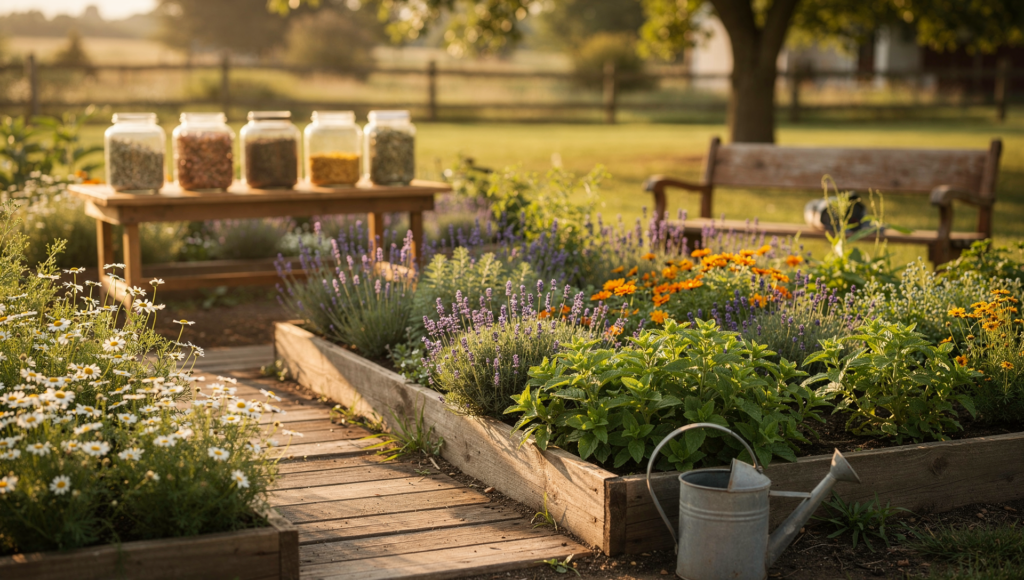
A small collection of familiar herbs can provide plenty of opportunities to practice growing, harvesting, drying, and preparing herbs at home.
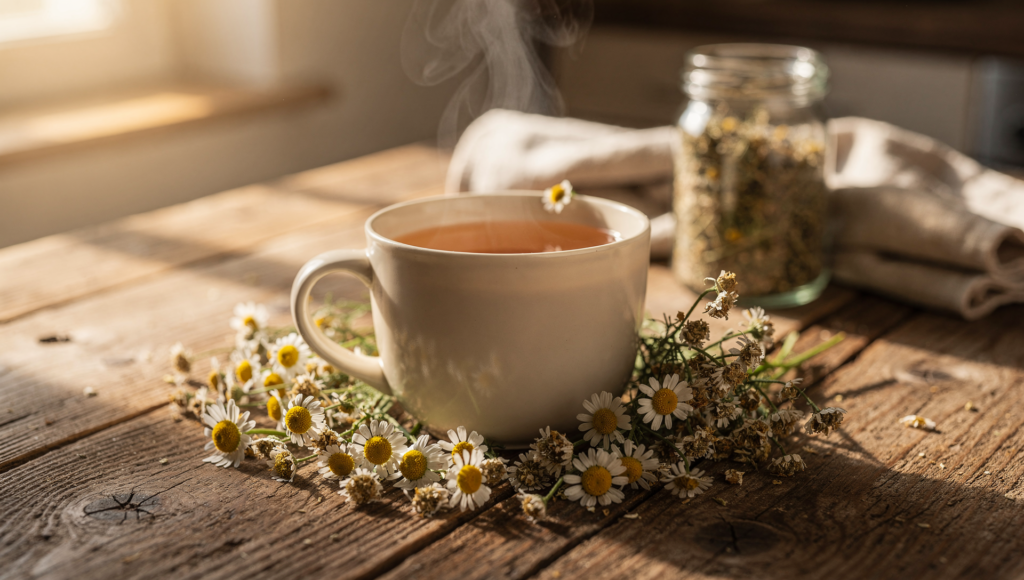
Chamomile
Chamomile’s small, daisy-like flowers are commonly dried and used as an herbal tea.
It has a long history of traditional use and is especially popular as an evening beverage.
Peppermint
Peppermint is vigorous, aromatic, and easy to grow.
Because it spreads aggressively, many gardeners prefer growing it in a container rather than directly in garden beds.
The leaves can be harvested and dried for tea.
Lemon Balm
A member of the mint family, lemon balm has a fresh lemony fragrance and grows readily in many home gardens.
Its leaves are commonly used fresh or dried in herbal teas.
Calendula
Calendula’s bright orange and yellow flowers make it one of the most recognizable plants in a traditional herbal garden.
The dried flower petals are often used in infused oils and topical herbal preparations.
Lavender
Lavender brings fragrance, pollinators, and beautiful purple flowers to the garden.
Depending on the variety, the flowers are also traditionally used in culinary and aromatic preparations.
Garden Tip: Five plants you actually learn to grow and use are far more valuable than twenty herbs you can’t identify confidently.
4. What’s an Herbal Infusion?
The terminology can be confusing because herbal tea itself is technically an infusion.
In traditional herbal practice, however, the word infusion is often used for preparations in which plant material remains in hot water longer than it would for an ordinary cup of tea.
The important thing to understand is that stronger isn’t automatically better.
The appropriate plant, quantity, preparation method, and duration depend on the herb.
For beginners, the safest approach is to learn each plant individually using a reputable herbal reference rather than relying on one universal formula.
A Simple Infusion Workflow
The general process looks like this:
- Identify the herb correctly.
- Confirm that the plant and plant part are appropriate for the intended preparation.
- Place the dried plant material in a clean heat-safe container.
- Add hot water.
- Cover while steeping.
- Strain thoroughly.
- Refrigerate any unused portion promptly.
- Discard the preparation if its smell, appearance, or quality changes.
Quick Checklist
- Use clean glass or heat-safe containers.
- Know exactly which plant you’re using.
- Confirm which part of the plant is appropriate.
- Keep the preparation covered while steeping.
- Refrigerate leftovers promptly.
- Label preparations if you’re making more than one.
- When in doubt, discard it.
5. What Is an Herb-Infused Oil?
Before making a salve, it helps to understand infused oils.
An infused oil is created by allowing suitable dried plant material to infuse into a carrier oil.
Calendula is one of the most recognizable examples.
The finished infused oil can be used as the oil component of simple topical preparations such as balms and salves.
Why Dried Herbs Matter
Moisture and oil are not a good combination for long-term storage.
Fresh plants contain water, and introducing that moisture into an oil preparation can increase the risk of spoilage.
For beginner home preparations intended for storage, properly dried plant material is generally the more practical option.
A Note About Calendula
Calendula is especially interesting for beginners because it connects the entire process:
Grow → Harvest → Dry → Infuse → Prepare
Instead of simply purchasing another finished product, you begin understanding where herbal preparations actually come from.
6. What Is an Herbal Salve?
Once you’ve learned how herb-infused oils work, one natural next step is turning an infused oil into a simple herbal salve.
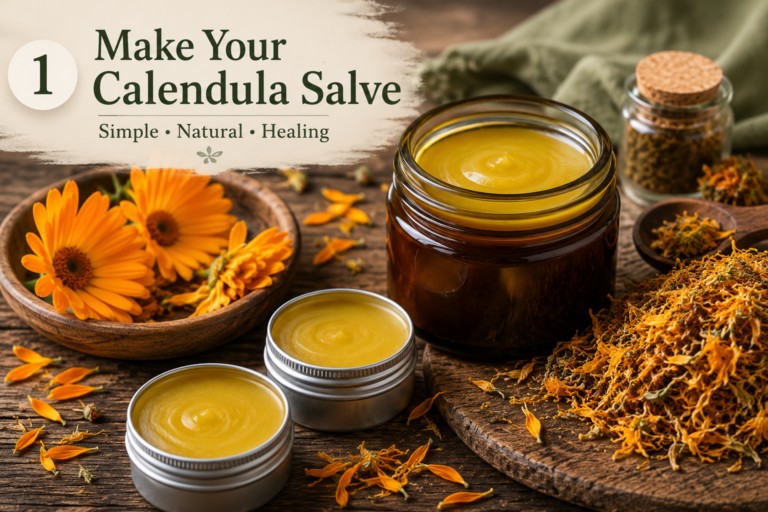
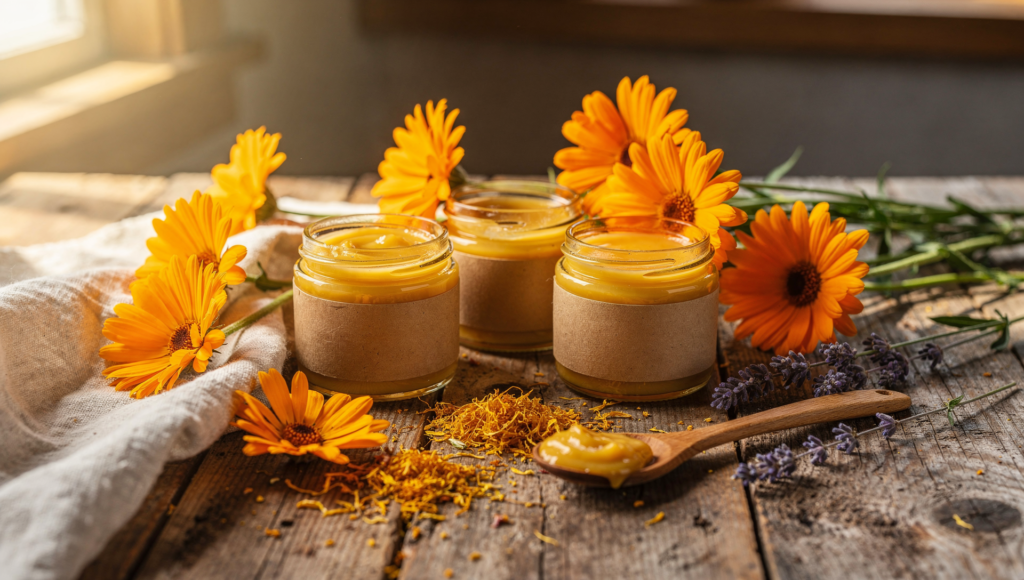
A salve is a semi-solid topical preparation traditionally made by combining an infused herbal oil with wax. It’s one of the most practical ways to explore traditional herbal preparations at home because it requires relatively few ingredients and can be stored in small jars or tins.
The basic idea is simple:
Dried Herbs → Infused Oil → Wax → Salve
But the details matter. The herb you choose, how thoroughly it was dried, the carrier oil, the amount of wax, cleanliness, labeling, and storage can all affect the finished preparation.
Start With Calendula
If you’ve never made an herbal salve before, calendula is a great plant to learn with.
We’ve already created a complete step-by-step guide showing how the process works — from preparing the infused oil to pouring and storing the finished salve.
→ Read Next: How to Make Calendula Salve at Home
It’s a perfect first project if you want to turn something from your herbal garden into a practical homemade preparation.
Important: Homemade topical preparations are not substitutes for appropriate medical care. Don’t use homemade salves on serious wounds, burns, infections, or unexplained skin conditions.
7. What Is an Herbal Tincture?
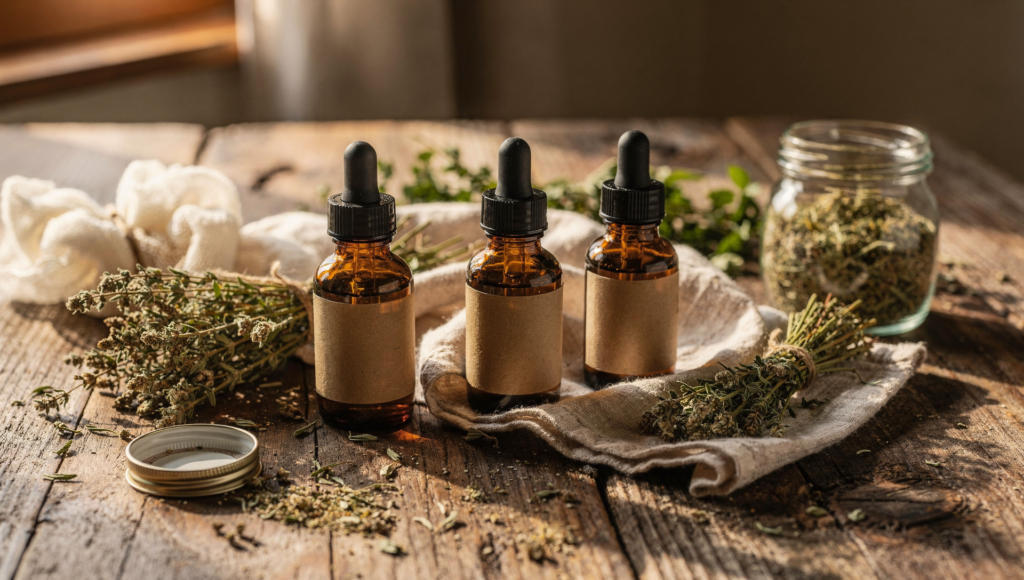
Tinctures are concentrated herbal extracts traditionally produced using alcohol or another extraction medium.
They’re worth understanding because you’ll encounter them frequently in herbal books, stores, and historical references.
However, tinctures are not where I recommend beginners start.
The appropriate extraction method depends heavily on the specific plant, plant part, moisture content, intended use, and other factors. Alcohol-based preparations also require additional safety considerations.
If you’re building your first home herbal practice, focus first on:
Plant identification → Growing → Harvesting → Drying → Tea → Infused Oil → Simple Topical Preparations
Those skills provide a much better foundation before moving into concentrated extracts.
8. How to Harvest Herbs From Your Garden
Growing herbs is only half the skill.
Knowing how to harvest them matters too.
The ideal harvest method varies by plant and by the part you’re collecting.
For many leafy herbs, gardeners harvest after surface moisture has dried and before the plant becomes stressed by the hottest part of the day.
Flowers are often harvested when they are freshly opened and healthy.
Always research the individual plant because roots, leaves, flowers, seeds, and bark can have completely different harvesting requirements.
Never Harvest a Plant You Can’t Identify
This deserves its own rule:
If you’re not completely certain what a plant is, don’t consume it or turn it into a homemade herbal preparation.
Look-alike plants exist, and some can be dangerous.
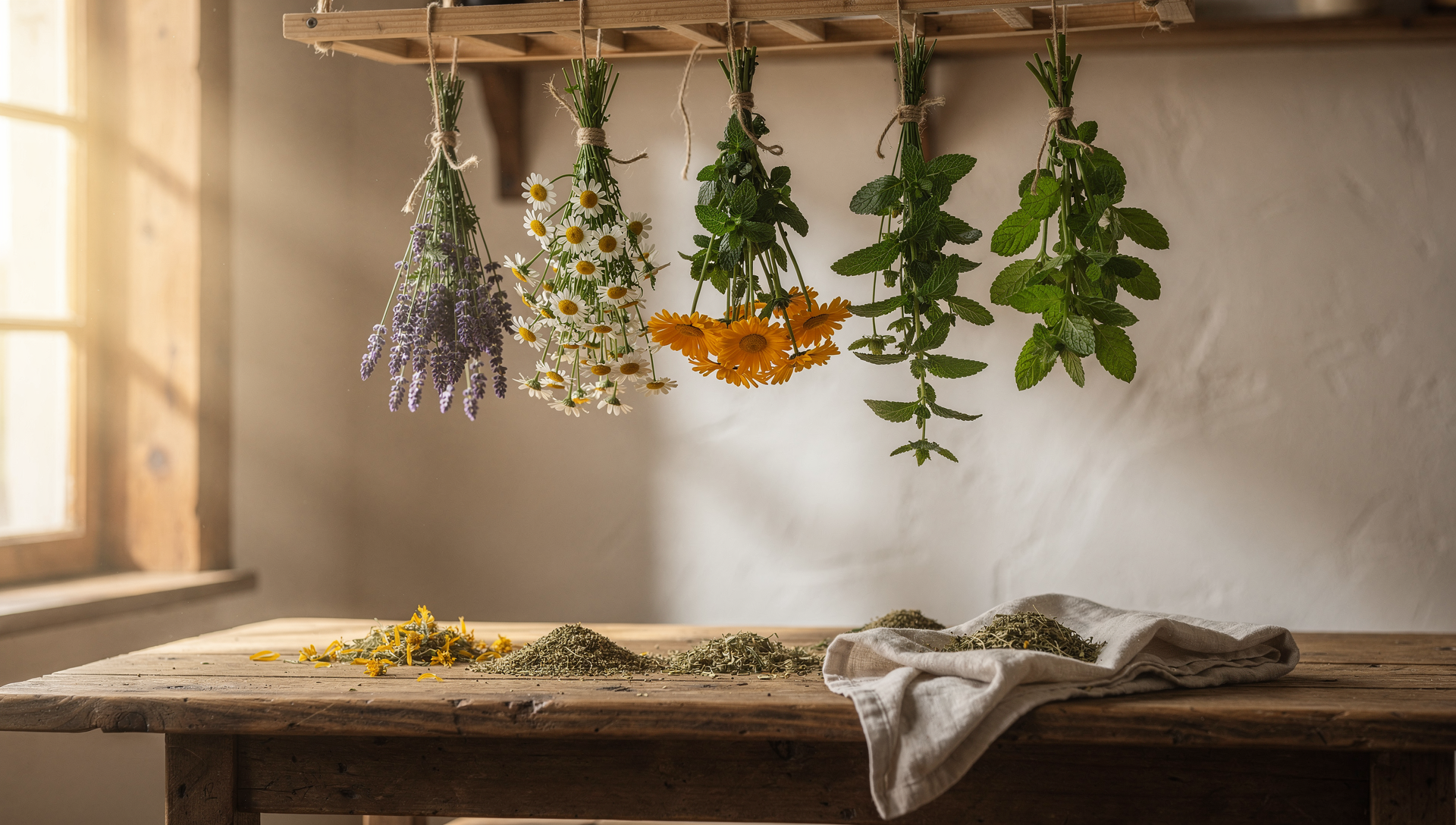
9. How to Dry Herbs at Home
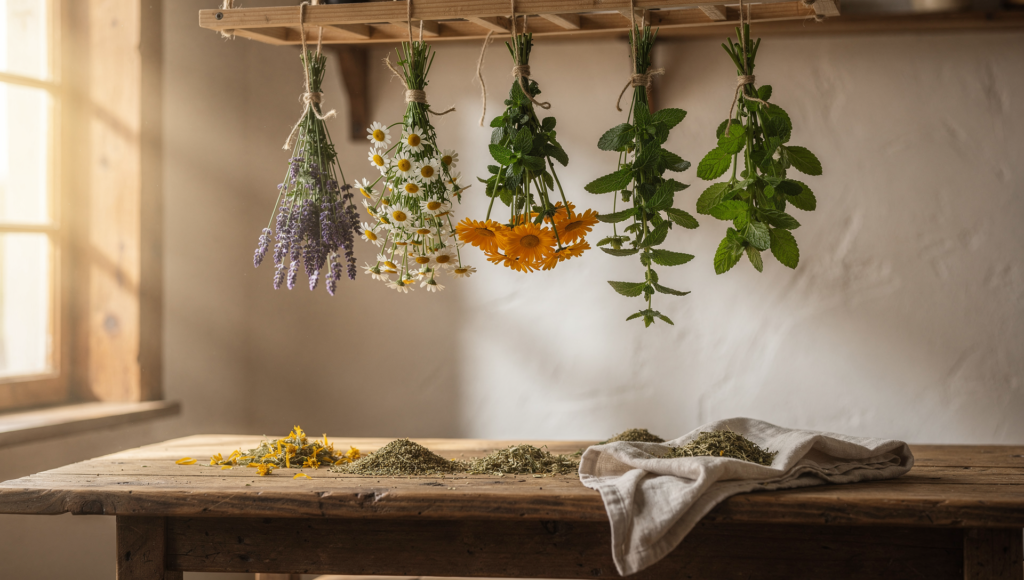
Drying removes moisture from harvested plants and makes proper storage possible.
Air Drying
For many herbs:
- Harvest clean, healthy plant material.
- Remove damaged or discolored portions.
- Arrange the herbs in small bundles or spread them on a drying screen.
- Keep them somewhere dry and well ventilated, away from direct sunlight.
- Allow them to dry completely before storage.
Large bundles can trap moisture, so smaller bundles generally dry more evenly.
How Do You Know They’re Dry?
Leaves should feel crisp rather than flexible.
Plant material that still feels damp or pliable may contain enough moisture to create storage problems.
When you’re unsure, give it more drying time.
10. How to Store Dried Herbs
Once your herbs are completely dry, storage is straightforward.
Use:
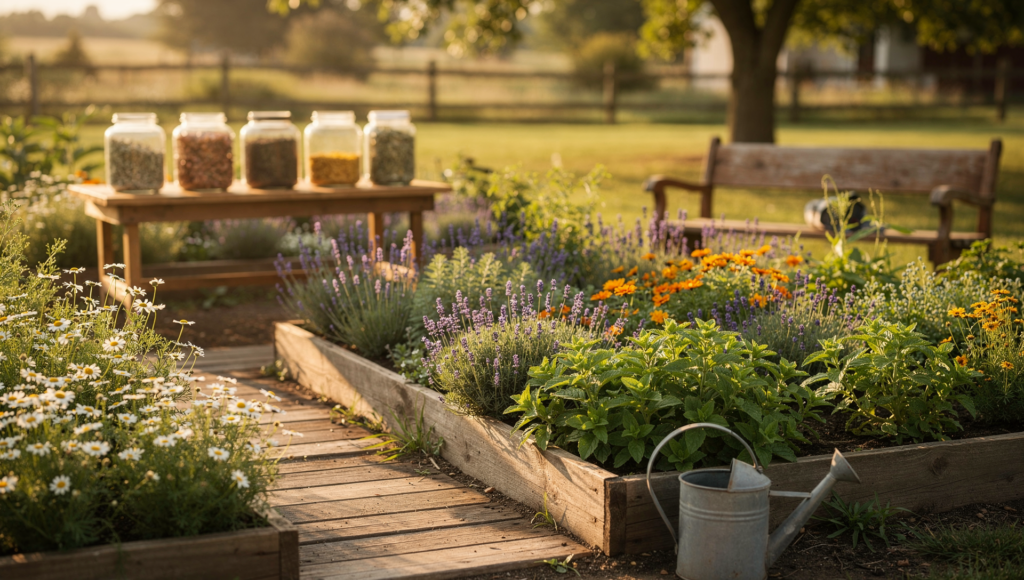
- Clean, dry glass jars
- Airtight lids
- Labels
- A cool, dark storage location
Avoid keeping herbs directly beside a stove, sunny window, or other source of heat and light.
Your Label Should Include
Plant name Plant part Harvest date Location, if useful
Keeping simple records turns a collection of jars into a genuine home herbal pantry.
Don’t Grind Everything Immediately
Whenever practical, store dried leaves and flowers relatively whole and crush them closer to the time you plan to use them.
Aroma and quality gradually decline after processing and storage.
11. Build a Small Home Herbal Pantry
One of the easiest mistakes to make is buying dozens of herbs before you’ve learned how to use five.
Instead, build your pantry gradually.
A simple beginner collection might include:
- Chamomile
- Peppermint
- Lemon balm
- Calendula
- Lavender
Then add supplies such as:
- Glass storage jars
- Labels
- Fine-mesh strainer
- Cheesecloth
- Drying screen
- Small tins or jars for topical preparations
The goal isn’t to create an apothecary overnight.
The goal is to know your plants.
12. Want to Grow Your Own Herbal Garden?
Buying dried herbs is convenient.
But growing them yourself teaches you something a package never can.
You learn what the seed looks like.
You recognize the leaves.
You watch the flowers develop.
You learn when to harvest.
And eventually, the jar sitting in your pantry contains something you grew yourself.
If you want a more organized way to begin, the Medicinal Garden Kit can help you start building a useful home herb garden without having to figure everything out from scratch.
→ Explore the Medicinal Garden Kit
Disclosure: This article may contain affiliate links. If you purchase through one of these links, Freeland Haven may earn a commission at no additional cost to you. We only feature resources that fit the topic and may be useful to our readers.
13. Herbal Safety: What Every Beginner Should Know
Learning about herbs can be useful and rewarding, but plants contain biologically active compounds.
“Natural” does not automatically mean harmless.
Keep these rules in mind:
- Never consume a plant you haven’t positively identified.
- Research the specific plant and the specific plant part before using it.
- Some herbs can interact with prescription and over-the-counter medications.
- Allergic reactions are possible.
- Children may respond differently to herbal products than adults.
- Pregnancy and breastfeeding require additional caution.
- Pets can be sensitive to plants that humans tolerate.
- Essential oils are highly concentrated and require separate safety knowledge.
- Serious, persistent, or worsening symptoms require appropriate medical care.
If you take medication, have a health condition, are pregnant or breastfeeding, or are considering herbs for a child, talk with a qualified healthcare professional before using herbal products.
14. Your Beginner Herbal Skills Checklist
Don’t try to learn everything at once.
Start here:
- Choose 3–5 beginner-friendly herbs to study
- Learn to positively identify each plant
- Grow at least one herb yourself
- Learn when and how to harvest it
- Dry your first batch properly
- Label and store it
- Prepare a simple herbal tea
- Learn how herb-infused oils work
- Try a simple topical salve when you’re ready
- Keep notes about what you grow and prepare
- Learn the safety considerations for every plant you use
That’s already a substantial set of practical skills.
15. Frequently Asked Questions
What is the easiest herbal preparation for beginners?
Herbal tea made from a familiar herb suitable for tea is one of the simplest places to start. It requires minimal equipment and lets you become familiar with the plant before learning more involved preparation methods.
What’s the difference between tea and an herbal infusion?
Technically, herbal tea is an infusion. In everyday herbal terminology, “infusion” often refers to herbs steeped in water for longer than an ordinary cup of tea.
Can I use fresh herbs instead of dried herbs?
It depends on the preparation. Fresh herbs are commonly used for some teas and culinary purposes, while dried herbs are often more appropriate for oil-based preparations intended for storage because moisture can contribute to spoilage.
How long do dried herbs last?
There isn’t one universal expiration date. Plant type, drying method, storage conditions, exposure to oxygen and light, and other factors all affect quality.
Check stored herbs periodically and discard anything showing moisture, mold, unusual odors, pest contamination, or other signs of deterioration.
Are homemade herbal preparations safe?
Safety depends on the plant, preparation, person using it, medications, health conditions, dosage, and intended use.
Familiarity with a plant doesn’t guarantee that every preparation made from it is appropriate for everyone.
Do I need a large garden?
Not at all.
Several useful herbs grow well in containers, raised beds, patios, balconies, and small garden spaces.
Starting small actually makes learning easier.
16. Start With One Plant
You don’t need a cabinet filled with mysterious bottles.
You don’t need fifty different herbs.
And you certainly don’t need to learn everything at once.
Start with one plant.
Learn what it looks like.
Grow it.
Harvest it.
Dry it.
Store it.
Learn its traditional uses and its safety considerations.
Then move on to the next one.
Over time, those individual skills become something much bigger: practical knowledge about the plants growing around your home and the ability to preserve and use what you grow.
That’s what self-reliance often looks like.
Not knowing everything.
Just knowing a little more than you did yesterday.
Live free. Grow food. Build freedom.
Want to Take Your Herbal Knowledge Further?
Once you start growing, harvesting, and drying your own herbs, you’ll probably find yourself wanting to learn more about the plants you’re working with.
Backyard Healing Herbs is a 260-page herbal reference designed for people who want to explore traditional herbal knowledge in greater depth — from useful plants to practical ways they have been prepared and used at home.
It’s a good next step if you’re interested in building your own home herbal reference library instead of searching for information every time you harvest a new plant.
→ Explore Backyard Healing Herbs
Affiliate disclosure: If you purchase through this link, Freeland Haven may earn a commission at no additional cost to you.
Important Disclaimer
This content is provided for educational and informational purposes only and is not intended to diagnose, treat, cure, or prevent any disease or medical condition. Herbal products can cause adverse reactions and interact with medications. Always positively identify plants before using them. Consult an appropriately qualified healthcare professional regarding medical concerns and before using herbal products if you take medications, have a medical condition, are pregnant or breastfeeding, or are considering their use for a child.