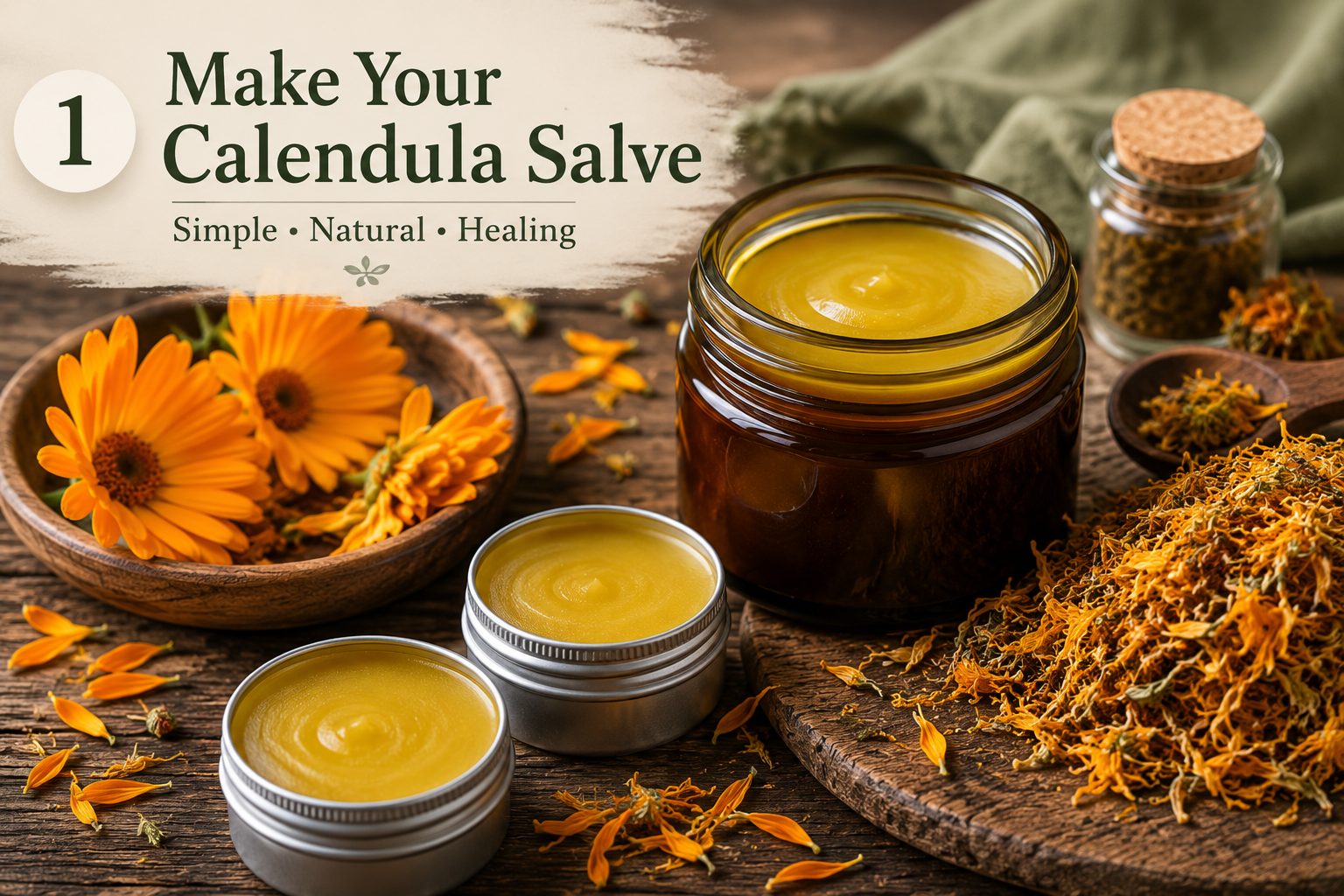
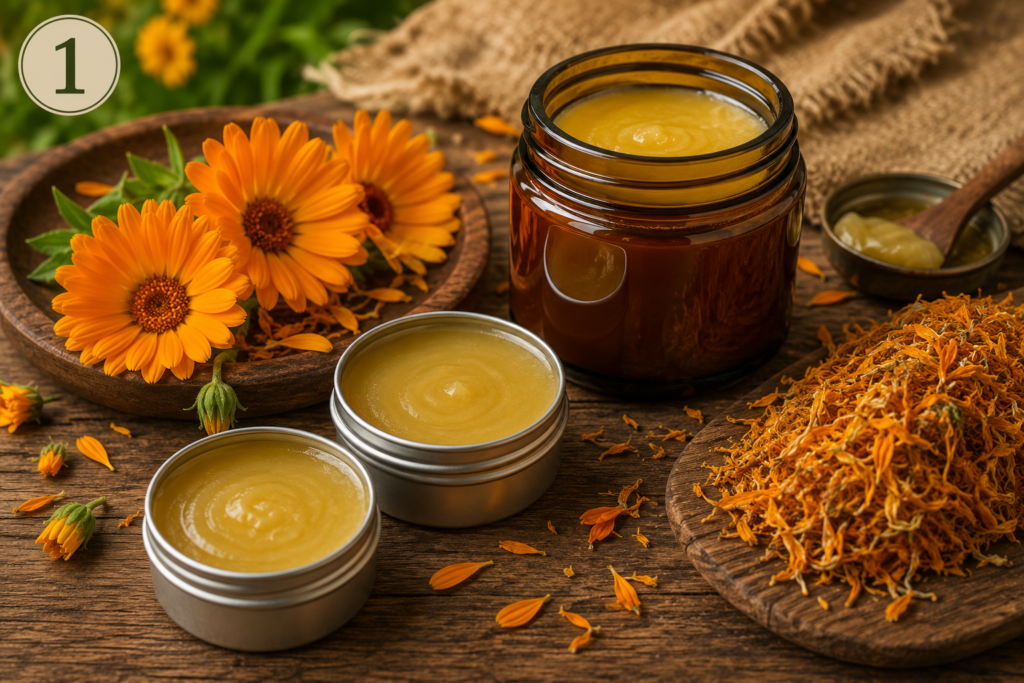
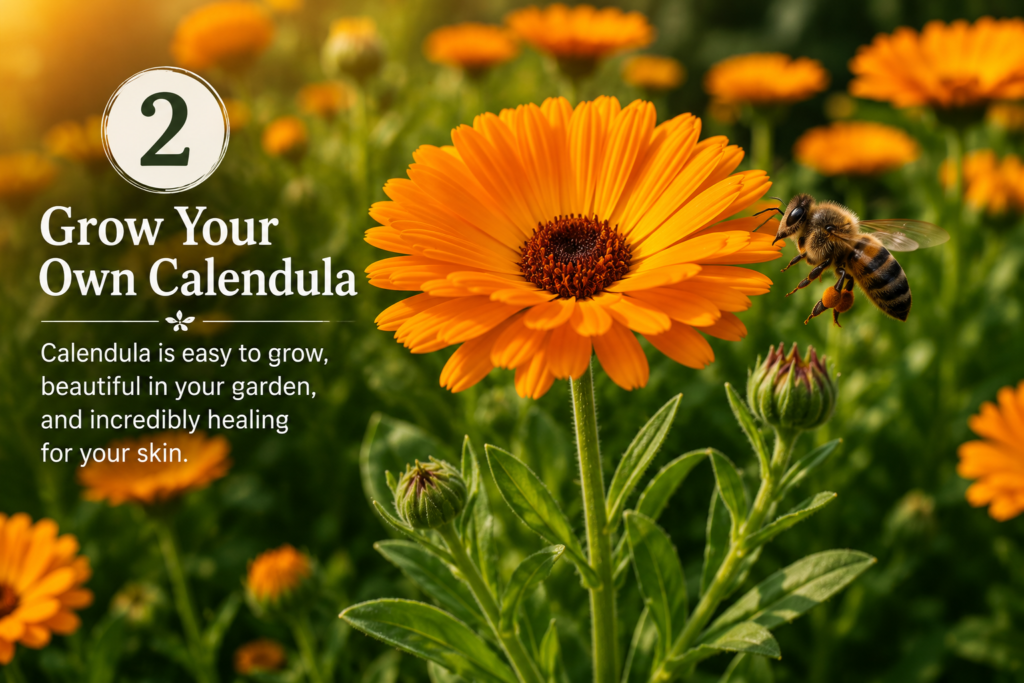
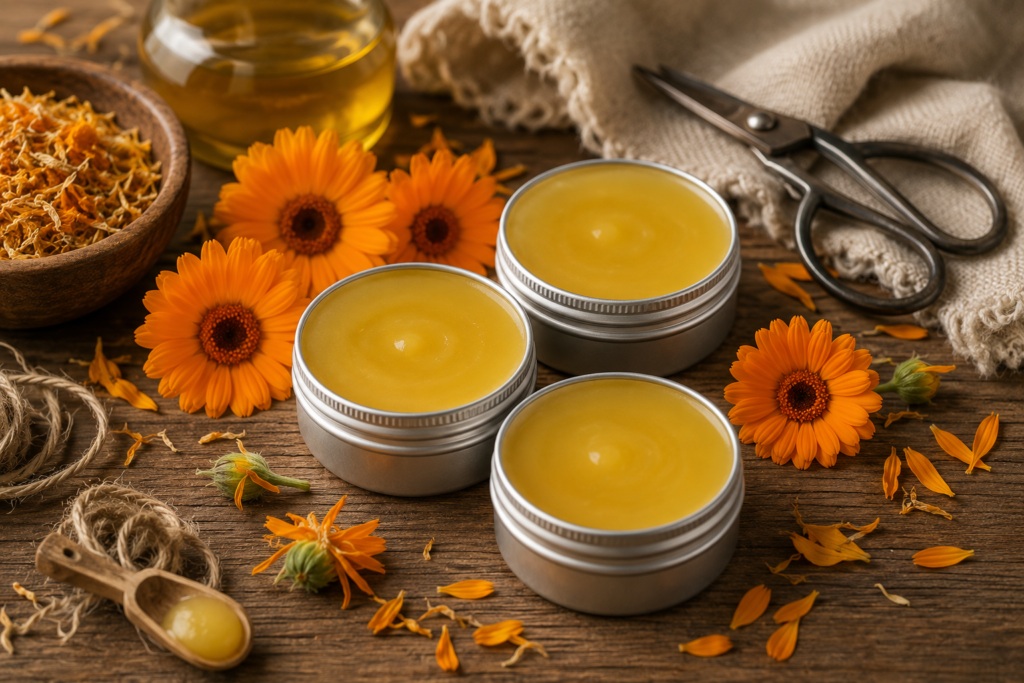
If you grow only one medicinal herb on your homestead, make it calendula. This orange and yellow flower is the workhorse of the home apothecary. It treats cuts, burns, rashes, chapped skin, diaper rash, and slow-healing wounds. It is gentle enough for a newborn and effective enough for a farmer who just spent the day clearing blackberries. And it is one of the easiest herbs to grow — calendula practically thrives on neglect.
A single plant produces enough flowers to make a year’s supply of salve. The process takes about an hour of active work spread over a few weeks. The result is a shelf-stable remedy that replaces half the tubes and bottles in your medicine cabinet. Here is exactly how to make it.
1. Why Calendula Works
The petals of calendula (Calendula officinalis) contain compounds called flavonoids and triterpenoids that reduce inflammation, fight infection, and stimulate tissue repair. When applied to a wound, calendula increases blood flow to the area, which speeds healing and reduces scarring.
Unlike many herbal remedies, calendula has actual clinical research behind it. Studies have shown it is effective for wound healing, reducing radiation dermatitis in cancer patients, and treating diaper rash. It is one of the few herbs that both herbalists and conventional doctors agree on.
What calendula salve is good for:
Minor cuts and scrapes
Burns (including sunburn)
Chapped or cracked skin
Diaper rash
Insect bites and stings
Poison ivy and other contact rashes
Dry, cracked heels and hands
Post-surgical scar healing
Chapped lips (use a beeswax-heavy version)
The Complete Homestead Self-Sufficiency System
The Decoupled Bastion Protocol is a complete 4-product Homestead self-sufficiency funnel targeting the fastest-growing Evergreen niche, especially for 2026 Global Situation — Homesteading, food storage, natural health, and emergency preparedness.
Also Included — 4 Bonus Appendices
Appendix A — 50 Essential Medicinal Herbs Reference
Appendix B — 12-Month Seasonal Bastion Core Calendar
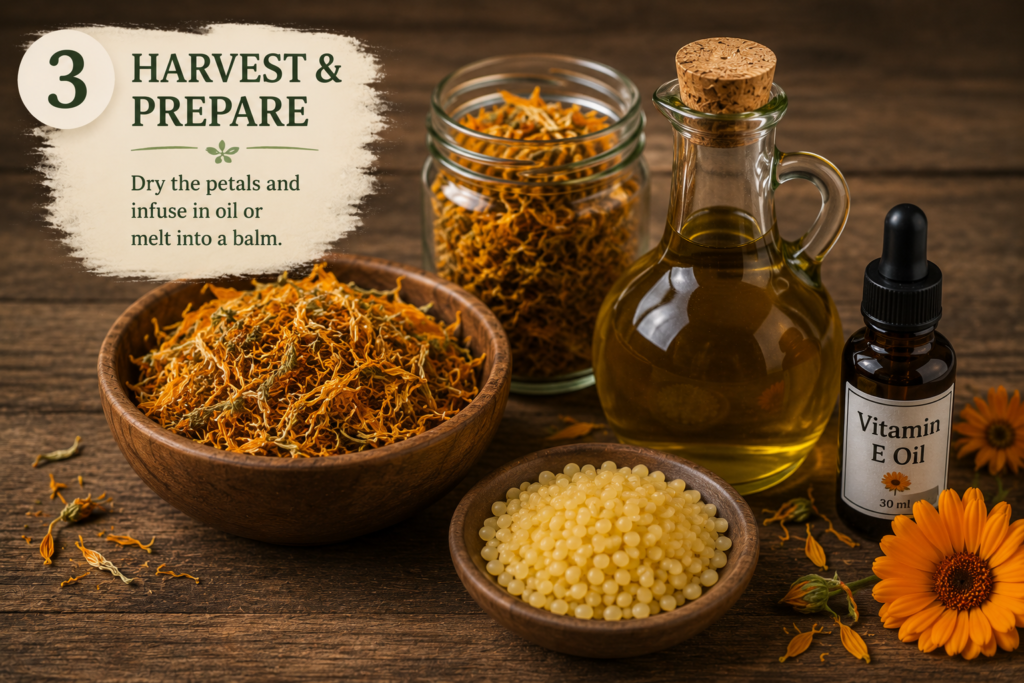
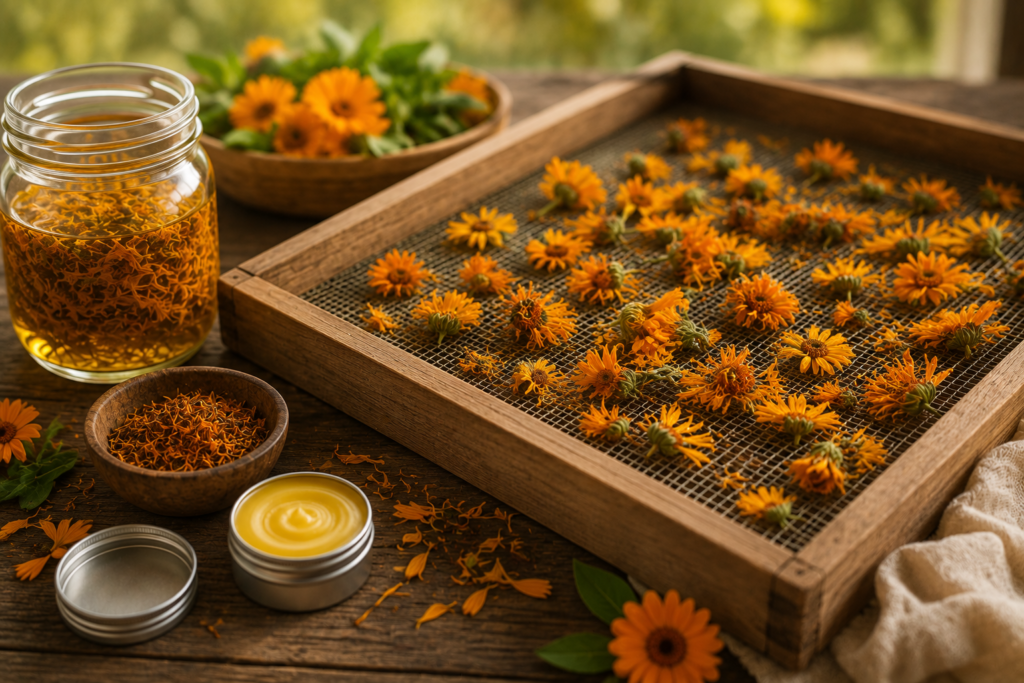
Fresh calendula flowers contain too much water. If you infuse them directly into oil, the moisture causes mold. The flowers must be fully dried first.
If you are growing your own: Harvest the flower heads when they are fully open — usually mid-morning after the dew has evaporated. Pick them at their peak, before they start to wilt or go to seed. Spread the flowers in a single layer on a drying screen, a mesh rack, or a clean towel. Place them in a warm, dark, well-ventilated area out of direct sunlight. Drying takes 5–10 days depending on humidity. The petals should be crisp and crumble easily when fully dry.
If you are buying dried calendula: Purchase from a reputable herb supplier. Look for organic calendula petals that are bright orange or yellow — faded color indicates old stock with reduced potency.
Beginner Tip: You can dry calendula in a dehydrator set to 95°F for 6–8 hours, but keep the temperature low. Heat above 110°F degrades the medicinal compounds.
4. Step 2: Infuse the Oil
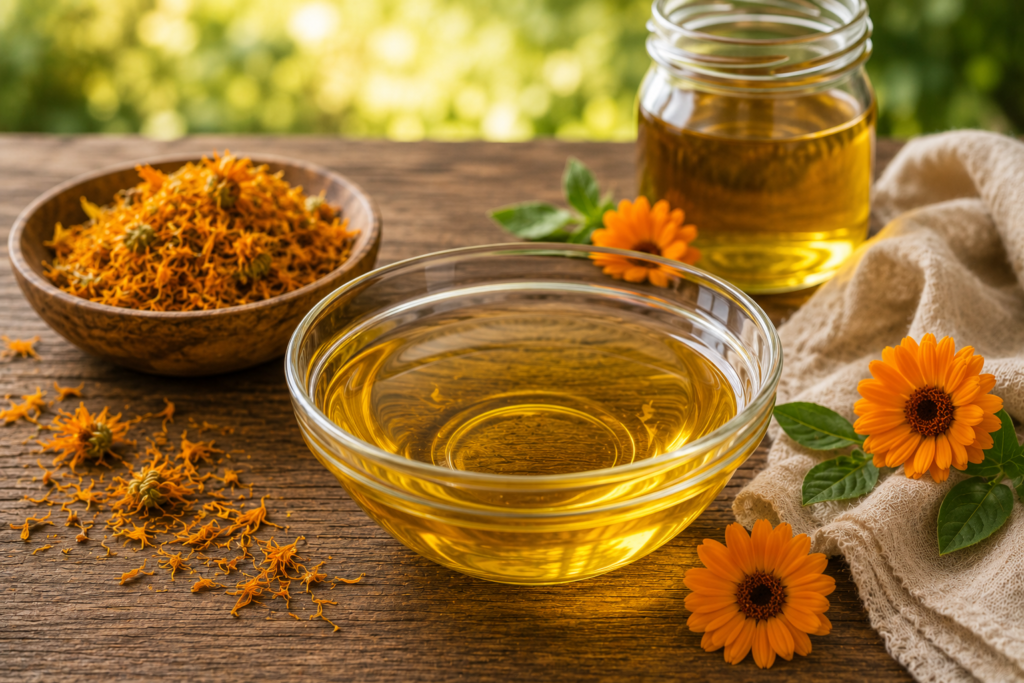
This is where the calendula’s healing compounds transfer into the carrier oil. There are two methods. Both work well.
4.1 Method A: Solar Infusion (Recommended)
This is the traditional method and produces the strongest medicinal oil. It takes longer but requires almost no effort.
Fill a clean, dry glass jar about three-quarters full with dried calendula flowers.
Pour carrier oil over the flowers until they are completely submerged. Add enough to keep them covered by about an inch.
Seal the jar tightly and give it a gentle shake.
Place the jar in a sunny windowsill or warm spot in your house.
Shake the jar daily. This prevents mold and ensures even extraction.
After 2–4 weeks, the oil will be deep golden-orange. It is ready to strain.
4.2 Method B: Slow Cooker Infusion (Faster)
If you need salve sooner, this method works in 24–48 hours.
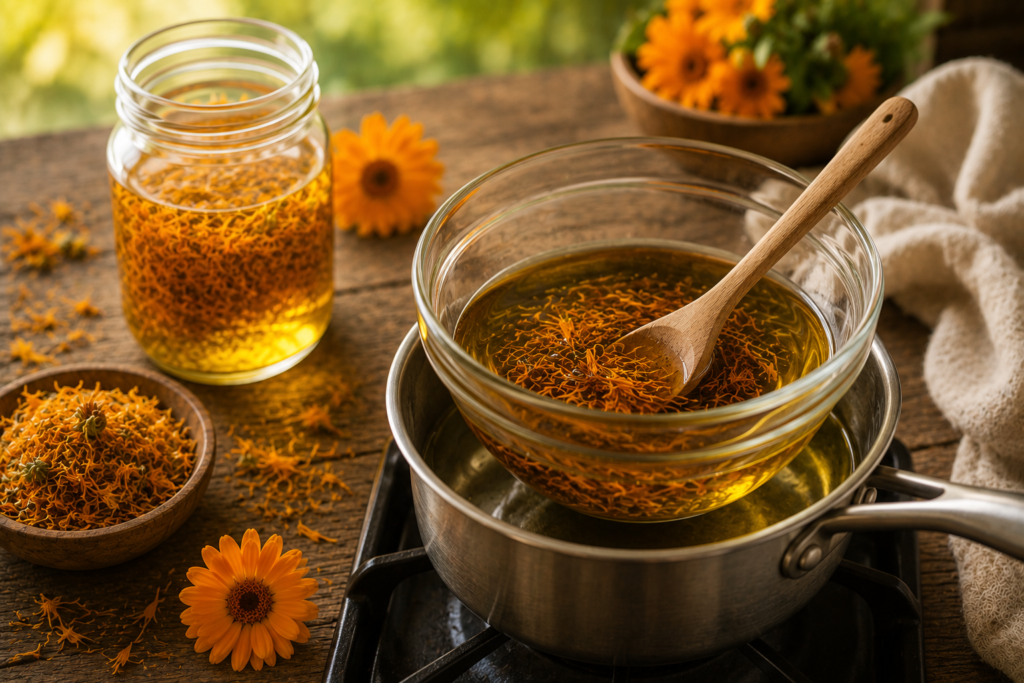
Place dried calendula flowers in a slow cooker or double boiler.
Cover completely with carrier oil.
Set to the lowest possible temperature (warm setting). The oil should never sizzle or smoke.
Let it steep for 24–48 hours, stirring occasionally.
Turn off and let cool before straining.
Common Mistake: Using too much heat. High temperatures destroy the medicinal compounds in calendula. If the oil is too hot to touch comfortably, it is too hot.
5. Step 3: Strain the Oil
After the infusion period, it is time to separate the oil from the spent flowers.
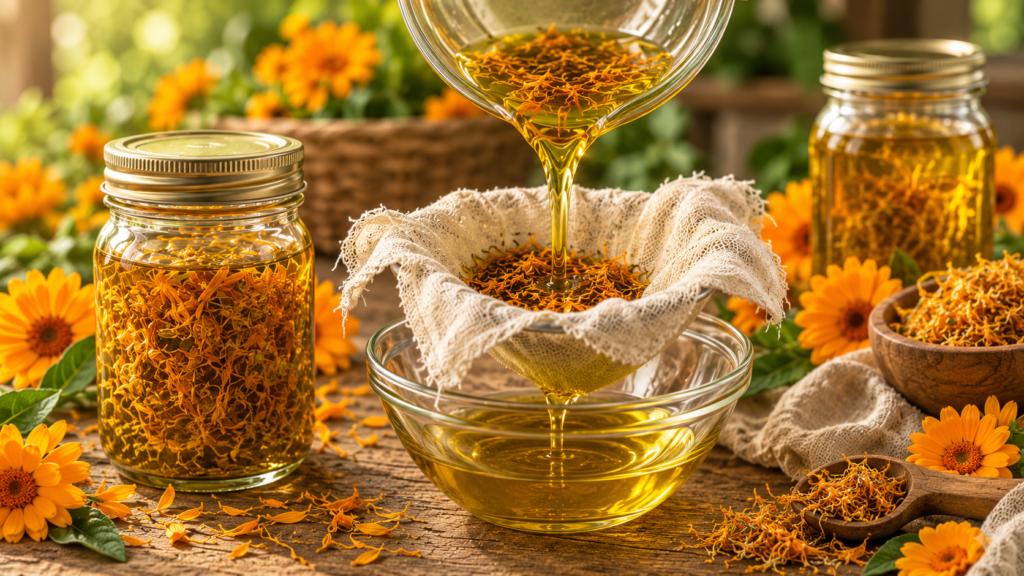
Line a fine mesh strainer with cheesecloth and place it over a clean bowl.
Pour the infused oil through the strainer. Let it drain naturally — do not squeeze the cheesecloth, or you will force sediment into the oil.
For a clearer salve, strain a second time through a coffee filter.
Discard the spent flowers (compost them).
The resulting oil is called calendula-infused oil. It can be used directly on skin or turned into salve. Stored in a cool, dark place, it keeps for 6–12 months.
6. Step 4: Make the Salve
Now you turn that infused oil into a solid, shelf-stable salve.
Measure 1 cup of your strained calendula-infused oil into a small saucepan or double boiler.
Add 1/4 cup of beeswax. If you are using beeswax pastilles, they melt faster.
Heat gently over low heat, stirring constantly, until the beeswax is fully melted (3–5 minutes).
Remove from heat immediately. Add 1 teaspoon of vitamin E oil if using, and stir well.
Pour the liquid salve into your tins or jars. Work quickly — it starts setting as it cools.
Let the salve cool completely (2–4 hours) before capping.
Pro Tip: Test the consistency before pouring. Dip a spoon into the melted mixture and set it in the freezer for 30 seconds. If it is too soft, add more beeswax. Too hard, add more oil.
7. Adjusting the Consistency
Ratio (Oil : Beeswax)
Consistency
Best For
4:1
Soft, lotion-like
Dry skin, chapped lips
3:1
Medium-soft
General purpose, cuts
2:1
Firm, holds shape
Hot climates, pocket carry
8. Step 5: Label and Store
Label every container with the product name, date made, and ingredients. Store in a cool, dark place. Properly made calendula salve lasts 12–18 months. Vitamin E oil extends the shelf life by preventing oxidation.
Signs of spoilage: Rancid smell, mold growth, or color change from golden to brown. If in doubt, throw it out and make a new batch.
Grow Your Own Medicinal Herbs at Home
Fresh herbs make homemade remedies even more rewarding. The Medicinal Garden Kit includes heirloom medicinal herb seeds and growing guidance to help you start your own medicinal garden.
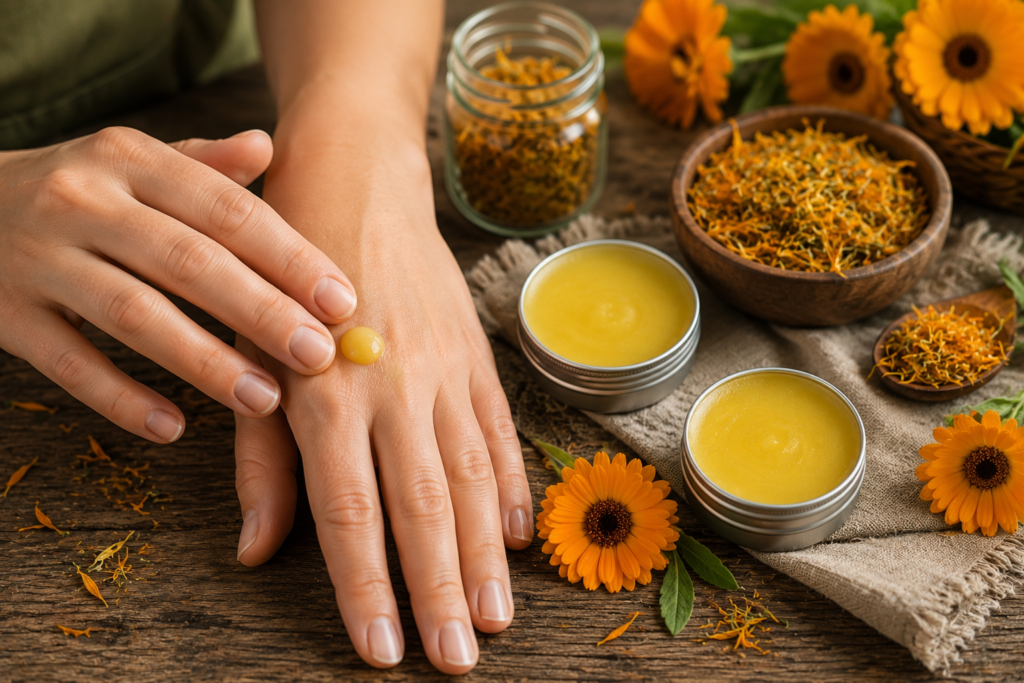
Apply a small amount to clean, dry skin 2–3 times daily. For cuts and scrapes, clean the wound first with mild soap and water, pat dry, then apply salve. For burns, apply a generous layer. The salve cools the skin on contact and reduces blistering when applied immediately.
FAQ
Can I use fresh calendula flowers?
No. Fresh flowers contain too much moisture, which causes mold. Always use fully dried flowers.
What is the best carrier oil?
Olive oil is the standard choice; it is affordable and has a good shelf life. Jojoba oil absorbs fastest.
How long does it last?
12–18 months in a cool, dark place.
Can I use this on children or pets?
Yes. Calendula is gentle for infants and safe for dogs/cats (externally). Avoid essential oils for pets.
How much does one batch make?
One cup of oil with 1/4 cup beeswax fills approximately four 2-ounce tins.
Continue Building Your Self-Sufficient Lifestyle
Homemade herbal remedies are just one part of living more independently. Learning practical health skills can help you feel more prepared for everyday situations.
Making calendula salve is one of the most rewarding homestead projects. It connects you to an ancient tradition of home medicine and saves you money. If you want to go deeper into medical preparedness, resources like Home Doctor are invaluable for handling emergencies when professional help is not available.
You’ve decided to start composting. Maybe you’re tired of tossing kitchen scraps into the trash. Maybe you’ve heard it’s the secret to vegetable garden soil that makes your neighbors jealous. Or maybe you just want to do something that feels good for the earth. All of those are good reasons. Here’s what nobody tells you:…
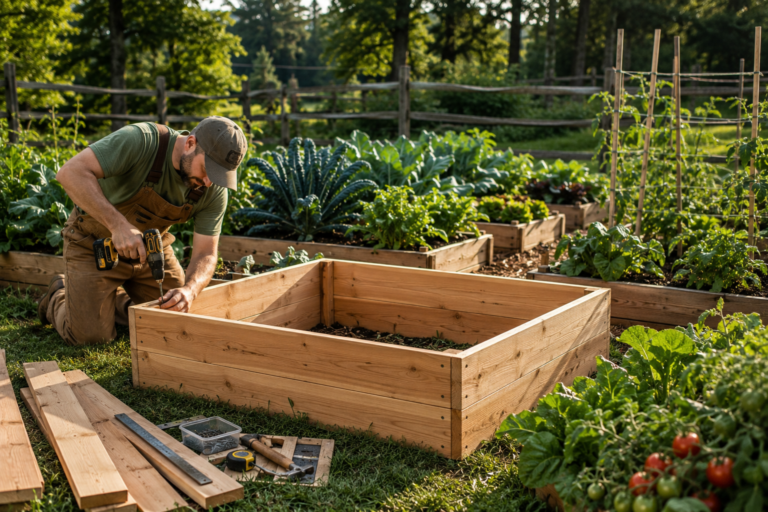
A raised garden bed is the single best investment you can make in your vegetable garden. Better soil. Fewer weeds. Warmer in spring. Easier to maintain. And harvesting at waist height instead of bending to the ground is a benefit you don’t appreciate until you’ve tried it. The good news: building one doesn’t require advanced…
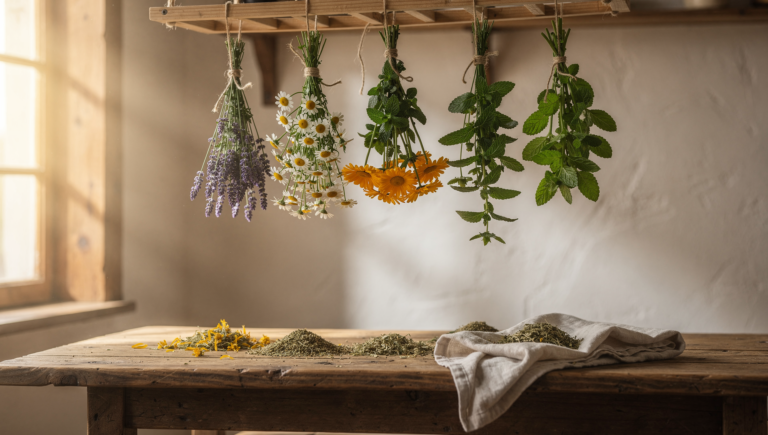
There’s something deeply satisfying about opening a jar of chamomile you grew and dried yourself, adding a spoonful to a mug, and knowing exactly where it came from. Growing useful herbs at home is one thing. Learning how to harvest, dry, store, and prepare them takes that knowledge one step further. And it doesn’t have…
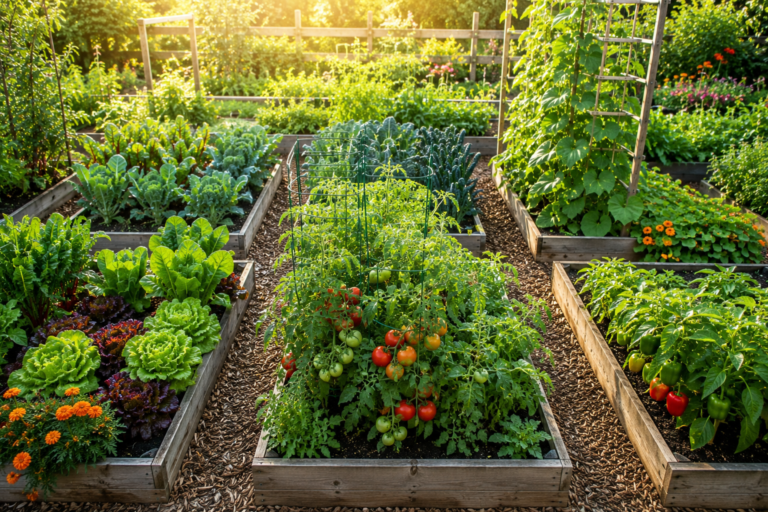
You built the beds. You filled them with good soil. Now comes the fun part — deciding what to plant. Raised beds change the rules of gardening. The soil warms faster in spring. Drainage is better. Weeds are fewer. And because you’re gardening in a contained space, every square inch matters. You want vegetables that…
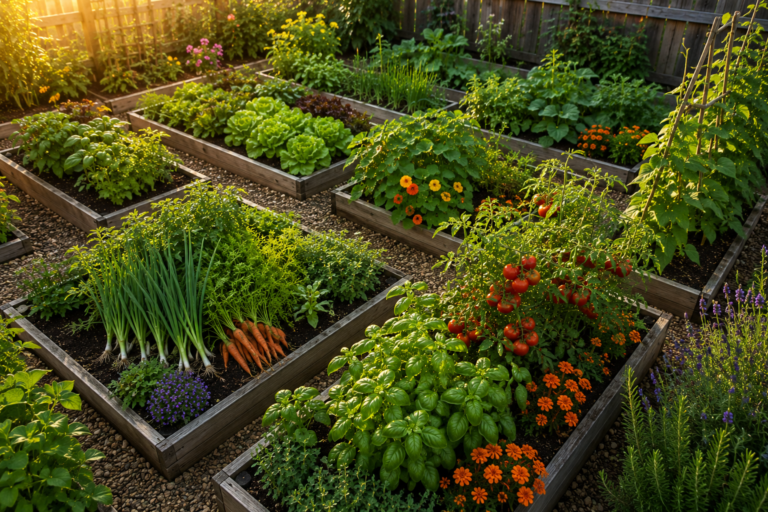
Growing your own vegetables is one of the most rewarding ways to save money, eat healthier, and become more self-sufficient. Whether you have a spacious backyard or a small corner with room for a few raised beds, starting a vegetable garden is easier than most people think. The biggest mistake beginners make is believing they…
You’ve probably seen the charts. Long lists of what goes with what, who hates who, and a dozen plants you’re supposed to keep on opposite sides of the garden like rival gangs at a wedding. Most of those charts are oversimplified. Some of them are just wrong. Here’s the truth: companion planting isn’t magic. It’s…


1 Comentário