
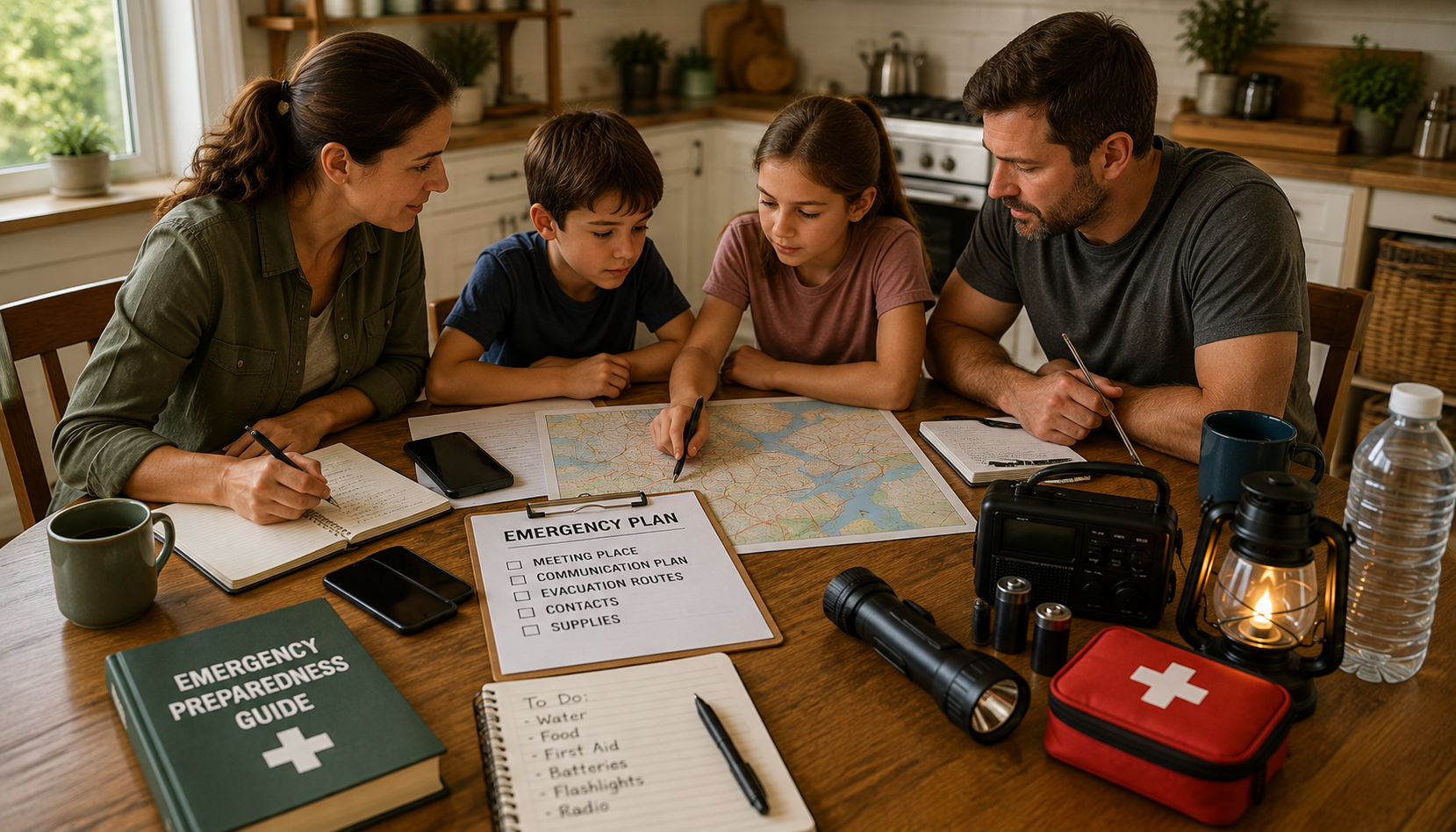
The Emergency Preparedness Checklist Every Household Should Have
A practical guide to preparing your home, your family, and your essential supplies before the unexpected happens.
It starts like any other evening.
Dinner is almost ready. Someone is finishing homework at the kitchen table. The washing machine is humming in the background. Your phone buzzes with another notification you barely notice.
Then everything goes dark.
The lights flicker once… and disappear.
At first, nobody worries. Power outages happen. You grab a flashlight, light a candle, and assume the electricity will return within the hour.
But it doesn’t.
Soon, your phone loses its signal. Gas stations stop pumping fuel. Grocery stores close their doors. By the next morning, the shelves that held bottled water, canned food, and batteries are nearly empty. Long lines form outside the few businesses still open.
The families who prepared weeks or months ago stay home. They make coffee, cook breakfast, and go about their day with little more than a minor inconvenience.
The families who didn’t prepare spend the day searching for supplies everyone else is searching for too.
The difference isn’t luck.
It isn’t money.
And it isn’t living in the countryside instead of the city.
It’s preparation.
Emergency preparedness isn’t about expecting the worst or living in fear. It’s about giving yourself more options when life becomes unpredictable. Whether it’s a severe storm, an extended blackout, a supply chain disruption, a wildfire, a hurricane, or simply an unexpected financial setback, the families who prepare ahead of time face these situations with far less stress.
The good news is that you don’t need to buy everything at once. You don’t need a bunker. You don’t need to become an expert survivalist.
You simply need a plan.
This guide brings together the essential steps every household should take—from storing water and building a practical food pantry to securing your home, preparing for power outages, organizing important documents, and creating a family emergency plan.
Think of it as your roadmap.
Complete it one section at a time, one weekend at a time, one practical decision at a time.
Because when the unexpected happens, preparation isn’t measured by what you wish you had done.
It’s measured by what you already did.
1. Before You Buy Anything, Start With a Plan
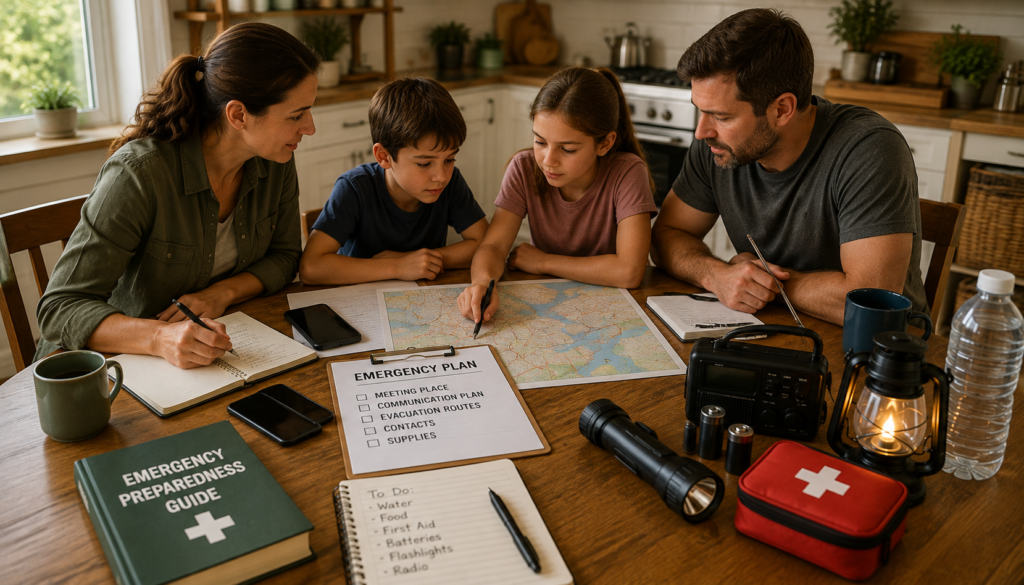
When people begin preparing for emergencies, their first instinct is usually to buy supplies.
More bottled water.
More canned food.
More batteries.
While those purchases are important, they’re not the best place to start.
Imagine a storm forces your family to leave home in the middle of the night.
Where will everyone meet if you’re separated?
Who will pick up the children if schools close early?
Do your relatives know who to contact if local phone networks become overloaded?
Where are your insurance papers, medical records, and identification documents?
Preparation begins long before the first flashlight or case of bottled water.
It begins with a plan.
Emergency management organizations consistently recommend that every household create a simple emergency plan before building an emergency kit. A written plan helps every family member understand what to do, where to go, and how to communicate when normal routines are interrupted.
Know Your Local Risks Before You Prepare
No two emergency plans should look exactly the same.
A family living in coastal Florida prepares for hurricanes and storm surges. Someone in California may focus on earthquakes and wildfires. In the Midwest, tornadoes and severe thunderstorms are often the greatest concern, while heavy snowstorms may be the priority in northern states.
The first step in emergency preparedness is understanding which hazards are most likely to affect your area. Once you know the risks, you can make better decisions about the supplies you’ll need, where your family should go, and how quickly you may need to act. Ready.gov emphasizes learning the hazards specific to where you live and building your plan around those risks.
Don’t wait until an emergency is already making headlines.
Stay informed throughout the year by following reliable local information sources, including:
- Your county or city emergency management office.
- The National Weather Service (NWS) for forecasts and severe weather alerts.
- Local news stations and radio broadcasts.
- Wireless Emergency Alerts (WEA) enabled on your smartphone.
- The FEMA App, which provides weather alerts, preparedness tips, and emergency information based on your location.
- NOAA Weather Radio if you live in an area prone to hurricanes, tornadoes, floods, or severe storms. Officials recommend it as a dependable source of alerts, including overnight when you may be asleep.
The earlier you know about an approaching storm, wildfire, flood, or evacuation order, the more options you have.
You may still have time to:
- Top off your vehicle’s fuel tank.
- Refill essential prescriptions.
- Buy food and water before stores become crowded.
- Secure outdoor furniture and equipment.
- Charge phones, power banks, and backup batteries.
- Leave safely before roads become congested.
🟩 Pro Tip
Treat emergency alerts the same way you treat a smoke alarm. They’re not meant to create panic—they’re meant to give you time. The earlier you receive accurate information, the more calmly and effectively you can prepare.
Stay Informed Using Trusted Sources
One of the most valuable emergency preparedness tools doesn’t cost anything.
Reliable information gives you time to make better decisions before a situation becomes urgent. By following trusted organizations and local emergency agencies, you’ll receive early warnings, weather updates, evacuation notices, and practical guidance that can help protect your family.
We recommend bookmarking these official resources today:
🇺🇸 National Preparedness
- Ready.gov — Official emergency preparedness guides, family communication plans, emergency kit checklists, and hazard-specific recommendations.
- FEMA App — Receive real-time National Weather Service alerts, preparedness reminders, shelter locations, and emergency resources directly on your phone.
🌦 Weather & Emergency Alerts
- National Weather Service (NWS) — Official weather forecasts, watches, warnings, and severe weather information.
- NOAA Weather Radio Information — Learn how NOAA Weather Radio provides continuous weather forecasts and emergency alerts, even when other communication systems may be disrupted.
🏛 Local Information
- Your County or City Emergency Management Office (search online for your county followed by Emergency Management).
- Local news stations and emergency alert services.
- Wireless Emergency Alerts (WEA) enabled on your smartphone.
🟩 Pro Tip
Don’t rely on just one source of information. Enable Wireless Emergency Alerts on your phone, download the FEMA App, and follow your local emergency management office. Receiving alerts from multiple trusted sources increases the chances of getting timely information when every minute matters.
Create a Family Emergency Plan
When an emergency happens, people rarely have time to stop and make decisions.
That’s why the most important conversations should happen before they’re ever needed.
A family emergency plan isn’t a complicated document. It’s a simple guide that helps everyone know what to do if normal routines are suddenly interrupted.
Whether you’re dealing with a severe storm, a wildfire, a flood, or an extended power outage, having a plan reduces confusion and allows your family to act quickly and confidently.
At a minimum, every household should answer these questions before an emergency occurs.
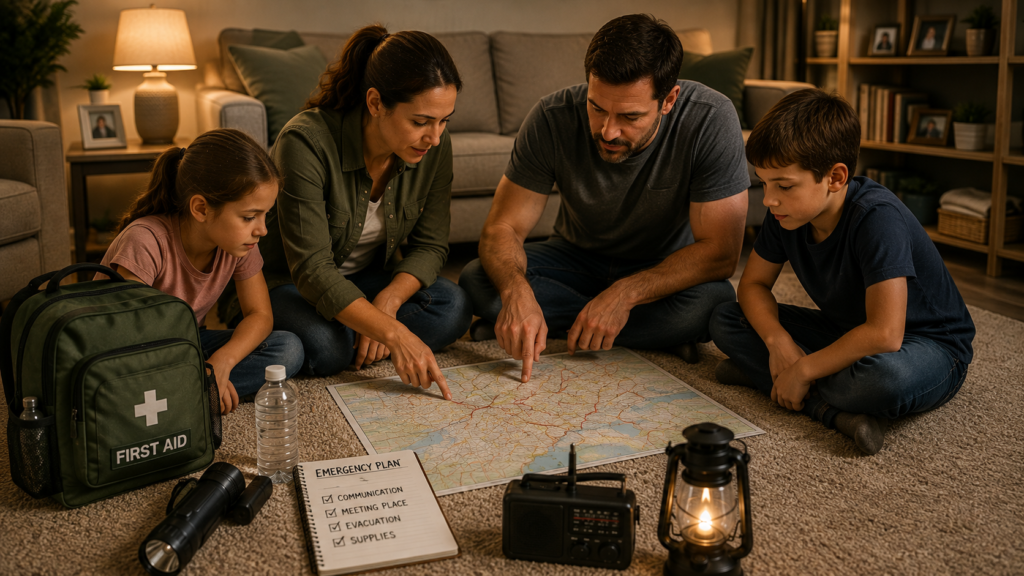
1.1 Where Will You Meet?
Choose two meeting places:
- A nearby location, such as a trusted neighbor’s house or a landmark within walking distance, in case you need to leave your home quickly.
- A second location outside your neighborhood, in case local roads are blocked or evacuation becomes necessary.
Make sure every family member knows both locations.
1.2 How Will You Communicate?
Phone networks may become overloaded during emergencies, and family members may be in different places.
Choose one trusted out-of-town contact who can serve as the communication point for everyone.
Sometimes it’s easier to contact someone outside the affected area than someone nearby.
Write down important phone numbers and keep a printed copy with your emergency supplies.
1.3 Who Will Pick Up the Children?
If schools close unexpectedly, who will pick up your children?
Discuss this plan in advance and make sure every caregiver understands their role.
If your children are old enough, teach them:
- important phone numbers
- your home address
- your meeting locations
- who they should contact if they can’t reach you
1.4 Don’t Forget Your Pets
Pets should always be included in your emergency plan.
Consider:
- food
- water
- medications
- carriers or leashes
- vaccination records
- identification tags
Many emergency shelters don’t accept pets, so identify pet-friendly shelters or boarding options before they’re needed.
1.5 Organize Important Documents
Store copies of essential documents in a waterproof folder.
Consider including:
- Identification
- Passports
- Birth certificates
- Insurance policies
- Medical information
- Emergency contacts
- Property records
- Copies of prescriptions
Keeping digital backups in a secure cloud storage service can provide an additional layer of protection.
1.6 Know How to Shut Off Utilities
Every adult in the household should know how to safely shut off:
- Water
- Natural gas
- Electricity
This simple knowledge can help reduce additional damage after certain emergencies.
If you’re unsure how your home’s utility systems work, contact your utility provider or review your homeowner’s manual before an emergency occurs.
1.7 Practice Your Plan
A plan only works if everyone remembers it.
Review your emergency plan at least once a year and update it whenever your family situation changes.
Practice simple scenarios together:
- What if the power goes out tonight?
- What if you’re not home when an evacuation order is issued?
- What if cell phones stop working?
Even a short family discussion can make a significant difference when real emergencies happen.
🟩 Pro Tip
Keep a printed copy of your emergency plan inside your emergency kit and another in an easy-to-find location at home. During a prolonged power outage, paper is often more reliable than a smartphone.
🟥 Common Mistake
Many families spend hundreds of dollars on emergency supplies but never discuss how they’ll communicate, where they’ll meet, or who will take responsibility for children or pets. Equipment is important—but a clear plan is what turns those supplies into an effective response.
📋 Quick Checklist
Before moving on, make sure you can answer “Yes” to each of these questions:
- □ Do we have two family meeting locations?
- □ Do we have an out-of-town emergency contact?
- □ Does everyone know the emergency phone numbers?
- □ Have we included our pets in the plan?
- □ Are our important documents organized?
- □ Does everyone know how to shut off utilities?
- □ Have we reviewed or practiced our emergency plan within the last year?
2. Water: Your First Priority
Imagine walking into your kitchen tomorrow morning and turning on the faucet.
Nothing happens.
You check the bathroom.
Still nothing.
At first, it’s just inconvenient.
By lunchtime, it becomes a problem.
By the next day, it becomes your family’s highest priority.
Long before food becomes an issue, access to clean drinking water determines how comfortable—and how safe—you’ll be during an emergency.
That’s why water should always be the first supply you plan for.
The good news is that preparing for a temporary water disruption is easier than most people think. With a little planning, every household can build a reliable water strategy without spending a fortune.
2.1 How Much Water Does a Household Really Need?
One of the first questions people ask is:
“How much water should I actually store?”
Emergency preparedness experts generally recommend storing at least one gallon of water per person, per day. This amount is intended to cover drinking, basic food preparation, and minimal hygiene during an emergency.
As a starting point, every household should have enough water for at least three days. If space and budget allow, building toward a two-week supply provides a much greater level of preparedness, especially for longer disruptions caused by severe weather or infrastructure failures.
Keep in mind that these are minimum recommendations.
Your household may require more water if you have:
- Young children
- Older adults
- Pregnant women
- People with medical conditions
- Pets
- Anyone living in a hot climate
The goal isn’t simply to survive—it’s to remain healthy, comfortable, and able to care for your family until normal services return.
Recommended Minimum Water Storage
| Household | 3 Days | 14 Days |
| 1 Person | 3 gallons | 14 gallons |
| 2 People | 6 gallons | 28 gallons |
| 3 People | 9 gallons | 42 gallons |
| 4 People | 12 gallons | 56 gallons |
| 5 People | 15 gallons | 70 gallons |
🟦 Did You Know?
A person can survive for weeks without food, but only a few days without water. During most emergencies, access to clean drinking water becomes a problem long before food supplies run out.
🟥 Common Mistake
Many families buy a single case of bottled water and believe they’re prepared.
For a family of four, that supply may only last about a day depending on conditions. Building your emergency water reserve gradually is far more effective than waiting until a storm is approaching.
🟩 Pro Tip
Instead of trying to buy two weeks of water at once, purchase a few extra gallons every grocery trip. Within a couple of months, you’ll have a solid emergency supply without straining your budget.
2.2 Best Ways to Store Emergency Water
Not all water storage methods are equally reliable.
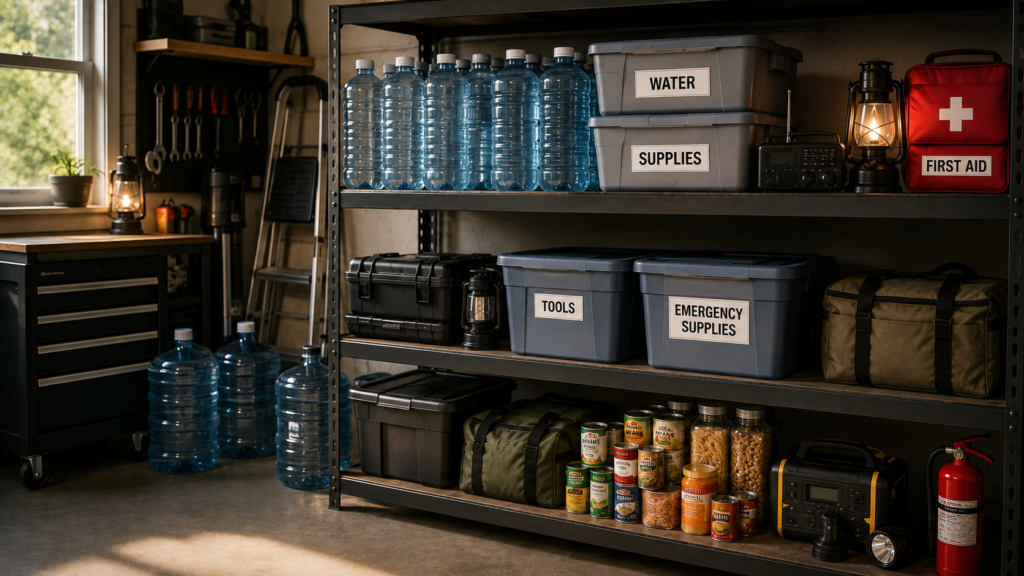
Commercially bottled water is one of the easiest options because it’s already sealed and designed for long-term storage.
For larger quantities, food-grade water containers provide an excellent solution. They are durable, reusable, and can store enough water for an entire household.
Choose a cool, dry location away from direct sunlight, gasoline, pesticides, or household chemicals. Heat and sunlight can shorten storage life and affect water quality over time.
If you’re filling your own containers, use only clean, food-grade containers and fresh drinking water from a safe source.
Label each container with the filling date so you know when it’s time to rotate your supply.
🟩 Pro Tip
Store water in more than one location whenever possible. Keeping part of your supply in the garage, basement, or another safe area reduces the chance of losing everything if one storage area becomes inaccessible.
2.3 Water Purification: Always Have a Backup
Even a large water supply can eventually run out.
That’s why every emergency plan should include at least one backup method for making water safer to drink.
Depending on the situation, this may include:
- Water filters
- Purification tablets
- Boiling water
- Unscented household bleach (used only according to official emergency guidance)
Never assume water from rivers, lakes, or rain barrels is safe to drink without proper treatment.
Having multiple purification options provides valuable flexibility during longer emergencies.
🟥 Common Mistake
Relying on a single source of water.
Prepared households build layers of protection: stored water first, purification methods second, and alternative sources as a final backup.
2.4 Long-Term Water Security
Short-term water storage is essential.
Long-term resilience means having a plan if an emergency lasts weeks instead of days.
Some families collect rainwater for non-drinking uses where local regulations allow. Others install larger storage systems or explore independent water sources for greater self-sufficiency.
The important thing is not relying on a single solution.
The more backup options you have, the more resilient your household becomes.
Key Takeaways
✅ Store at least one gallon of water per person, per day.
✅ Aim for a minimum three-day supply—and build toward two weeks if possible.
✅ Use clean, food-grade containers.
✅ Store water in cool, dark locations.
✅ Rotate your stored water regularly.
✅ Keep at least one reliable water purification method.
✅ Build multiple backup water options whenever possible.
💧 Recommended Resource
Storing water is the first step.
The next is making sure your family has a reliable backup plan if your stored supply eventually runs out.
If you’re interested in learning practical, long-term water solutions—including rainwater collection, purification methods, emergency storage strategies, and independent water sources—our recommended guide is an excellent next step.
👉 Explore the Water Freedom System
3. Emergency Food Storage

Imagine opening your pantry after a major storm.
The grocery stores are closed.
Roads are blocked.
Supply trucks haven’t arrived.
For a few days—or even a couple of weeks—your family will rely on whatever is already inside your home.
That’s why every emergency plan should include a well-stocked pantry built around foods your family already enjoys eating. A simple, organized food reserve can provide comfort, nutrition, and peace of mind while normal services recover.
The goal isn’t to stockpile years of food overnight. It’s to gradually build a pantry that supports your family through short-term disruptions while reducing unnecessary waste.
3.1 The Basics
A practical emergency pantry should include:
- Shelf-stable foods your family already eats
- Drinking water for food preparation
- A manual can opener
- Foods that require little or no cooking
- A simple rotation system to keep supplies fresh
Rather than buying unfamiliar survival meals, many preparedness experts recommend gradually expanding your everyday pantry so you’re always prepared without changing your normal shopping habits.
🟩 Pro Tip
Every grocery trip is an opportunity to strengthen your emergency pantry. Buying just a few extra shelf-stable items each week is often more affordable—and more sustainable—than trying to build a large food reserve all at once.
Want to Learn More?
Food storage is one of the most important parts of emergency preparedness—and it’s a topic worth exploring in more detail.
In our complete guide, you’ll learn:
- How to build a deep pantry
- Which foods last the longest
- Common food storage mistakes
- Rotation methods that reduce waste
- Long-term storage tips
- Traditional preservation techniques
👉 Read our complete Emergency Food Storage Guide
Recommended Resource
If you’re interested in traditional food preservation methods, forgotten long-lasting foods, and practical techniques used before refrigeration, we also recommend exploring
4. Power Outages: Be Ready Before the Lights Go Out
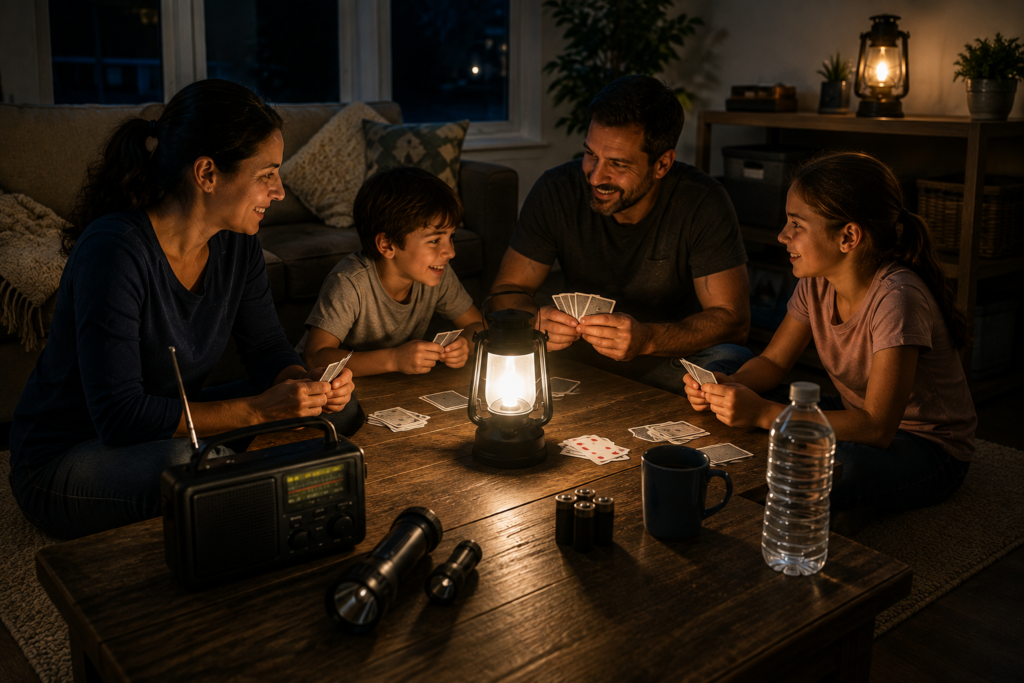
Imagine the power goes out just after dinner.
The lights disappear.
The Wi-Fi stops working.
Your phone battery is already below 20%.
The refrigerator begins warming up.
Outside, your neighborhood is completely dark.
For some emergencies, electricity returns within an hour. For others, it may take days.
Knowing what to do during those first few hours can protect your food, preserve your devices, and help keep your family safe and comfortable until power is restored.
4.1 The First Hour Matters
The first hour after a power outage often determines how smoothly the rest of the event will go.
Instead of rushing to solve every problem at once, focus on protecting the essentials.
Check that everyone in your household is safe, gather your flashlights, and avoid opening the refrigerator or freezer unless absolutely necessary. If severe weather caused the outage, continue monitoring official alerts using a battery-powered or hand-crank radio whenever possible.
A calm response during the first hour can prevent unnecessary food loss, preserve battery life, and reduce stress for the entire family.
4.2 Safe Lighting
One of the biggest mistakes people make during a blackout is relying on candles.
While candles may seem convenient, they significantly increase the risk of accidental fires—especially if children or pets are present.
Instead, keep several reliable lighting options available throughout your home.
Good choices include:
- LED flashlights
- Rechargeable lanterns
- Headlamps for hands-free lighting
- Battery-powered camping lanterns
Store extra batteries in a cool, dry location and periodically test your equipment to ensure everything is working properly.
4.3 Keep Food Safe
During a power outage, every time you open the refrigerator or freezer, cold air escapes.
Keeping the doors closed as much as possible helps preserve food safely for much longer.
As a general guideline:
| Appliance | Safe Time Without Power |
| Refrigerator | About 4 hours |
| Full Freezer | Up to 48 hours |
| Half-full Freezer | About 24 hours |
If you’re unsure whether refrigerated food remained at a safe temperature, it’s always better to throw it away than risk foodborne illness.
4.4 Stay Connected
Power outages often affect more than electricity.
Internet service may stop working, Wi-Fi routers shut down, and mobile networks can become overloaded during major emergencies.
Prepare alternative ways to receive important information, such as:
- A battery-powered or hand-crank emergency radio
- Fully charged power banks
- Printed emergency contact numbers
- Wireless Emergency Alerts enabled on your phone
Reliable information helps you make better decisions while avoiding unnecessary panic.
4.5 Keep Your Devices Powered
Your smartphone quickly becomes one of your most valuable tools during an emergency.
Use it wisely.
To extend battery life:
- Enable Low Power Mode.
- Lower your screen brightness.
- Close unnecessary apps.
- Avoid streaming videos or downloading large files.
- Charge devices immediately if temporary power returns.
It’s also a good idea to unplug sensitive electronics during an outage. When electricity returns, sudden power surges can damage televisions, computers, and other electronic devices.
4. 6 Prepare for Extreme Temperatures
A prolonged power outage isn’t just about darkness.
Depending on the season, your home may become dangerously hot or cold.
During Hot Weather
- Stay hydrated.
- Close blinds and curtains to reduce heat.
- Spend time on lower floors if your home has multiple levels.
- Use battery-powered fans if available.
- Limit unnecessary physical activity during the hottest hours of the day.
During Cold Weather
- Dress in layers.
- Keep doors to unused rooms closed.
- Use blankets and sleeping bags to retain body heat.
- Avoid using outdoor grills or fuel-burning equipment indoors, as they can produce dangerous carbon monoxide.
⏱️ First Hour Checklist
When the power goes out:
✔ Check on everyone in your household.
✔ Use flashlights instead of candles.
✔ Keep refrigerator and freezer doors closed.
✔ Listen for official emergency updates.
✔ Conserve your phone battery.
✔ Unplug sensitive electronics.
✔ Stay calm and avoid unnecessary travel if severe weather is still occurring.
🟦 Did You Know?
Many food losses during power outages happen simply because refrigerator and freezer doors are opened too often. Keeping them closed can preserve safe temperatures for several hours—and in the case of a full freezer, up to two days.
🟥 Common Mistake
Waiting until the power goes out to look for flashlights, batteries, or phone chargers.
A few minutes of preparation before a storm arrives can save hours of frustration later.
🟩 Pro Tip
Whenever severe weather is forecast, treat it as a reminder to prepare. Fully charge your phones, rechargeable lanterns, and power banks, refill any essential medical devices, and make sure your emergency kit is easy to access.
Key Takeaways
✅ Keep multiple flashlights and spare batteries at home.
✅ Avoid using candles whenever possible.
✅ Keep refrigerator and freezer doors closed.
✅ Maintain several ways to receive emergency information.
✅ Keep power banks fully charged.
✅ Prepare for both hot and cold weather.
✅ Focus on staying calm during the first hour.
Build Greater Energy Resilience
Power outages can last much longer than expected after major storms, hurricanes, winter weather, or other emergencies.
Learning practical backup power strategies before you need them can make your home more comfortable and resilient during extended outages.
If you’d like to explore DIY home energy projects and practical ways to become less dependent on the electrical grid, this program is an excellent place to start.
👉 Explore the DIY Home Energy Program
5. Home Security During Emergencies

Imagine hearing the sound of breaking glass somewhere down the street.
The power has been out for hours.
Streetlights are dark.
Emergency services are overwhelmed.
Most people think about home security only after an emergency begins—but by then, your options are much more limited.
The best time to strengthen your home’s security is long before you ever need it.
Fortunately, improving your home’s security doesn’t require turning it into a fortress. A few simple upgrades can make your property a far less attractive target while giving your family greater peace of mind.
5.1 Focus on the Basics
A strong home security plan starts with simple, practical improvements.
Prioritize measures that make your home more difficult to access and easier to monitor, such as:
- Reinforcing exterior doors with quality deadbolts.
- Installing motion-activated outdoor lighting.
- Securing sliding doors and accessible windows.
- Locking gates, garages, and outdoor storage buildings.
- Keeping landscaping trimmed to eliminate hiding places.
These improvements are affordable, easy to implement, and provide an extra layer of protection during both everyday life and emergencies.
5.2 Layer Your Security
The most effective home security doesn’t rely on a single device.
Instead, it combines multiple layers that work together.
A well-prepared home may include:
- Motion lighting
- Security cameras
- Door reinforcement
- Alarm systems
- Visible deterrents
- A family security plan
Each layer makes your home a less appealing target while giving your family more time to respond if something unexpected happens.
5.3 Don’t Forget Situational Awareness
One of the most valuable security tools doesn’t require buying anything.
Stay aware of what’s happening around you.
Follow local emergency alerts, know your neighbors, and pay attention to changing conditions during severe weather or other emergencies.
Preparation is about making informed decisions—not living in fear.
🟩 Pro Tip
Walk around your home during the evening. Ask yourself a simple question:
“If I had never seen this house before, where would I try to enter?”
This exercise often reveals weak points that are easy and inexpensive to improve.
🟥 Common Mistake
Many homeowners invest in cameras but overlook basic physical security.
Strong locks, reinforced doors, and good outdoor lighting often provide a greater improvement than expensive technology alone.
Key Takeaways
✅ Reinforce doors and vulnerable entry points.
✅ Install motion-activated exterior lighting.
✅ Lock garages, gates, and outdoor buildings.
✅ Eliminate hiding places around your home.
✅ Combine multiple layers of security.
✅ Stay informed about local conditions during emergencies.
Want to Learn More?
Home security deserves more than a simple checklist.
👉 Read our Home Security Guide
Recommended Resources
Whether you’re looking for a complete emergency home security system or a discreet way to monitor your property while also enjoying your backyard, these resources are worth exploring:
Final Thoughts
Emergency preparedness isn’t about expecting the worst.
It’s about giving your family the confidence to handle the unexpected.
You don’t need to prepare for every possible disaster overnight, and you certainly don’t need to spend thousands of dollars to get started.
The most important step is simply taking the first one.
Create a family emergency plan.
Store enough water for a few days.
Build a small emergency pantry.
Prepare for power outages.
Strengthen your home’s security.
Then continue improving your preparedness one step at a time.
Every improvement you make today is one less problem you’ll have to solve during an emergency.
Preparedness isn’t about fear.
It’s about resilience.
It’s about protecting the people you love.
And it’s about having the peace of mind that comes from knowing you’re ready—no matter what tomorrow brings.
Your Emergency Preparedness Checklist
Before you leave, take a moment to review the essentials:
✅ Understand the risks in your area.
✅ Create a family emergency plan.
✅ Store enough clean drinking water.
✅ Build an emergency food pantry.
✅ Prepare for extended power outages.
✅ Improve your home’s security.
✅ Keep emergency supplies easily accessible.
Remember, preparedness is a journey—not a one-time project.
Even one small improvement this week can make a meaningful difference in the future.
Continue Building Your Emergency Preparedness
Recommended Resources
If you’re ready to strengthen your emergency preparedness even further, these trusted resources are worth exploring:
🛡️ Anti-Looter Kit — Build multiple layers of home protection with emergency-ready security tools.
Discover The Decoupled Bastion Protocol
A Complete Self-Sufficiency System for a More Prepared, Resilient Home
Learn practical skills across food growing, preservation, household preparedness, water, energy and more — organized into one structured system.
Explore the Complete System →
Live free. Stay prepared.
Small actions today create greater confidence tomorrow.
At Freeland Haven, we believe preparedness isn’t about fear—it’s about building a safer, more self-reliant future for yourself and the people you love.