
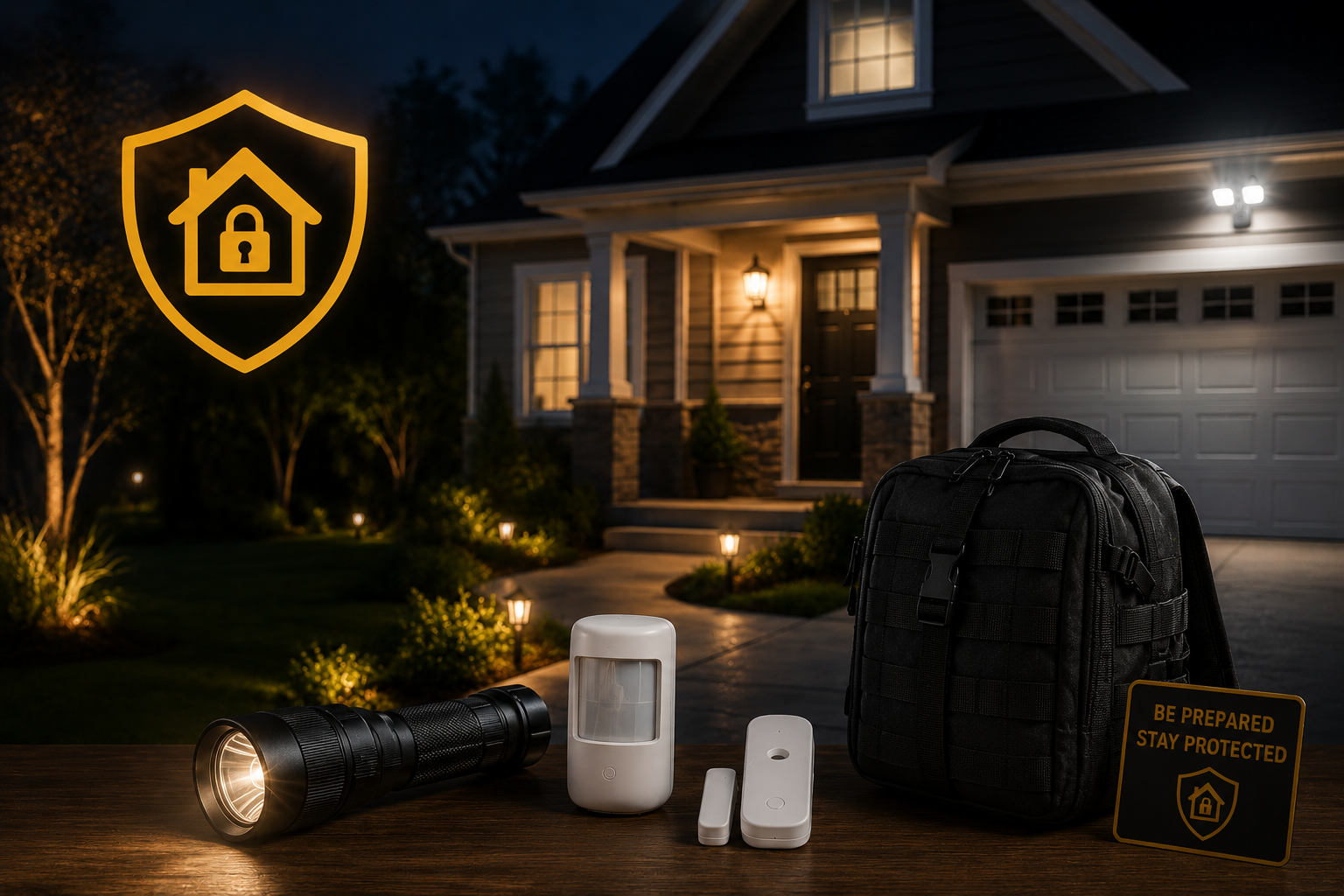
SIMPLE WAYS TO IMPROVE YOUR HOME SECURITY BEFORE AN EMERGENCY
Simple, practical steps to make your home harder to target and give your family more time to respond when normal systems aren’t available.
The sirens start wailing at 2 a.m.
You’re awake in seconds. The power is out. The streetlights are dark. Your phone has little or no signal. Outside, the neighborhood feels unfamiliar in the darkness.
You check your front door.
It’s locked.
But then you start noticing the things you’ve never thought about before.
The strike plate is held by short screws. The windows are standard glass. The garage has an exterior-facing emergency release. The backyard is poorly lit.
Your home was built for convenience.
Not necessarily for emergencies.
The good news is that improving home security doesn’t mean turning your house into a fortress or spending thousands of dollars.
Many useful improvements are simple, inexpensive, and can be completed over a weekend.
More importantly, good emergency security isn’t about relying on one device. It’s about layers.
Lighting can make an approach more visible. Landscaping can remove hiding places. Stronger doors and windows can slow unauthorized entry. Alarms and cameras can provide additional awareness.
And when those layers work together, your home becomes a much less attractive target.
The goal isn’t to live in fear. It’s to be prepared enough that you don’t have to.
1. Start With the Basics: Make Your Home Visible
Before buying security equipment, walk around your property after dark.
Look at your home the way a stranger would.
Are there dark corners around the garage?
Can someone approach a side door without being seen?
Are shrubs blocking windows?
Can you see clearly from inside the house toward the driveway and entrances?
These observations can reveal some of the easiest improvements.
Install Motion-Activated Lighting
Motion-activated lights are one of the simplest ways to improve visibility around a home.
Consider placing them near:
- Front and back doors
- Garage entrances
- Driveways
- Side gates
- Dark pathways
- Other vulnerable access points
The goal isn’t to flood your entire property with light.
It’s to eliminate unexpected dark areas where someone could approach without being easily noticed.
Practical tip: Aim outdoor lights so they illuminate the approach area without creating excessive glare inside the house.
Keep Landscaping Under Control
Landscaping can make a huge difference in visibility.
Dense shrubs immediately beside windows can create places where someone could remain hidden. Tall vegetation can also block your view of doors, walkways, and parts of the yard.
Keep plants around vulnerable entry points trimmed enough to maintain clear sightlines.
You don’t have to remove every shrub.
The goal is simply to avoid creating unnecessary blind spots.
Make Security Visible
Visible signs of preparedness can also contribute to deterrence.
Depending on what you actually have installed, this might include:
- Security signs
- Motion lighting
- Visible cameras
- Doorbell cameras
- Clearly visible locks or reinforced entry hardware
The important principle is simple:
Don’t advertise security measures you don’t actually have.
2. Strengthen the Places Someone Would Actually Try to Enter
Once you’ve improved visibility, look at the physical entry points.
Your front door isn’t the only concern.
Check:
- Front and back doors
- Garage access
- Basement windows
- Ground-floor windows
- Sliding doors
- Side entrances
You don’t necessarily need to replace everything.
Small upgrades can improve the resilience of vulnerable points.
Reinforce Exterior Doors
Start with the doors that provide direct access into your home.
If your exterior doors have weak hardware, consider upgrading the deadbolt and reinforcing the strike area according to the door manufacturer’s specifications.
A stronger strike plate and properly installed longer screws can help connect the hardware more securely to the structural framing rather than relying only on the thin door trim.
The important part: installation matters. A quality lock installed incorrectly isn’t much of an improvement.
Consider an Interior Door Brace
A properly designed door brace or security bar can provide an additional layer of resistance from inside the home.
These devices are particularly useful because they generally don’t require permanent modifications to the door.
Keep them somewhere accessible and make sure everyone in the household knows how they work.
Strengthen Vulnerable Windows
Windows are another area worth inspecting.
Security film can help hold shattered glass together after impact. It doesn’t make glass impossible to break, but it can make creating a clear opening more difficult.
If you’re working with a limited budget, prioritize:
- Ground-floor windows
- Basement windows
- Windows close to exterior doors
- Other easily accessible windows
Don’t Forget Sliding Doors
Sliding doors can have different vulnerabilities from conventional hinged doors.
A properly fitted secondary locking device can provide additional protection.
For some sliding doors, a correctly sized security bar or dowel can prevent the door from sliding open.
Measure first. The device should fit securely without interfering with normal operation or emergency egress.
3. Check Your Garage
Garages often contain tools, ladders, equipment, and another potential route into the house.
Inspect:
- Garage door locks
- Interior access door
- Windows
- Emergency-release mechanism
- Side doors
- Connecting doors into the home
Important: Don’t disable or permanently interfere with emergency-release mechanisms. Instead, inspect the system and use manufacturer-approved security measures to address vulnerabilities.
Also consider keeping tools and ladders secured rather than leaving them readily accessible outside.
Secure Gates and Outbuildings
A locked house with an unlocked shed isn’t much of a complete security plan.
Check:
- Gates
- Sheds
- Workshops
- Detached garages
- Storage areas
Quality padlocks and properly secured gates are inexpensive ways to reduce unnecessary access to your property.
And remember what’s inside those buildings.
Ladders, tools and other equipment can become useful to someone attempting to access another part of the property.
4. Think in Layers, Not in One Perfect Security Device
This is where many homeowners make a mistake.
They look for one product that will secure everything.
There isn’t one.
A better approach is to think in layers:
Layer 1 — Deterrence
Make your home visibly less attractive as a target.
- Exterior lighting
- Clear landscaping
- Visible security equipment
- Locked gates
Layer 2 — Delay
Make unauthorized entry more difficult.
- Reinforced doors
- Quality deadbolts
- Door braces
- Window security measures
- Secured sliding doors
Layer 3 — Detection
Know when something is happening.
- Motion sensors
- Door and window alarms
- Cameras
- Perimeter alerts
Layer 4 — Response
Have a plan for what your household does when an alarm or suspicious activity occurs.
This final layer is often overlooked.
Security equipment is only useful if everyone knows what to do when it activates.
These measures reinforce the actual points of entry. They’re the physical barriers that slow down anyone who ignores the deterrents.
5. What Happens When the Power or Internet Goes Down?
This deserves special attention in an emergency preparedness plan.
Some security systems and connected devices may depend on electricity, internet, Wi-Fi or cellular connectivity, so it’s worth knowing what continues to work during an outage.
During an ordinary day, that’s convenient.
During a major storm or extended outage, those dependencies can become limitations.
That doesn’t mean connected security systems are useless.
It means they shouldn’t necessarily be your only layer of protection.
Consider having some security measures that remain useful even when your normal digital infrastructure isn’t available.
This is where physical security tools, independent alarms, backup lighting and other preparedness equipment can complement a conventional security setup.
Don’t Forget Emergency Lighting
Home security isn’t only about keeping unwanted people out.
It’s also about making sure your family can see what is happening when normal lighting isn’t available.
A power outage can leave familiar spaces unexpectedly dark — including stairways, garages, driveways, yards and entryways.
That’s why a reliable flashlight belongs in a well-prepared emergency kit. Ready.gov specifically recommends flashlights and extra batteries among the supplies to have available for power outages.
Keep at least one flashlight somewhere everyone in the household can reach quickly. Consider additional ones for your bedroom, vehicle and emergency supplies.
Looking for a dedicated emergency flashlight?
A compact tactical flashlight can serve as part of a broader preparedness setup — useful during power outages, roadside emergencies, camping and nighttime situations around the home.
👉 See the Tactical Flashlight →
6. When You Want a More Complete Security Layer
If you’ve already handled the inexpensive basics and want to add another layer of protection, a dedicated emergency security system may make sense.
One option worth exploring is the Anti-Looter Kit, which is designed around additional home-protection tools such as motion detection, door and window alarms, perimeter alerts and other security equipment intended for situations where conventional systems may not be available.
It isn’t a replacement for good locks, lighting, a household emergency plan or appropriate local security services.
Think of it as another layer.
The Anti-Looter Kit focuses on practical physical security, using motion sensors, door alarms, perimeter alerts, and other simple tools that continue to work independently of your home’s internet connection.
👉 See What’s Included In The Anti-Looter Kit →
7. Build Your Home Security Plan Around Your Property
Not every home has the same vulnerabilities.
A suburban house with an attached garage has different considerations from a rural property with a detached workshop.
A ground-floor apartment is different from a two-story home.
A property surrounded by dense vegetation is different from one with open sightlines.
Quick Checklist: Your Home Security To-Do List
Save this checklist and walk through your property when you have time.
Exterior
☐ Motion lighting near important entrances
☐ Clear sightlines around doors and windows
☐ Landscaping trimmed around vulnerable areas
☐ Gates secured
☐ Sheds and outbuildings locked
☐ Ladders and tools stored securely
Doors
☐ Exterior doors inspected
☐ Deadbolts functioning properly
☐ Strike plates securely installed
☐ Door frames inspected
☐ Interior door brace considered where appropriate
Windows
☐ Ground-floor windows inspected
☐ Basement windows inspected
☐ Sliding doors have secondary protection
☐ Security film considered for vulnerable glass
Garage
☐ Garage access points inspected
☐ Interior garage door secured
☐ Emergency-release mechanism checked
☐ Tools and ladders secured
Emergency Layer
☐ Motion sensors considered
☐ Door/window alarms considered
☐ Cameras considered
☐ Backup lighting available
☐ Household emergency plan established
FAQ
Start with visibility.
Exterior lighting, clear sightlines and secured entry points are relatively simple improvements that can make a meaningful difference without requiring a major investment.
Do I need an expensive security system?
Not necessarily.
Start with the vulnerabilities you can address yourself. You can gradually add additional layers such as cameras, alarms, sensors and other security equipment as your needs and budget allow.
Are cameras enough to secure a home?
Cameras provide awareness and can document activity, but they are only one layer.
A more complete approach combines detection with physical security and a household response plan.
If you use connected security cameras, treat cybersecurity as part of your home-security plan.
Before installing a connected camera:
- Change the default password.
- Keep the camera and app updated.
- Use two-factor authentication when available.
- Check privacy and sharing settings.
- Understand whether footage depends on internet access.
What should I do during a suspected break-in?
Prioritize your family’s safety.
Move to a secure location if possible, avoid unnecessary confrontation, and contact emergency services when appropriate.
Your emergency plan should establish in advance where your household will go and how everyone will communicate.
Should I focus on security or emergency preparedness first?
You don’t really have to choose.
Good preparedness incorporates both.
A home can have excellent locks but still be poorly prepared for a prolonged blackout. Likewise, having emergency supplies doesn’t help much if the household hasn’t considered basic security and communication.
The strongest approach is layered preparedness.
Ready to Take the Next Step?
Improving your home’s security doesn’t have to happen all at once. Every small upgrade—better lighting, stronger doors, smarter monitoring, and layered protection—helps create a safer, more resilient home.
If you’re looking for practical tools to strengthen your emergency preparedness, here are two resources worth exploring:
🛡️ Anti-Looter Kit
👉 Explore the Anti-Looter Kit – A comprehensive home security system designed to help protect your property during emergencies with motion sensors, perimeter alarms, door protection, and other off-grid security tools.
👉 See the Tactical Flashlight → A compact tactical flashlight can serve as part of a broader preparedness setup — useful during power outages, roadside emergencies, camping and nighttime situations around the home.
Prepared today. Confident tomorrow.
8. Final Thoughts
Home security isn’t about turning your house into a fortress.
It’s about removing easy vulnerabilities before you need to think about them under pressure.
Start with the basics.
Improve the lighting.
Clear the sightlines.
Check your doors.
Inspect your windows.
Secure the garage.
Lock the gates.
Then think about detection and backup systems.
And if you eventually want to add a more comprehensive layer of emergency security, products such as the Anti-Looter Kit can be considered as part of that larger strategy.
You don’t have to do everything this weekend.
Start with one improvement. Then another.
Because preparedness isn’t about predicting exactly what will happen.
It’s about making sure that when something unexpected does happen, you’re not starting from zero.
Prepared today. Confident tomorrow.
Live free. Grow food. Build freedom.
1 Comentário