
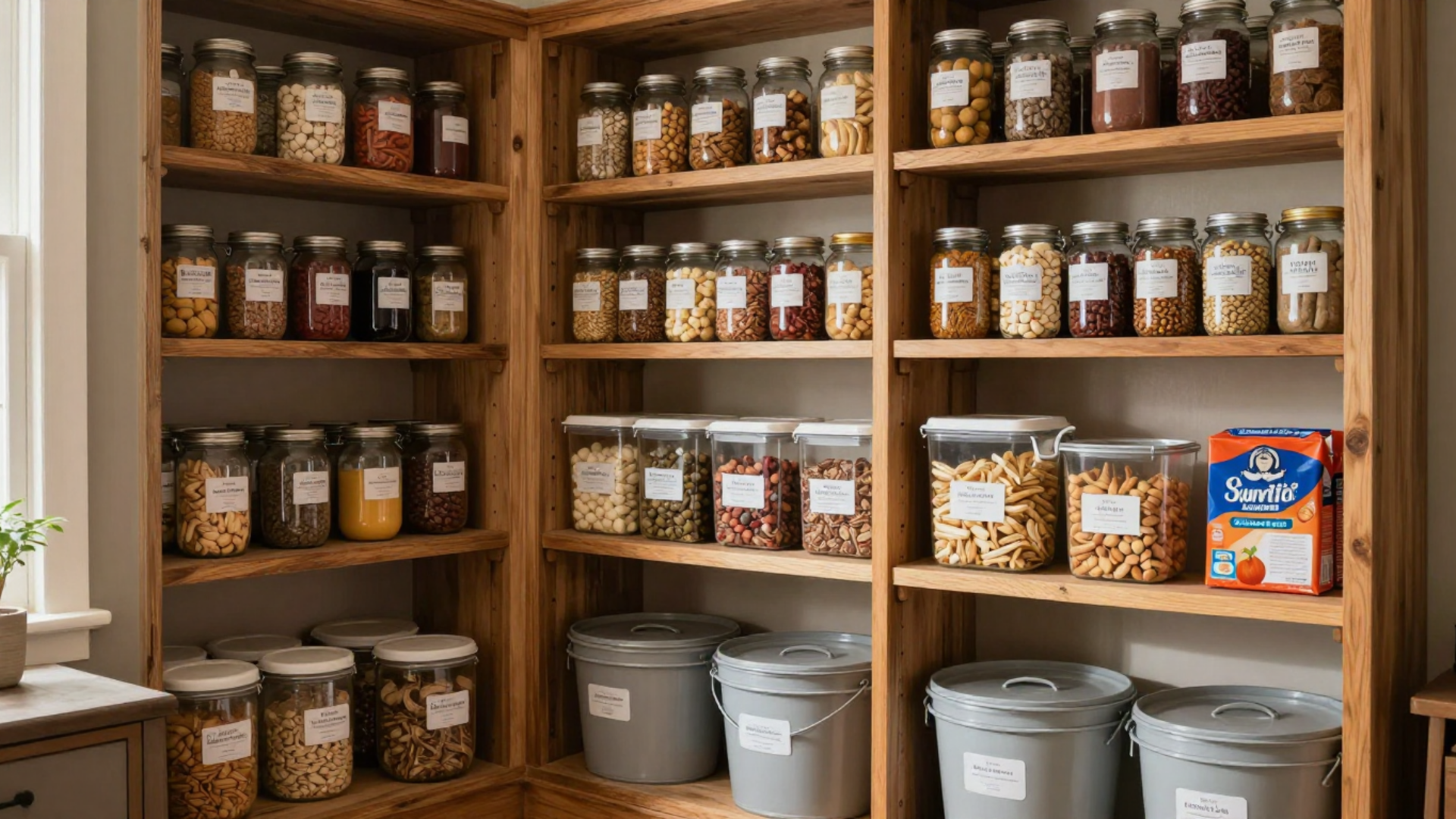
How to Stock a Survival Pantry on a Budget
The weather alert came just three days before the hurricane made landfall. By the time the governor declared a state of emergency, grocery store shelves were nearly empty. Bottled water disappeared first. Then canned food, rice, pasta, and bread. Within hours, even the basics were gone.
Moments like these remind us of an important truth: the grocery store isn’t a backup plan.
The good news? Building a survival pantry doesn’t require thousands of dollars, a huge storage room, or expensive freeze-dried meals. In fact, the most effective emergency pantry is often built with the same everyday foods your family already enjoys—purchased gradually, stored properly, and rotated regularly.
A well-stocked pantry isn’t about preparing for doomsday. It’s about protecting your family from life’s unexpected disruptions—whether that’s a severe storm, temporary job loss, supply chain problems, rising food prices, or simply a month when money is tight. Every extra bag of rice, every can of vegetables, and every gallon of stored water becomes an investment in peace of mind.
In this guide, you’ll learn exactly how to build a practical survival pantry on almost any budget, which foods offer the best value, how to store them safely for years, and how to create a food reserve your family will actually use.
2. How to Build a Survival Pantry from Scratch
A survival pantry isn’t just a larger version of your kitchen cabinets—it’s a carefully planned food reserve designed to keep your family fed during unexpected disruptions.
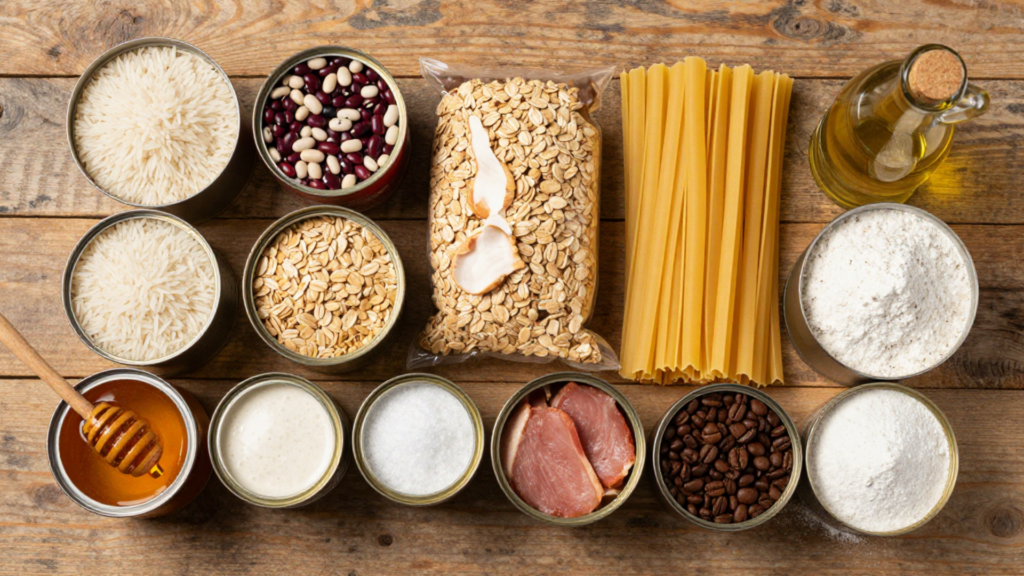
Instead of storing unfamiliar emergency rations you’ll never eat, build your pantry around the foods your family already enjoys every week. White rice, beans, pasta, oats, canned vegetables, canned meats, cooking oil, flour, coffee, and spices are all excellent foundations.
The golden rule is simple:
Store what you eat. Eat what you store.
Following this principle makes food rotation effortless, reduces waste, and ensures your emergency food supply is always fresh.
Start Small and Build Consistently
One of the biggest misconceptions about preparedness is believing you need hundreds of dollars to get started.
You don’t.
A survival pantry grows one grocery trip at a time.
Add one extra bag of rice.
One extra can of vegetables.
One extra jar of peanut butter.
Those small purchases quickly become weeks—and eventually months—of food security.
Beginner Tip: A pantry built slowly is often better organized, easier to maintain, and far less expensive than buying everything at once.
Common Mistake
Many beginners buy large quantities of specialty survival foods they’ll never actually eat.
Buckets of wheat berries, powdered eggs, or dehydrated meals may look impressive, but if your family doesn’t normally cook with them, they often sit untouched.
Your pantry should support your everyday lifestyle—not create an entirely new one.
🍅 Grow More, Store More
A stocked pantry becomes even more valuable when you can replenish it yourself.
If you’re interested in growing food in your own backyard, even with limited space, this guide is worth exploring.
👉 Explore The Self-Sufficient Backyard
3. Why Every Family Should Build a Survival Pantry
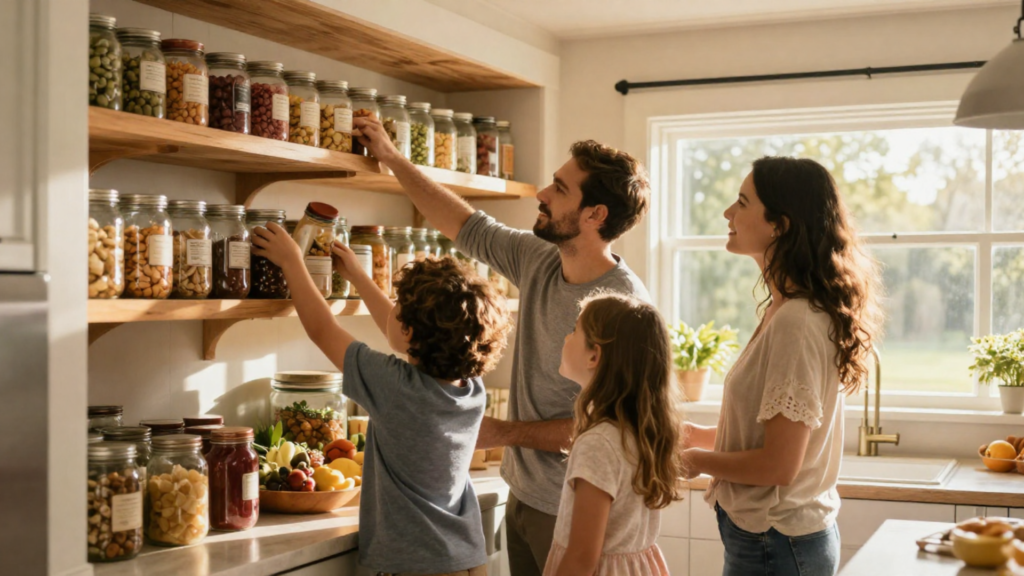
A survival pantry isn’t just about preparing for emergencies. It’s about creating stability in an unpredictable world.
Food prices change. Storms interrupt deliveries. Unexpected expenses happen. Jobs can change overnight. Having extra food at home gives your family something incredibly valuable: options.
Instead of rushing to crowded grocery stores or paying inflated prices during a crisis, you’ll already have what you need sitting on your shelves.
Protection Against Rising Food Prices
One of the biggest benefits of a survival pantry has nothing to do with disasters.
It’s inflation.
When you buy pantry staples during sales or in bulk, you’re essentially locking in today’s prices.
The rice you purchase today for $1.00 per pound may cost $1.50 six months from now—but your pantry is already stocked.
Every sale becomes an opportunity to save money.
More Convenience, Less Stress
A well-stocked pantry reduces last-minute grocery trips.
Forgot to buy pasta?
Need dinner during a snowstorm?
Unexpected guests?
Instead of driving to the store, you simply walk to your pantry.
Over time, that saves fuel, time, and a surprising amount of stress.
Real Peace of Mind
The greatest benefit isn’t the food itself.
It’s knowing your family has a cushion when life becomes unpredictable.
Whether it’s a severe storm, temporary unemployment, supply chain disruptions, or an unexpected financial setback, your pantry buys you time to make thoughtful decisions instead of reacting in panic.
That’s what preparedness is really about.
Did You Know?
The average American household wastes thousands of dollars on impulse grocery purchases over time.
Keeping a well-organized pantry—and following a simple rotation system—helps reduce waste because you’re buying intentionally and using what you already have.
Stop Throwing Food Away
Every bag of rice, beans, pasta, or dehydrated food that loses freshness is money wasted.
A vacuum sealer helps preserve flavor, reduce spoilage, and maximize the life of your emergency food storage.
See why many preparedness enthusiasts include a vacuum sealer in their pantry setup.
4. How Much Food Should You Actually Store?
One of the biggest mistakes beginners make is trying to build a year’s worth of food overnight.
Don’t.
A realistic goal is much more effective.
Start with two weeks of food for everyone in your household.
Once you’ve reached that milestone, expand to one month, then three months, and eventually six months if your space and budget allow.
For most families, a three-month pantry provides an excellent balance between preparedness, affordability, and available storage space.
It covers many common situations, including:
- Severe weather
- Temporary job loss
- Supply chain disruptions
- Illness
- Unexpected financial emergencies
Building gradually also allows you to learn what your family actually eats, making food rotation much easier.
Recommended 3-Month Food Supply (Per Adult)
| Category | Monthly Amount | 3-Month Total |
| Grains | 20 lbs | 60 lbs |
| Legumes | 5 lbs | 15 lbs |
| Canned Vegetables | 15 cans | 45 cans |
| Canned Fruits | 10 cans | 30 cans |
| Canned Meat | 5 cans | 15 cans |
| Cooking Oil | 1 bottle | 3 bottles |
| Salt, Sugar & Spices | As needed | Bulk |
| Shelf-Stable Milk | 1 gallon | 3 gallons |
| Water | 15 gallons | 45 gallons |
Beginner Tip
Don’t think in terms of buying three months of food.
Think in terms of your next grocery trip.
Every time you shop, ask yourself:
“What one extra item can I buy today that my family will definitely eat?”
That simple habit builds a fully stocked pantry surprisingly fast.
Budget Example
Imagine spending just $20 extra each week on pantry staples.
That’s:
- about $80 per month
- roughly $1,000 per year
Instead of disappearing on impulse purchases, that money becomes a long-term food reserve your family can rely on.
Preparedness isn’t built in a weekend.
It’s built one grocery trip at a time.
🥫 Looking Beyond Grocery Store Foods?
Many survivalists also learn how to identify nutrient-rich foods that grow naturally.
👉 Discover The Lost Superfoods Guide
5. 25 Pantry Staples Every Survival Pantry Should Have
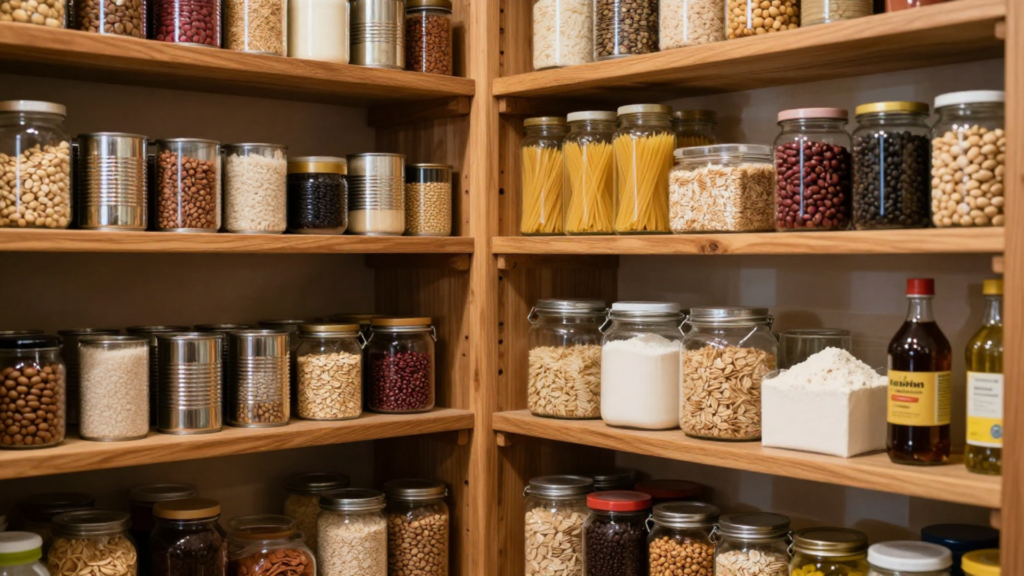
A well-stocked survival pantry doesn’t need hundreds of different products.
It needs a small collection of reliable foods that are affordable, nutritious, easy to store, and versatile enough to create dozens of different meals.
Start with these pantry staples before buying specialty emergency foods.
Grains — The Foundation of Every Pantry
Grains provide inexpensive calories, are easy to store, and form the base of countless meals.
Best choices:
- White Rice
- Rolled Oats
- Pasta
- Flour
- Popcorn Kernels
White rice remains one of the best long-term storage foods available. When stored properly, it can last decades while providing an inexpensive source of energy.
Rolled oats are another pantry favorite because they’re useful for breakfast, baking, and even homemade granola.
Pasta is affordable, easy to rotate, and pairs with almost any canned protein or vegetable.
Pro Tip: Buy grains in bulk only if you have a plan to store them properly. Heat, moisture, oxygen, and pests will ruin food long before its expected shelf life.
Beans and Legumes — Affordable Protein
Beans are one of the most cost-effective survival foods you can buy.
Excellent options include:
- Black Beans
- Pinto Beans
- Lentils
- Split Peas
- Chickpeas
Lentils deserve special attention because they cook quickly and don’t require overnight soaking, making them ideal during power outages or emergencies.
Canned Foods — Ready When You Need Them
Canned foods require little or no preparation and can be eaten even if you lose power.
Focus on:
- Tomatoes
- Vegetables
- Fruit
- Chicken
- Tuna
- Salmon
- Beans
Choose foods your family already enjoys so they naturally rotate through everyday meals.
Healthy Fats
Calories matter during emergencies.
Healthy fats help meals stay satisfying while providing essential energy.
Good pantry choices include:
- Olive Oil
- Coconut Oil
- Vegetable Oil
- Ghee
Always store oils in cool, dark locations to maximize shelf life.
Sweeteners and Everyday Essentials
Don’t overlook the foods that make meals enjoyable.
Include:
- Honey
- Sugar
- Salt
- Vinegar
- Soy Sauce
- Coffee
- Tea
- Basic Spices
These items improve flavor, boost morale, and make simple pantry meals much more enjoyable.
Don’t Forget Comfort Foods
Preparedness isn’t just about calories.
It’s also about maintaining a sense of normal life.
A few familiar treats can make a difficult situation much easier.
Consider storing:
- Hot Chocolate
- Popcorn
- Peanut Butter
- Crackers
- Chocolate
- Hard Candy
Small comforts make a surprisingly big difference during stressful times.
Common Mistake
Many beginners focus only on shelf life.
Instead, ask yourself:
“Will my family actually enjoy eating this?”
A survival pantry should support your normal eating habits—not replace them.
6. Best Food Storage Methods That Actually Work
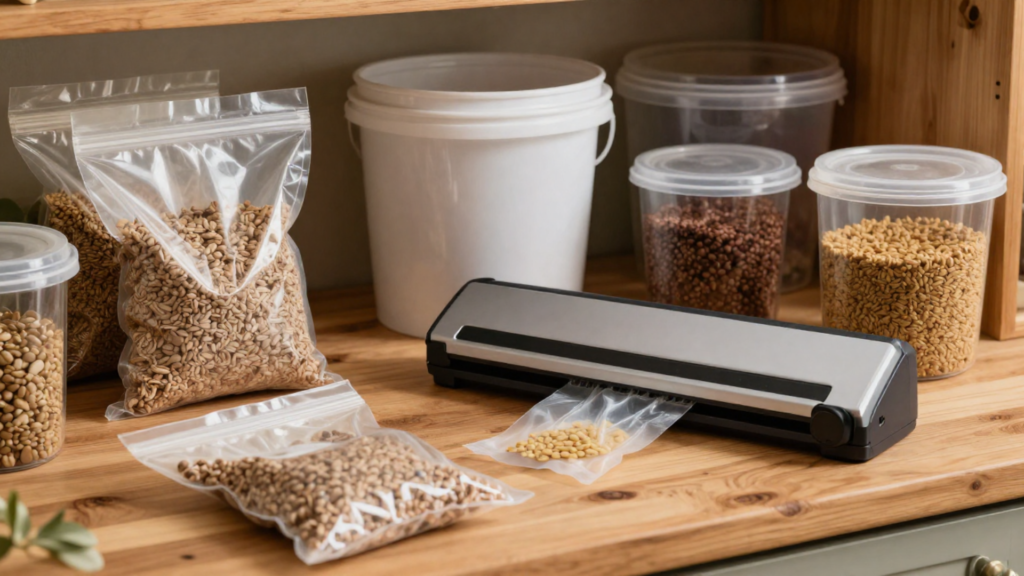
Buying food is only half the job.
Storing it correctly is what protects your investment.
A bag of rice that should last 25 years can spoil in just a few months if it’s exposed to heat, moisture, insects, or oxygen.
Long-term food storage comes down to controlling four simple enemies:
- Heat
- Moisture
- Light
- Oxygen
The more effectively you control these four factors, the longer your food will stay fresh.
Mylar Bags + Oxygen Absorbers
For long-term storage of grains and legumes, this remains the gold standard.
Foods such as:
- White rice
- Dry beans
- Lentils
- Oats
- Pasta
can remain usable for decades when stored correctly.
The process is simple:
- Fill the mylar bag.
- Add the correct oxygen absorber.
- Heat-seal the bag.
- Store it inside a food-grade bucket.
This combination protects against insects, moisture, oxygen, and light.
Vacuum Sealing
Vacuum sealing is one of the easiest ways to extend the shelf life of everyday pantry foods.
It’s especially useful for:
- Flour
- Pasta
- Coffee
- Dried fruit
- Nuts
- Baking ingredients
It also helps save space and keeps your pantry much more organized.
🥫 Keep Your Food Fresh for Longer
A well-stocked pantry isn’t just about having enough food—it’s also about preventing waste.
A vacuum sealer can help extend the shelf life of dry foods, dehydrated ingredients, and emergency supplies while keeping them organized and protected from moisture.
If you’re building a long-term emergency pantry, this is one of the most practical tools you can add.
👉 See how the SavourFresh Vacuum Sealer works.
Airtight Containers
Not every food needs mylar bags.
For foods you use frequently, clear airtight containers make daily cooking much easier.
Excellent choices include:
- Rice
- Sugar
- Flour
- Oats
- Pasta
- Coffee
Being able to see how much food remains also helps you know when it’s time to restock.
Food-Grade Buckets
Buckets are one of the most affordable ways to store large quantities of food.
When combined with mylar bags and oxygen absorbers, they protect against:
- rodents
- insects
- moisture
- physical damage
Always choose food-grade buckets designed for food storage.
Pantry Storage Checklist
✅ Store food below 70°F (21°C)
✅ Keep food out of direct sunlight.
✅ Label every container.
✅ Rotate food regularly.
✅ Keep food off the floor.
✅ Check for pests every month.
✅ Store similar foods together.
✅ Inspect containers for damage.
Common Mistake
Many beginners spend hundreds of dollars buying food…
…then store everything in thin plastic bags inside a hot garage.
Proper storage is just as important as the food itself.
A few inexpensive storage supplies can protect hundreds—or even thousands—of dollars’ worth of food.
7. Where Should You Store Your Survival Pantry?
The best survival pantry isn’t necessarily the biggest one.
It’s the one that keeps your food cool, dry, organized, and easy to access.
Choosing the right storage location can dramatically extend the life of your food without costing you anything.
When possible, look for areas that stay consistently cool throughout the year and are protected from direct sunlight and excess humidity.
Best Places to Store Emergency Food
Excellent options include:
- Basement or root cellar
- Interior closet
- Under-the-stairs storage
- Spare bedroom closet
- Climate-controlled pantry
- Cool utility room
These locations usually maintain stable temperatures and protect food from heat and moisture.
Places to Avoid
Some storage areas can shorten shelf life dramatically.
Avoid storing food:
- In attics
- In non-insulated garages
- Next to furnaces or water heaters
- Under kitchen sinks
- Anywhere exposed to direct sunlight
- In damp basements without moisture control
Heat is one of the fastest ways to ruin stored food.
As a general rule, every increase in storage temperature significantly reduces shelf life.
Keep Food Off the Floor
One simple habit can prevent a lot of problems.
Always store food:
- On shelves
- On wooden pallets
- On heavy-duty storage racks
Keeping food elevated protects it from:
- Flooding
- Moisture
- Dirt
- Rodents
- Easier cleaning
Pro Tip: Don’t keep your entire food supply in a single location. Split your pantry between two storage areas whenever possible. If one area is damaged by flooding, pests, or another unexpected problem, you’ll still have access to the rest of your food.
Organize by Category
As your pantry grows, organization becomes more important than storage space.
Group foods together.
For example:
🥫 Canned Goods
🌾 Grains
🫘 Beans & Legumes
🥛 Baking Supplies
🥫 Oils & Condiments
💧 Water Storage
This makes shopping, rotation, and meal planning much easier.
Quick Storage Checklist
✅ Cool location
✅ Dry environment
✅ No direct sunlight
✅ Food stored off the floor
✅ Good airflow
✅ Easy access
✅ Clearly labeled containers
✅ Regular inspections
Common Mistake
Many beginners focus on buying food…
Experienced preppers focus on protecting it.
A well-organized pantry not only lasts longer but also makes everyday cooking faster and helps reduce waste.
8. How to Rotate Your Pantry Without Wasting Food
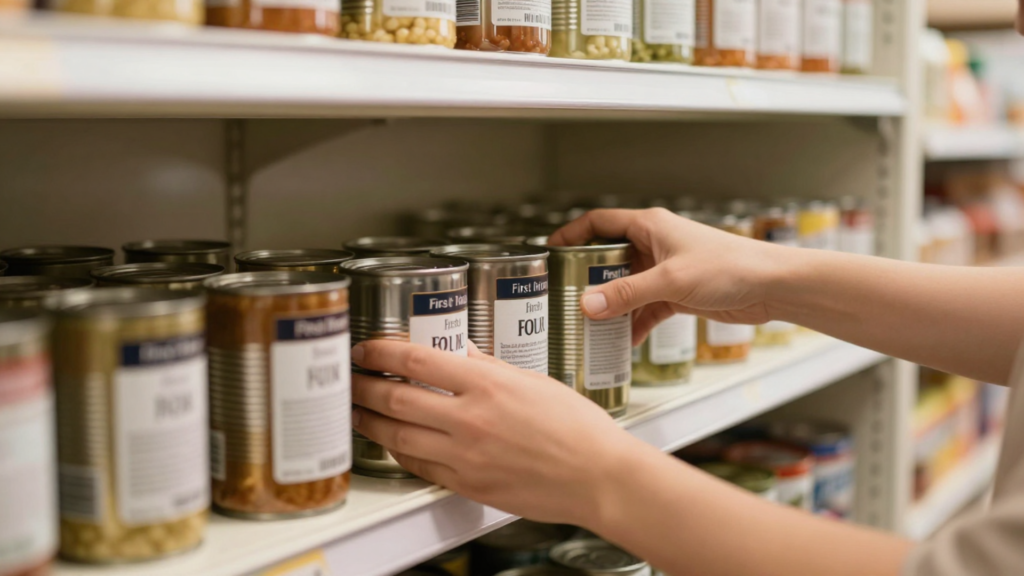
A survival pantry only works if the food inside it stays fresh.
Without a simple rotation system, food gets pushed to the back of the shelf, forgotten, and eventually thrown away.
The good news?
Keeping your pantry organized takes only a few minutes each month.
Use the FIFO Method
The easiest system is called FIFO:
First In, First Out.
It’s simple:
- Place newly purchased food behind older items.
- Always take food from the front first.
- Replace what you use during your next grocery trip.
This keeps your pantry constantly refreshed without wasting food.
Label Everything
Every container should have at least:
- Purchase date
- Expiration date
- Food name
Simple masking tape and a permanent marker work perfectly.
The easier it is to identify your food, the easier it becomes to rotate.
Organize Shelves by Frequency of Use
Think about how often you use each item.
A simple layout works best:
Top Shelves
- Long-term storage
- Emergency supplies
- Backup ingredients
Middle Shelves
- Daily pantry items
- Canned food
- Pasta
- Rice
- Coffee
- Oils
These should be the easiest shelves to reach.
Bottom Shelves
- Water
- Food-grade buckets
- Heavy containers
- Bulk storage
Keeping heavy items low also makes your pantry safer.
Schedule a Monthly Pantry Check
You don’t need to inspect your pantry every week.
Once a month is usually enough.
During your inspection:
✅ Check expiration dates
✅ Rotate older food forward
✅ Replace anything you’ve used
✅ Look for pests
✅ Check bucket lids and container seals
✅ Wipe shelves if needed
The entire process usually takes less than 20 minutes.
Quick Rotation Checklist
✔ First In, First Out
✔ Labels on everything
✔ Older food in front
✔ Replace used items
✔ Monthly inspection
✔ Clean shelves
✔ Check for pests
✔ Verify container seals
Common Mistake
Many people build a beautiful emergency pantry…
…and never cook from it.
The best survival pantry becomes part of your normal kitchen.
Cook with it.
Replace what you use.
Repeat.
That way your emergency food is always fresh.
Pro Tip: Try preparing one meal every week using only ingredients from your pantry.
You’ll quickly discover:
- what your family enjoys,
- what you should buy more of,
- and what isn’t worth storing.
It’s the easiest way to build confidence before an emergency ever happens.
9. How to Build a Survival Pantry on a Tight Budget
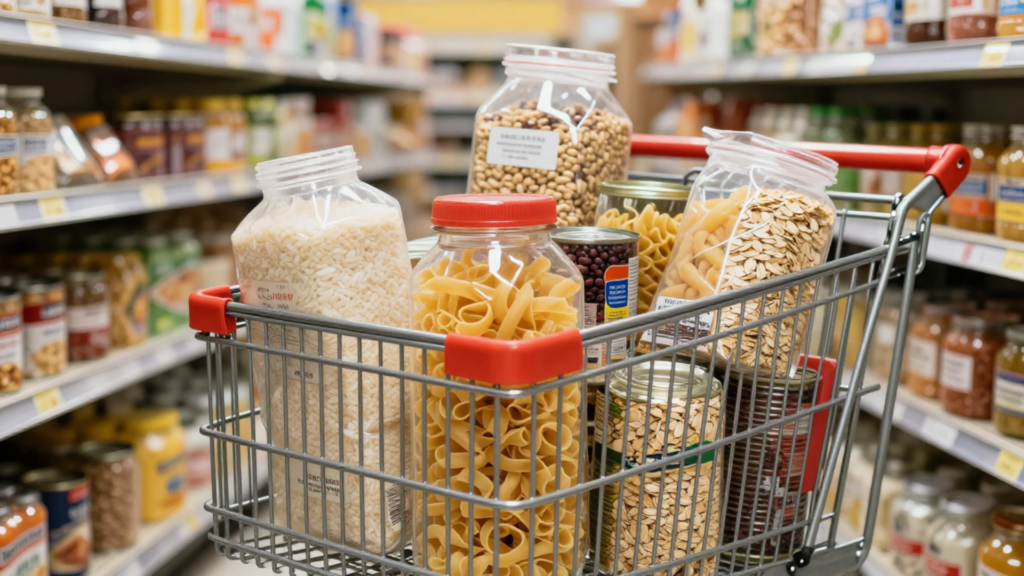
Building a survival pantry doesn’t require a large budget.
It requires consistency.
The most successful pantries aren’t built in one expensive shopping trip—they’re built one grocery run at a time.
The $20 Rule
Set aside just $20 each week for pantry staples.
Buy items only when they’re on sale.
Over a year, you’ll build a substantial emergency food supply without straining your budget.
Shop Smarter
Stretch every dollar by:
- Buying in bulk when prices are low.
- Watching for case-lot sales.
- Using store loyalty programs.
- Rotating what you already own before buying more.
Grow Part of Your Pantry
Even a small garden can reduce grocery costs.
Easy pantry crops include:
- Potatoes
- Dry beans
- Tomatoes
- Winter squash
- Garlic
- Onions
Homegrown food is often the cheapest long-term pantry investment.
Money Saving Tip
Never buy emergency food because you’re scared.
Buy because it’s on sale.
Preparedness rewards patience.
💧 Want a Reliable Backup Water Source?
Storing water is one of the smartest first steps. But many preparedness enthusiasts also look for ways to produce clean drinking water when stored supplies eventually run out.
👉 Discover the Joseph’s Well and see how it works.
10. How Much Water Should Every Family Store?
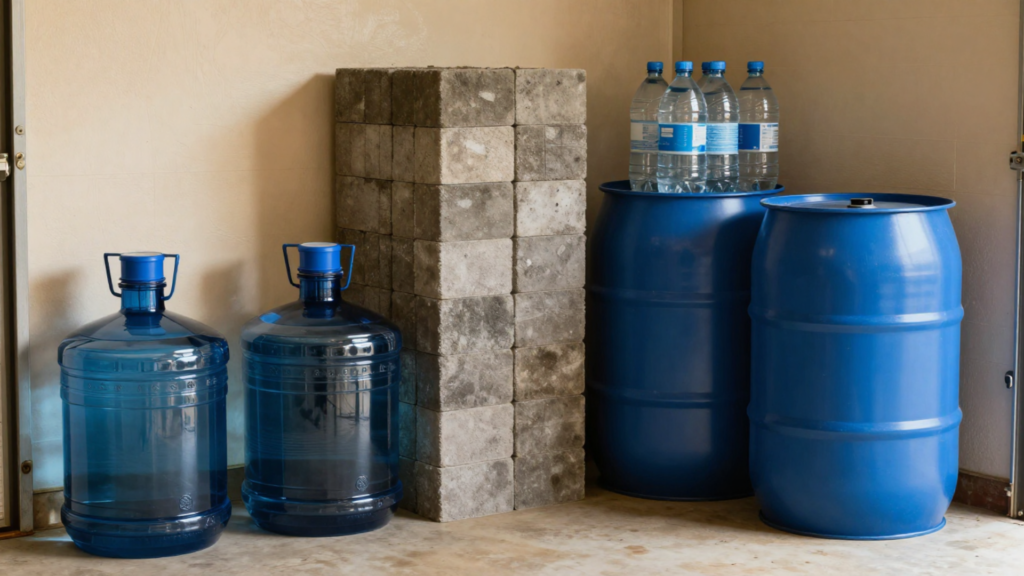
Food is important.
Water is essential.
Most people can go weeks without food—but only a few days without clean drinking water. That’s why every emergency pantry should include a reliable water supply.
A good starting point is at least one gallon of water per person, per day, for a minimum of two weeks.
For a family of four, that’s 56 gallons.
Best Water Storage Options
Choose one or combine several methods:
- 5-gallon food-grade water containers – Easy to carry and rotate.
- 55-gallon water barrels – Ideal for long-term household storage.
- Stackable water bricks – Great when space is limited.
- Clean, repurposed soda bottles – A free option for beginners.
Store Water in More Than One Location
Avoid keeping all your water in one place.
Instead, divide it between different areas of your home, such as:
- Pantry
- Garage
- Basement
- Utility room
If one area becomes inaccessible, you’ll still have access to clean water.
Pro Tip: Rotate stored water every 6–12 months, or follow the manufacturer’s recommendations for commercially packaged water. Label every container with the storage date so you always know when it’s time to refresh your supply.
Quick Water Checklist
✅ One gallon per person per day
✅ Store water in multiple locations
✅ Use food-grade containers
✅ Label storage dates
✅ Rotate water regularly
✅ Keep a backup water filter
💧 Recommended Resource: Learn How to Secure Your Water Supply

Storing water is one of the most important parts of emergency preparedness.
But even a well-stocked emergency supply won’t last forever.
That’s why many preparedness-minded families also learn how to locate, collect, filter, and secure clean drinking water using multiple methods.
If you’d like to expand your emergency water plan beyond basic storage, the Water Freedom System is a practical resource that teaches step-by-step strategies for finding and producing clean water in different emergency situations.
👉 Learn More About the Water Freedom System
11. 15 Foods Every Beginner Should Buy First
If you’re starting from scratch, don’t try to buy everything.
Focus on the essentials first.
These 15 pantry staples are affordable, easy to find, and versatile enough to form the foundation of hundreds of meals.
| Item | Amount | Why |
| White rice | 20 lbs | Most versatile grain, 25+ year shelf life |
| Rolled oats | 10 lbs | Breakfast, baking, 10+ year shelf life |
| Pasta | 10 lbs | Quick meals, 2–3 year shelf life |
| Dried beans | 5 lbs | Protein, 10+ year shelf life |
| Lentils | 2 lbs | Cooks fast, no soaking needed |
| Canned tomatoes | 12 cans | Base for soups, sauces, chili |
| Canned vegetables | 12 cans | Easy nutrition, 2–5 year shelf life |
| Canned beans | 6 cans | Quick protein, no cooking needed |
| Canned tuna or chicken | 6 cans | Protein, no refrigeration needed |
| Peanut butter | 2 jars | Calories, protein, comfort food |
| Cooking oil | 1 bottle | Essential for cooking |
| Salt | 2 lbs | Seasoning, preservation |
| Honey | 1 jar | Sweetener, never expires |
| Coffee or tea | As needed | Normalcy, morale |
| Water | 15 gallons | One week for one person |
Beginner Tip
Don’t wait until your pantry is “finished” before using it.
Cook with these foods regularly.
Replace what you use on your next shopping trip.
That’s how a survival pantry stays fresh, practical, and affordable.
Pantry Starter Checklist
Before expanding your pantry, make sure you already have:
✅ Rice
✅ Beans
✅ Pasta
✅ Canned vegetables
✅ Canned protein
✅ Cooking oil
✅ Salt
✅ Honey or sugar
✅ Coffee or tea
✅ Drinking water
Once these basics are covered, you can gradually add more variety based on your family’s preferences.
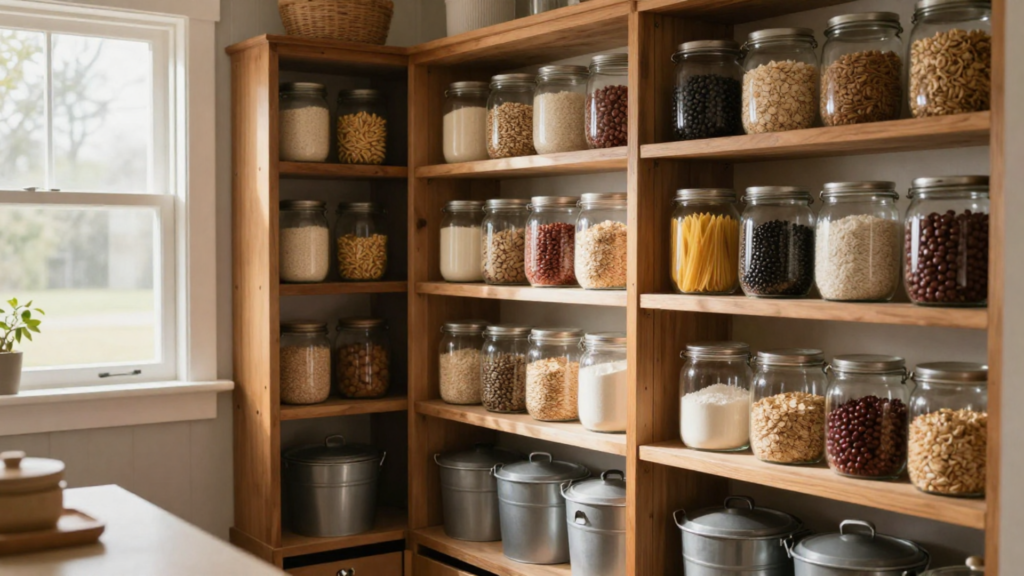
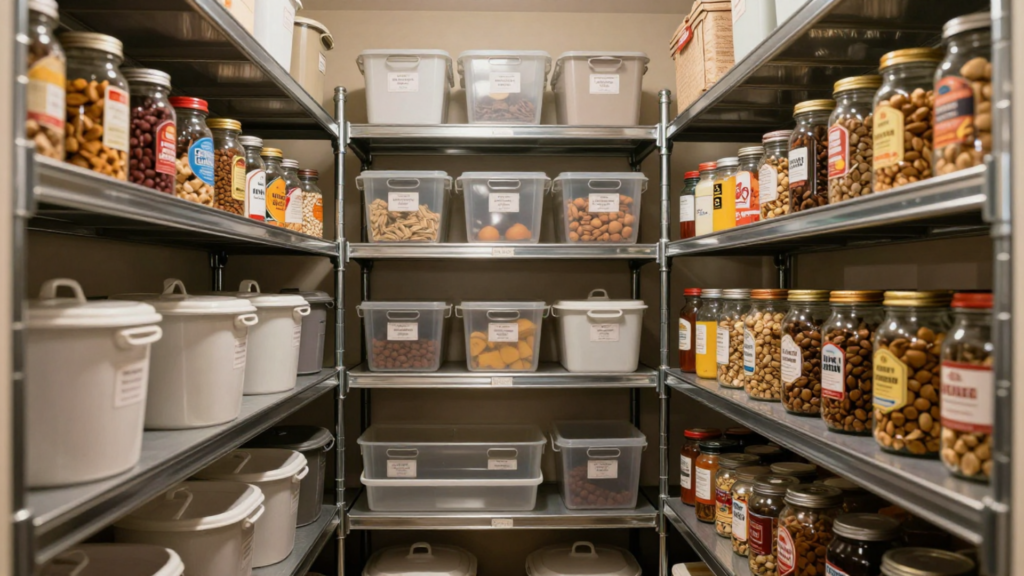
As your food supply grows, proper organization becomes increasingly important. Clear airtight containers make it easier to see what you have, keep food fresh, and simplify rotation.
12. Common Pantry Mistakes to Avoid
Even the best pantry can fail if it’s not managed properly.
Avoid these common mistakes:
- Buying food your family doesn’t normally eat.
- Ignoring water storage.
- Forgetting how you’ll cook during a power outage.
- Storing everything in one location.
- Failing to rotate older food.
- Buying more than you can properly store.
Pro Tip: Choose one day each month for a quick pantry inspection.
In just 15–20 minutes you can:
- Check expiration dates.
- Rotate older items.
- Replace what you’ve used.
- Inspect containers for damage or pests.
Small monthly habits prevent expensive mistakes later.
Quick Monthly Pantry Checklist
✅ Check expiration dates
✅ Rotate older food to the front
✅ Replace used items
✅ Inspect for pests
✅ Verify bucket seals
✅ Wipe shelves if needed
🏠 Protect More Than Your Food
Preparedness isn’t only about food and water.
Having a plan to protect your home and family is another important part of emergency readiness.
👉 Learn more about the Anti-Looter Kit
13. Frequently Asked Questions
How much food should I store for a family of four?
A practical goal is to build a three-month supply of the foods your family already eats. Start with two weeks, then gradually expand to one month and beyond. Building your pantry in stages is more affordable and much easier to manage.
What’s the best way to store rice and other dry foods?
For long-term storage, use mylar bags with oxygen absorbers placed inside food-grade buckets. This method protects food from oxygen, moisture, insects, and light, helping many dry foods last for years when stored in a cool, dry location.
How do I rotate my pantry without wasting food?
Use the First In, First Out (FIFO) method. Place newly purchased items behind older ones and always use the oldest products first. A quick monthly pantry check helps prevent expired food and keeps your emergency supply fresh.
Do I really need to store water?
Absolutely. Water is even more important than food during an emergency. Store at least one gallon per person per day for a minimum of two weeks, and keep a reliable water filter or purifier as a backup.
How can I build a pantry if I’m on a very limited budget?
Start small. Add one or two extra pantry staples every time you shop. Buying food during sales, purchasing in bulk when possible, and consistently adding to your pantry over time is far more effective than trying to buy everything at once.
How often should I inspect my survival pantry?
A quick inspection once a month is usually enough. Check expiration dates, rotate older food, inspect containers for damage or pests, and replace any items you’ve used. Regular maintenance keeps your pantry ready whenever you need it.
14. Final Thoughts
A survival pantry isn’t about preparing for the end of the world.
It’s about preparing for real life.
Storms happen.
Unexpected expenses happen.
Supply chains get disrupted.
Jobs change.
Having food stored at home gives your family something incredibly valuable: time.
Time to make thoughtful decisions instead of rushed ones.
Time to avoid crowded grocery stores.
Time to focus on what matters most.
The good news is that you don’t need to build a perfect pantry overnight.
Start with one extra bag of rice.
One can of vegetables.
One gallon of water.
One grocery trip at a time.
Those small decisions add up faster than you think.
Months from now, you’ll open your pantry and realize you’ve built something far more valuable than a collection of food.
You’ve built peace of mind.
Preparedness isn’t about fear.
It’s about confidence.
Start today.
Your future self—and your family—will thank you.
Live free. Grow food. Build freedom. 🚜🌿💧
Build a More Self-Reliant Lifestyle
Preparedness isn’t about fear—it’s about reducing dependence and being ready for unexpected situations.
Here are some of the most popular preparedness resources our readers enjoy:
✅ The Self-Sufficient Backyard

1 Comentário