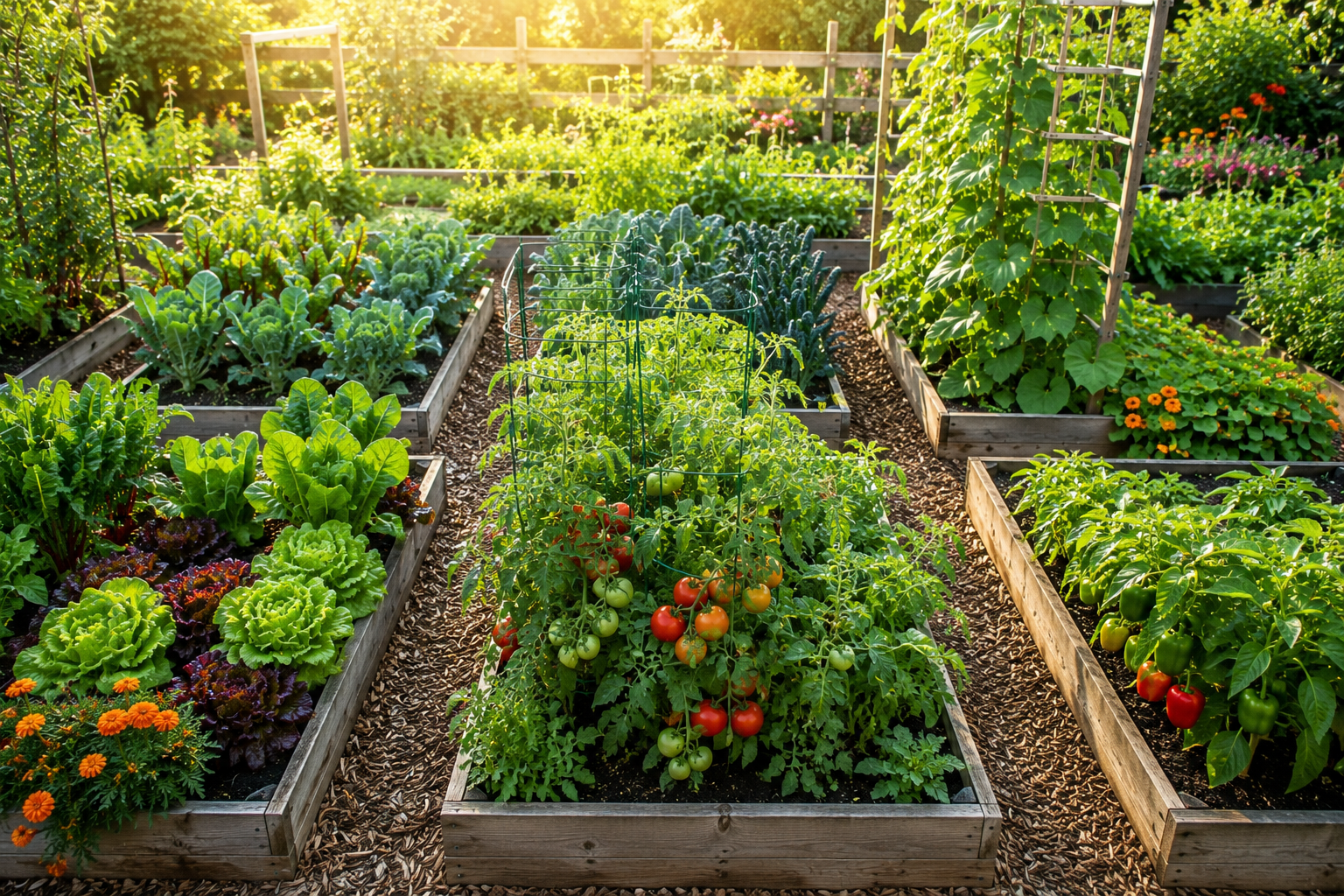
25 Best Vegetables for Raised Beds
You built the beds. You filled them with good soil. Now comes the fun part — deciding what to plant.
Raised beds change the rules of gardening. The soil warms faster in spring. Drainage is better. Weeds are fewer. And because you’re gardening in a contained space, every square inch matters. You want vegetables that earn their spot — high yields, compact growth, and real payoff for the effort you put in.
Not every vegetable thrives in a raised bed. Some need more root depth than a typical bed provides. Others spread so aggressively they’ll take over your entire plot. But the ones that work? They’ll produce more than you expect in less space than you’d think.
Here are the 25 best vegetables for raised beds, organized by how they perform in this specific growing environment.
Heavy Feeders: Vegetables That Reward Rich Soil
Raised beds let you control your soil quality completely. That’s a game-changer for vegetables that need fertile, well-amended ground to produce well.
1. Tomatoes
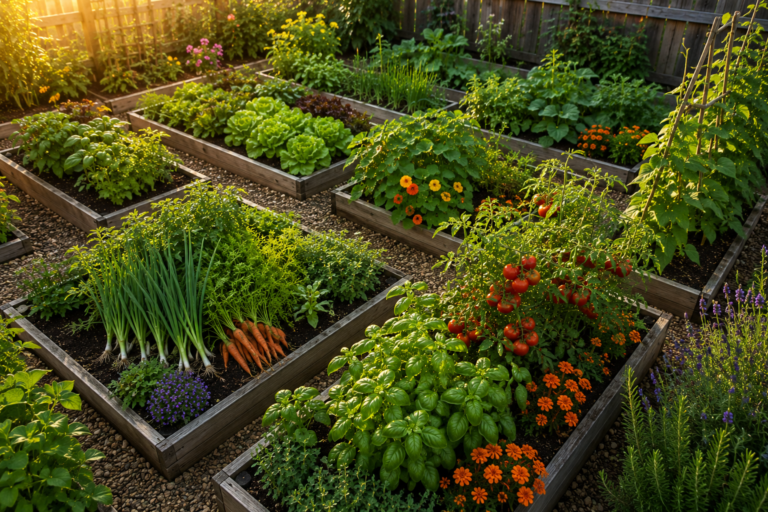
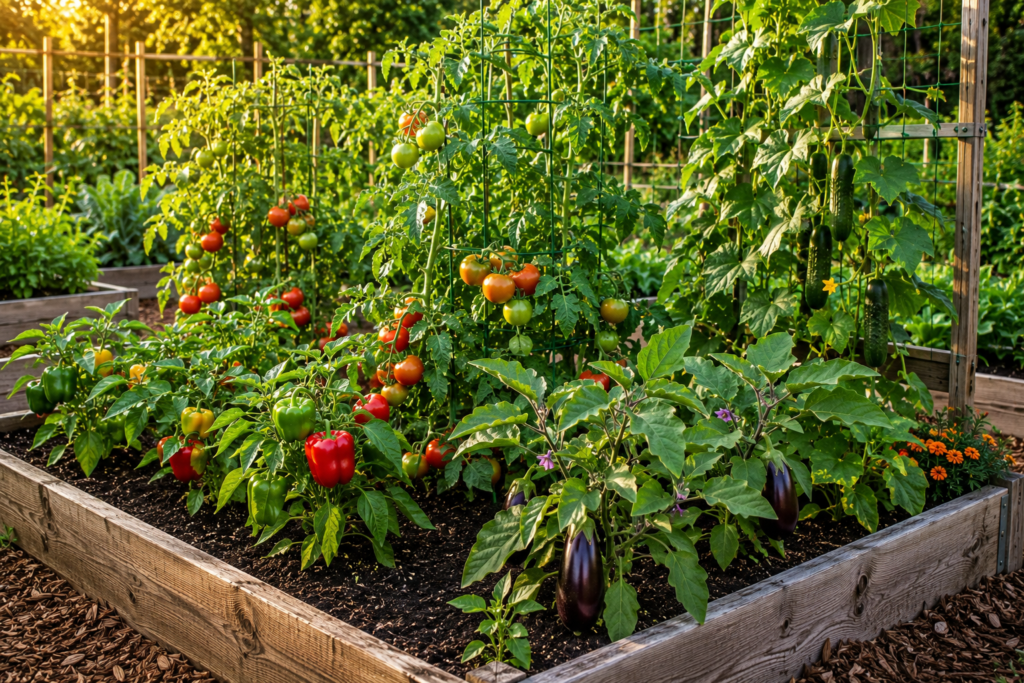
Tomatoes are the king of raised bed gardening for good reason. They need deep, rich soil with excellent drainage — exactly what a raised bed provides. In ground soil, tomatoes often struggle with compaction and poor drainage. In a raised bed, they thrive.
Plant one tomato per square foot for determinate (bush) varieties, or one per two square feet for indeterminate (vining) varieties. Cage or stake them immediately — trying to add support after they’re established is a recipe for broken branches.
Best varieties for raised beds: Celebrity, Better Boy, San Marzano (sauce), Sun Gold (cherry)
2. Peppers
Both sweet and hot peppers love the warm soil of raised beds. They’re heat-lovers, and raised beds warm up faster than ground soil in spring, giving you a longer growing season.
Peppers have a smaller root system than tomatoes, so they’re excellent for shallower beds (8–10 inches deep). They also benefit from the consistent moisture that well-managed raised beds provide — peppers that dry out between waterings develop blossom end rot.
Best varieties for raised beds: California Wonder, Jalapeño, Shishito, Cubanelle
3. Eggplant
Eggplant is a heavy feeder that demands warm soil and consistent nutrition. Raised beds deliver both. The improved drainage prevents the root rot that plagues eggplant in heavy clay ground soil.
Space plants 18–24 inches apart. They need full sun and a steady supply of nitrogen throughout the growing season. Side-dress with compost or a balanced fertilizer when the first fruits appear.
Best varieties for raised beds: Black Beauty, Ichiban, Fairy Tale, Rosa Bianca
4. Cucumbers
Cucumbers sprawl, but in a raised bed you can train them vertically on a trellis. This saves enormous amounts of space and keeps the fruit clean and straight. A single 4×8 bed with a trellis along the back can produce enough cucumbers for a family of four.
Plant 3–4 cucumber seeds per square foot at the base of the trellis. Thin to the strongest two. Keep the soil consistently moist — cucumbers that experience drought stress produce bitter fruit.
Best varieties for raised beds: Marketmore, Straight Eight, Lemon, Armenian (burpless)
5. Summer Squash and Zucchini
These are among the most productive vegetables you can grow. A single zucchini plant can produce 6–10 pounds of fruit over a season. In a raised bed, the warm soil and good drainage push production even higher.
The challenge is space. Zucchini plants spread 3–4 feet wide. Plant them at the corners of your bed or along one edge so they have room to sprawl without crowding everything else. One plant per household is usually enough. Two is almost too many.
Best varieties for raised beds: Black Beauty, Yellow Crookneck, Eight Ball, Costata Romanesco
Grow More in Every Raised Bed
Choosing the right vegetables is only half the equation. The way you organize your garden has an even bigger impact on your harvest.
The 5 Foot Farm teaches practical layouts, intensive planting, succession planting, and space-saving methods that help every raised bed produce more food.
👉 See how The 5 Foot Farm can help you maximize every square foot.
Root Vegetables: Thriving in Loose Soil
Compacted ground soil is the enemy of root vegetables. Raised beds solve this problem completely. Loose, well-drained soil means straight carrots, round beets, and radishes that actually develop bulbs instead of just tops.
6. Carrots
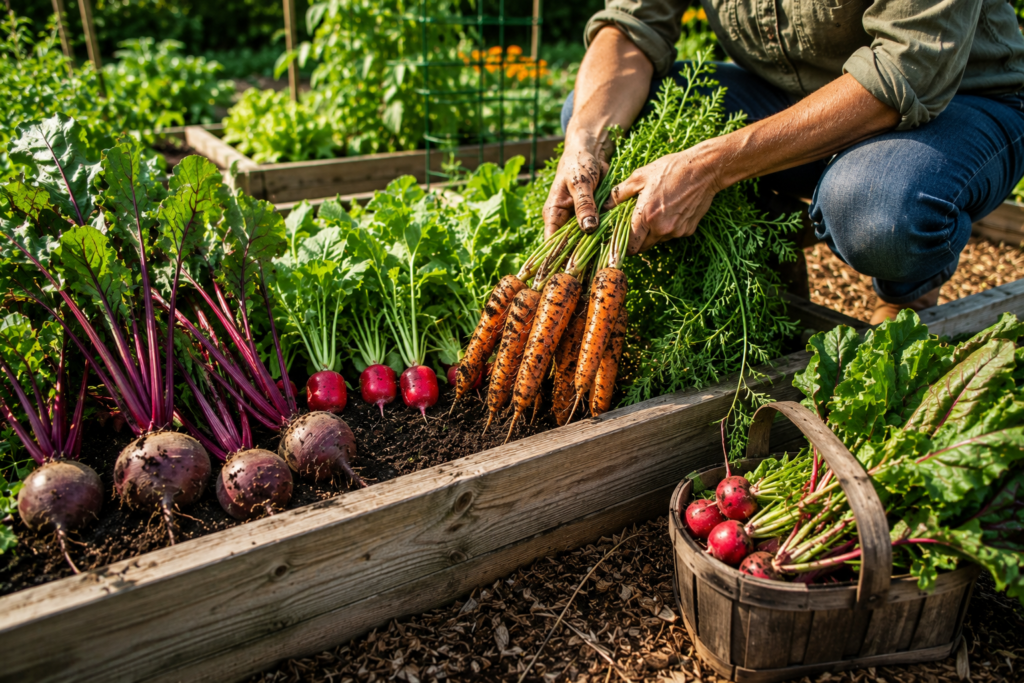
Carrots need loose soil without rocks, clumps, or compaction to grow straight. A raised bed filled with sifted soil or sandy loam produces carrots that look like they came from a farmer’s market display.
The depth of your bed matters here. Standard 8-inch beds work for most carrot varieties. For long varieties like Danvers or Nantes, you want at least 12 inches of loose soil. Short varieties like Paris Market or Thumbelina will grow in anything 6 inches deep.
Beginner Tip: Carrot seeds are tiny and easy to overseed. Mix them with dry sand before planting to distribute them evenly. Thin seedlings to 2 inches apart once they’re 2 inches tall.
7. Beets
Beets are one of the most underrated raised bed crops. They grow quickly, produce two harvests (roots and greens), and store well in the ground. The loose soil of a raised bed allows the roots to develop evenly without forking.
Plant beet seeds 1 inch apart in rows 6 inches apart. Thin to 3 inches apart once seedlings emerge. Every part of the beet is edible — the roots for roasting, the greens for sautéing.
Best varieties for raised beds: Detroit Dark Red, Golden, Chioggia, Bull’s Blood
8. Radishes
Radishes are the fastest vegetable you can grow. Some varieties go from seed to harvest in 21–25 days. They’re perfect for filling gaps in a raised bed while slower crops mature.
Sow a short row of radish seeds every two weeks for a continuous harvest. They’re excellent interplanted with carrots — the radishes loosen the soil as they grow, and they’re harvested before the carrots need the space.
Best varieties for raised beds: Cherry Belle, French Breakfast, Watermelon, Daikon
9. Onions
Onions are space-efficient and low-maintenance in raised beds. They don’t need deep soil — 6–8 inches is sufficient. Plant onion sets (small bulbs) 4 inches apart in rows 6 inches apart.
The key to large onion bulbs is consistent watering and plenty of sunlight. Onions are photoperiod-sensitive, so choose varieties suited to your latitude. Long-day onions for northern gardens, short-day for southern.
Best varieties for raised beds: Redwing, Walla Walla, Candy, Texas Super Sweet
10. Potatoes
Potatoes in raised beds? Absolutely. In fact, raised beds are one of the best ways to grow potatoes. The loose soil makes harvesting simple — no digging required. Just lift the plants and collect the potatoes.
Plant seed potatoes 4 inches deep, then hill soil or straw around the stems as they grow. A 4×4 bed can produce 15–20 pounds of potatoes. Use a dedicated bed or grow bags within the bed to avoid disturbing other crops.
Best varieties for raised beds: Yukon Gold, Red Pontiac, Kennebec, Purple Majesty
Leafy Greens: Perfect for Succession Planting
Leafy greens are the workhorses of the raised bed. They grow quickly, tolerate partial shade, and can be harvested continuously through the season.
11. Lettuce
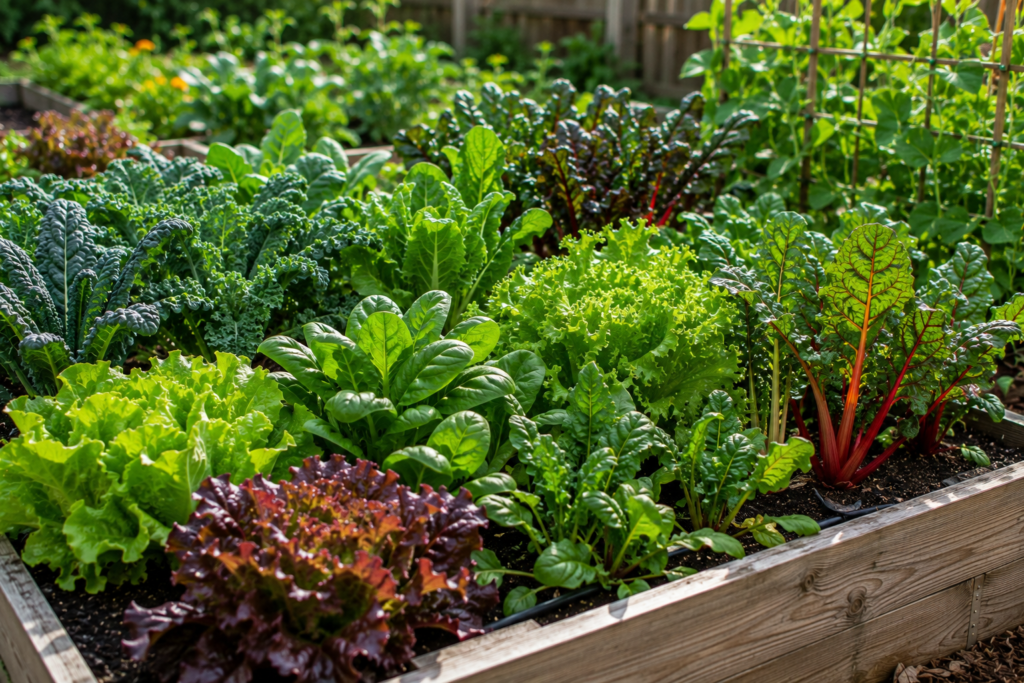
Lettuce is practically made for raised beds. The loose soil encourages quick root development, and the improved drainage prevents the rot that plagues lettuce in wet ground soil.
Sow lettuce seeds directly in the bed every two weeks for a continuous harvest. Use the cut-and-come-again method — harvest the outer leaves and let the center continue growing. A single 4×4 bed can supply salads for a family of four all season.
Best varieties for raised beds: Buttercrunch, Romaine, Black Seeded Simpson, Oakleaf
12. Spinach
Spinach prefers cool weather and consistent moisture — both of which are easier to manage in a raised bed. The soil warms faster in spring, allowing earlier planting, and you can extend the fall season with a simple row cover.
Plant spinach seeds 1 inch apart in rows 6 inches apart. Harvest outer leaves when they reach 3–4 inches long. Spinach bolts (goes to seed) quickly in hot weather, so plan for spring and fall crops with a break in midsummer.
Best varieties for raised beds: Bloomsdale, Space, Tyee, Regiment
13. Kale
Kale is the most forgiving green you can grow. It tolerates heat, cold, and mediocre soil — but in a raised bed with good soil, it thrives. Kale actually gets sweeter after a frost, making it a perfect fall and winter crop.
Plant kale 12 inches apart. Harvest the oldest leaves from the bottom up, leaving the growing center intact. A single plant can produce for 6–8 months.
Best varieties for raised beds: Lacinato (Dinosaur), Red Russian, Winterbor, Scarlet
14. Swiss Chard
Swiss chard is beautiful and productive. The colorful stems — red, yellow, orange, pink — add visual interest to any raised bed. It’s also heat-tolerant, producing through summer when spinach and lettuce have bolted.
Plant chard 6 inches apart. Harvest outer leaves when they reach 8–10 inches. The plants will produce for months. Chard is technically a biennial, so in mild climates it can overwinter and produce again the following spring.
Best varieties for raised beds: Bright Lights, Fordhook Giant, Rhubarb, Peppermint
15. Arugula
Arugula grows fast and adds a peppery kick to salads. It’s perfect for filling small spaces in a raised bed. Sow seeds every three weeks for a continuous supply.
Arugula bolts quickly in hot weather, but that’s not necessarily a problem — the flowers are edible and attract pollinators. Let a few plants go to seed and you’ll have volunteer arugula next season.
Best varieties for raised beds: Rocket, Sylvetta, Astro, Wasabi
Legumes: Nitrogen-Fixing Powerhouses
Legumes are valuable in a raised bed for two reasons: they produce a worthwhile crop, and they fix nitrogen in the soil that other vegetables can use.
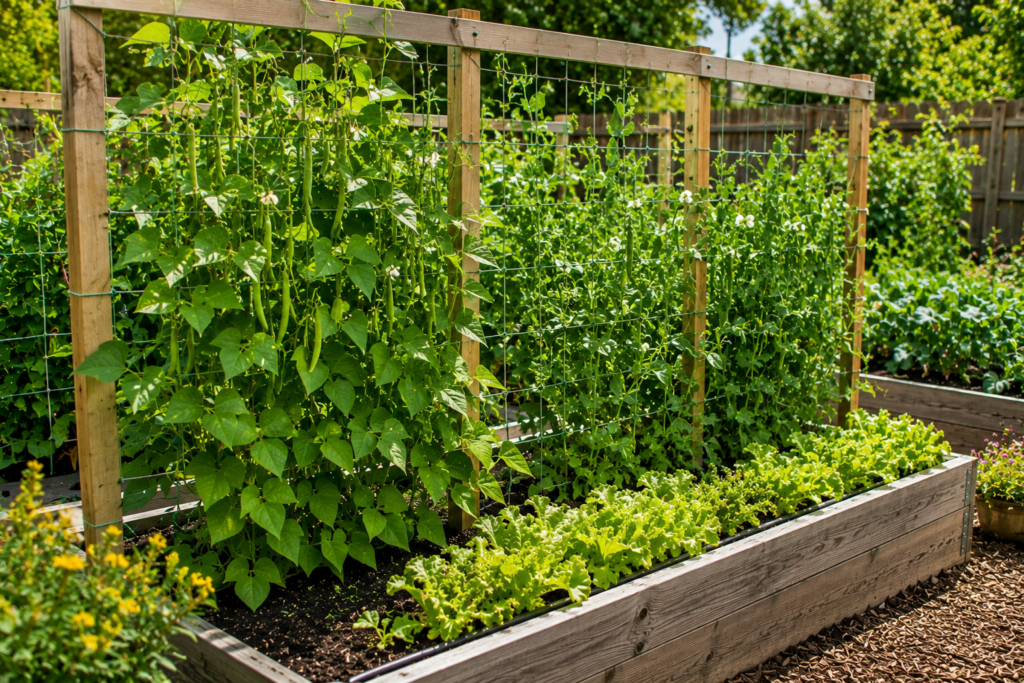
16. Bush Beans
Bush beans are the right choice for raised beds. Unlike pole beans, they don’t need a trellis. They grow in a compact, self-supporting bush form that fits neatly into a bed.
Plant bush bean seeds 2 inches apart in rows 6 inches apart. They germinate quickly and produce in about 50–60 days. Succession plant every three weeks for a continuous harvest through summer.
Best varieties for raised beds: Blue Lake, Provider, Contender, Royal Burgundy
17. Peas
Peas are a cool-season crop that does well in early spring and fall raised beds. They fix nitrogen in the soil, benefiting whatever you plant in that bed afterward.
Use a low trellis or netting for support, even for bush varieties. Peas are easier to harvest when they’re climbing. Plant seeds 1 inch apart in double rows on either side of the trellis.
Best varieties for raised beds: Sugar Snap, Oregon Sugar Pod, Wando, Little Marvel
18. Pole Beans
Pole beans are more productive per square foot than bush beans, but they need vertical support. In a raised bed, install a trellis, teepee, or cattle panel along the north side so the beans don’t shade shorter crops.
Plant pole beans 3 inches apart at the base of the trellis. They’ll climb on their own. Pole beans produce over a longer period than bush beans — 6–8 weeks of harvest versus 2–3 weeks for bush varieties.
Best varieties for raised beds: Kentucky Wonder, Fortex, Rattlesnake, Scarlet Runner
Brassicas: Cool-Weather Champions
The cabbage family does well in raised beds because the improved drainage prevents the root rot that can plague them in wet ground soil.
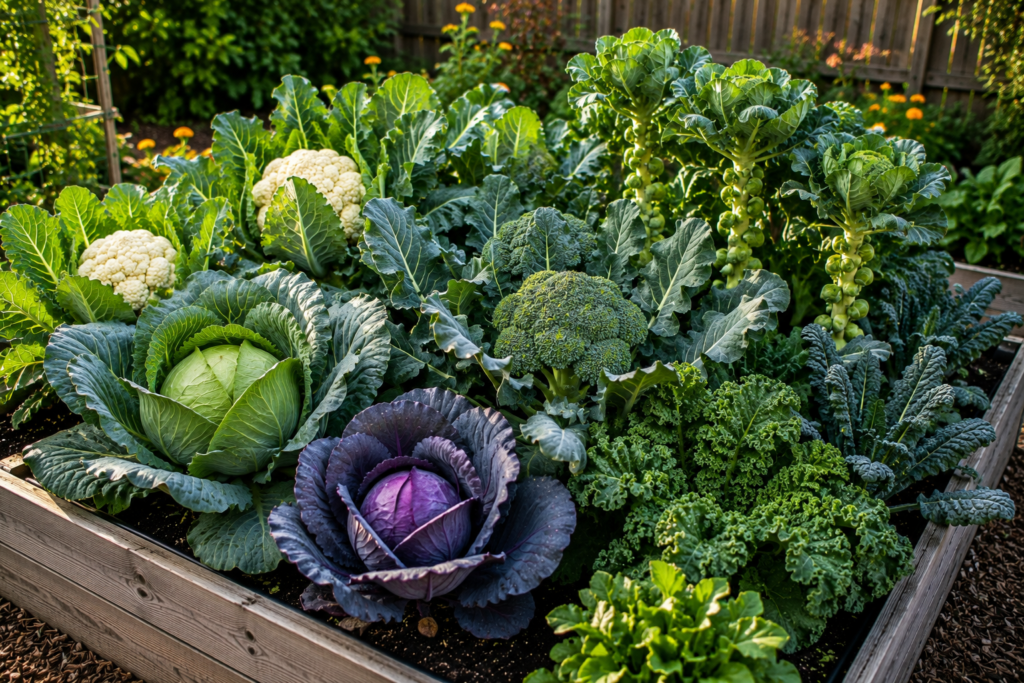
19. Broccoli
Broccoli grows best in cool weather with consistent moisture. Raised beds provide the drainage and root space it needs. The key is timing — plant broccoli early enough that it matures before summer heat, or late enough that it matures in fall.
Space broccoli 18 inches apart. Harvest the central head while the buds are still tight. After cutting the main head, the plant will produce side shoots for weeks of additional harvest.
Best varieties for raised beds: Green Magic, Calabrese, Waltham, Di Cicco
20. Cabbage
Cabbage needs space — 18–24 inches per plant — but it’s worth the real estate. A well-grown cabbage head is satisfying to harvest and stores for months.
The secret to good cabbage is consistent watering. Irregular watering causes the heads to split. In a raised bed, the drainage prevents overwatering while the contained soil holds moisture evenly.
Best varieties for raised beds: Early Jersey Wakefield, Copenhagen Market, Red Acre, Savoy
21. Cauliflower
Cauliflower is the most demanding brassica. It needs consistent moisture, rich soil, and cool temperatures. Raised beds help with the first two, but timing is critical.
The trick with cauliflower is blanching — covering the developing head to keep it white. When the head is about 2–3 inches across, tie the outer leaves over it. Check regularly for pests like cabbage worms.
Best varieties for raised beds: Snowball, Snow Crown, Graffiti (purple), Cheddar (orange)
22. Brussels Sprouts
Brussels sprouts take up space for a long time — 90–120 days — but they’re one of the most productive brassicas for a raised bed. They grow best in cool fall weather, so time your planting for a late-season harvest.
Space plants 24 inches apart. Remove the lower leaves as the sprouts develop. Harvest from the bottom up when the sprouts are firm and about 1 inch in diameter.
Best varieties for raised beds: Long Island Improved, Churchill, Diablo, Rubine (red)
Build a Backyard That Produces Year After Year
Healthy raised beds are part of a larger self-sufficient garden system.
The Self-Sufficient Backyard covers composting, raised beds, irrigation, food preservation, fruit trees, and long-term backyard food production.
👉 Discover everything included in The Self-Sufficient Backyard.
Perennials and Continuous Producers
These vegetables keep producing year after year or for months at a time. They earn their spot in a raised bed through longevity.
23. Asparagus
Asparagus is a long-term investment. A well-prepared raised bed can produce asparagus for 15–20 years. The improved drainage and deep, loose soil of a raised bed are ideal for asparagus crowns.
Plant one-year-old crowns 6 inches deep in a bed that’s at least 12 inches deep. Don’t harvest at all in the first year. Harvest lightly in the second year. Full harvest begins in year three.
Pro Tip: Dedicate an entire raised bed to asparagus. It’s a perennial that shouldn’t be disturbed by annual vegetable planting.
24. Perennial Onions
Walking onions, potato onions, and Egyptian onions produce year after year with minimal effort. Plant them along the edge of a raised bed where they won’t interfere with annual crops.
These onions multiply on their own. Harvest what you need and leave the rest to grow. They’re among the lowest-maintenance vegetables you can grow.
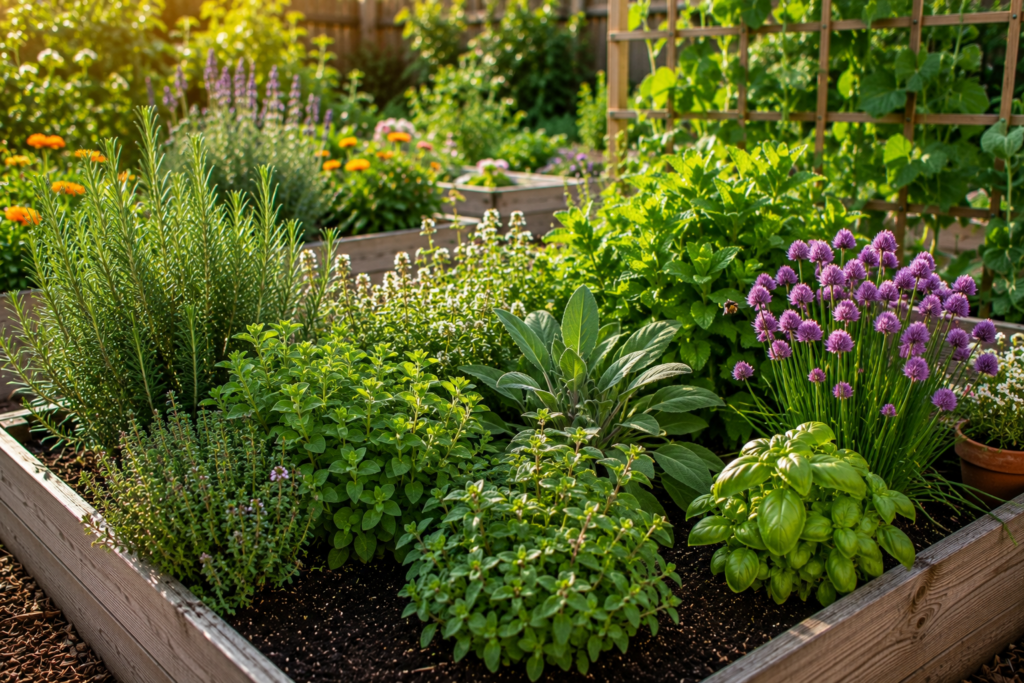
25. Herbs
Herbs belong in every raised bed. They repel pests, attract pollinators, and provide fresh flavor for your kitchen. Many are perennials that come back year after year.
Plant herbs along the edges of your beds or in dedicated corners. Rosemary, thyme, oregano, and sage are drought-tolerant and don’t need rich soil — they actually prefer leaner conditions. Basil, parsley, and cilantro are annuals that benefit from the same soil conditions as your vegetables.
Best herbs for raised beds: Basil, Rosemary, Thyme, Oregano, Parsley, Cilantro, Sage, Mint (in a container — mint is invasive)
Raised Bed Planting by Season
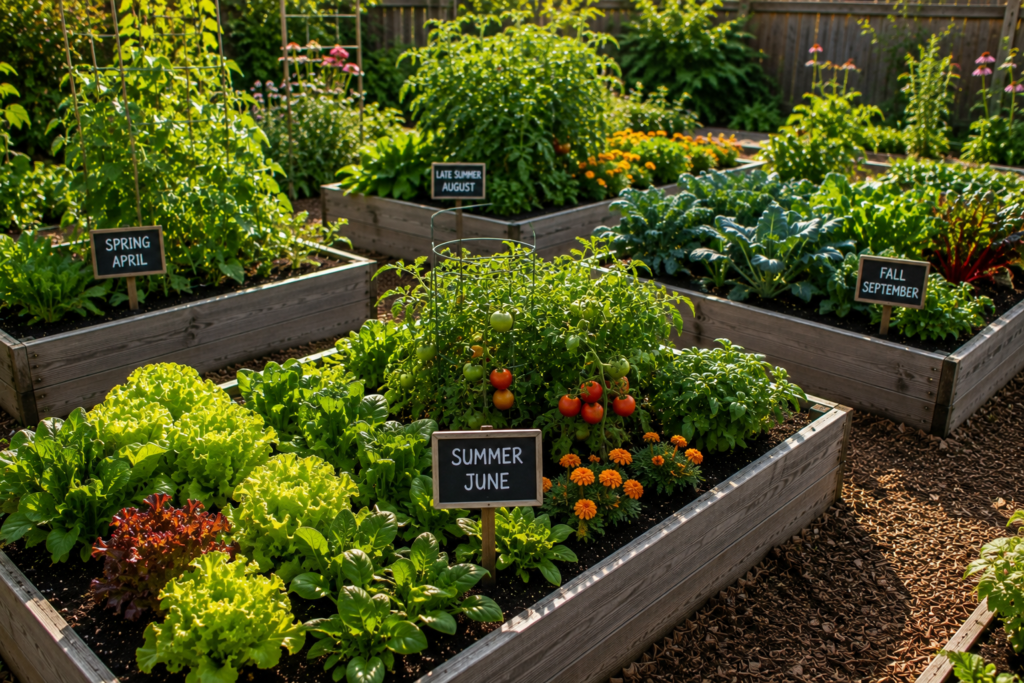
A well-planned raised bed produces something in every season. Here’s a simple rotation:
Spring (cool season): Peas, lettuce, spinach, radishes, carrots, broccoli
Summer (warm season): Tomatoes, peppers, eggplant, cucumbers, beans, squash
Fall (cool season): Kale, Brussels sprouts, cabbage, beets, turnips, garlic
Winter (cold season): Garlic (planted in fall, harvested in summer), overwintering onions, kale under row cover
Common Raised Bed Mistakes to Avoid
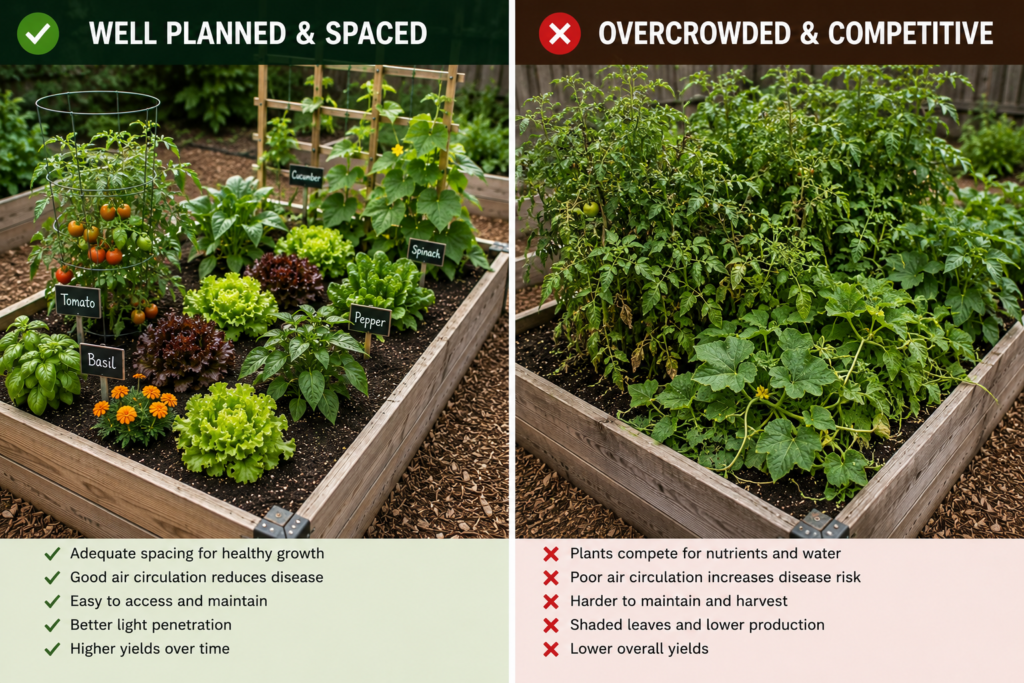
Planting too densely. It’s tempting to cram more plants into a raised bed, but overcrowding reduces yields. Each plant competes for light, water, and nutrients. Follow spacing guidelines.
Not rotating crops. Growing the same vegetables in the same bed year after year depletes specific nutrients and allows soil-borne diseases to build up. Rotate plant families each season.
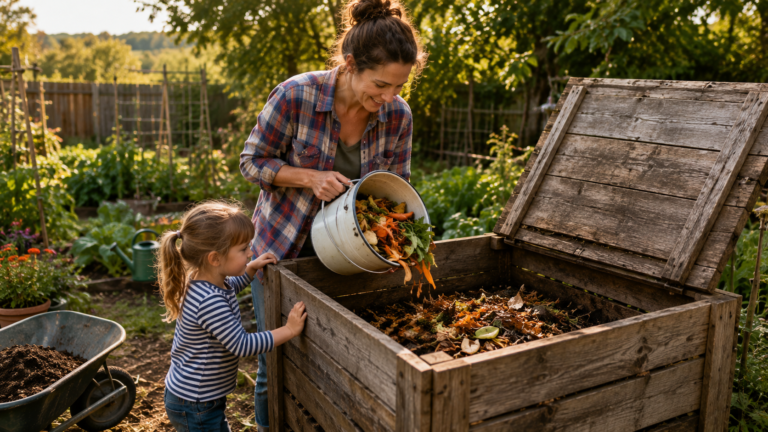
Ignoring soil health. Raised bed soil needs annual amendment. Add 1–2 inches of compost each spring. Test soil pH every 2–3 years. Replace or refresh the soil every 3–5 years.
Overwatering. Raised beds drain well, but that doesn’t mean you should water constantly. Check soil moisture 2 inches down before watering. Most vegetables need 1–1.5 inches of water per week.
FAQ
1. How deep should a raised bed be for vegetables?
At least 8 inches for most vegetables. 12 inches is better for deep-rooted crops like tomatoes, carrots, and potatoes. If your bed sits on compacted soil or concrete, go with 12–18 inches so roots have enough room to develop.
2. Can I grow root vegetables in a shallow raised bed?
Yes, if you choose the right varieties. Short-rooted carrots like Paris Market or Thumbelina, radishes, and beets will grow in 6–8 inches of soil. Long carrots and parsnips need at least 12 inches.
3. How many tomato plants can I put in a 4×8 raised bed?
Four to six plants, depending on the variety. Determinate (bush) tomatoes can go 18 inches apart. Indeterminate (vining) tomatoes need 24 inches. Any more than that and you’ll get reduced yields and increased disease pressure.
4. What should I plant in a raised bed for maximum yield per square foot?
Bush beans, tomatoes (trellised), cucumbers (trellised), leafy greens (cut-and-come-again), and zucchini. These produce the most food per square foot when managed well. Pole beans on a trellis are even more productive than bush beans.
5. Can I grow the same vegetables in the same raised bed every year?
You can, but you shouldn’t. Growing the same plant family in the same spot depletes specific nutrients and allows soil-borne diseases to accumulate. Rotate between heavy feeders (tomatoes, squash), light feeders (root vegetables), and nitrogen-fixers (beans, peas) each season.
Expand Beyond Traditional Vegetables
Once your raised beds are producing well, it’s worth adding crops that most modern gardeners have never heard of.
The Lost Superfoods introduces forgotten vegetables, survival crops, and traditional foods that can make your garden even more productive and resilient.
👉 Explore the forgotten foods that generations relied on.
Final Thoughts
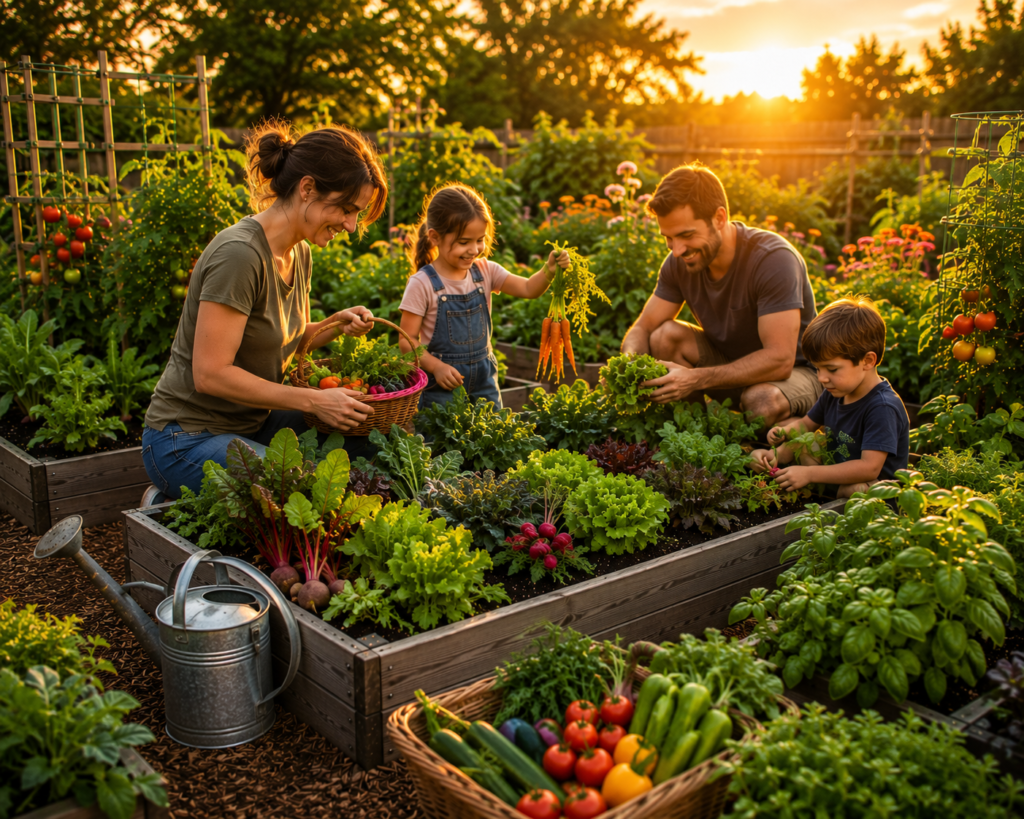
The best vegetables for your raised bed are the ones you’ll actually eat and enjoy growing. Start with a handful of proven performers — tomatoes, peppers, beans, lettuce, carrots — and expand from there as you learn what works in your specific climate and soil.
A well-planned raised bed garden can produce an astonishing amount of food. The key is matching the right vegetables to the right conditions and giving each plant the space and nutrition it needs.
Choose wisely, plant with intention, and your raised beds will reward you with harvests that make every hour of work worthwhile.
Live free. Grow food. Build freedom.
Recommended Resources
If you’re planning a productive raised bed garden, these guides pair perfectly with this article:
🌱 The Self-Sufficient Backyard – Build a complete backyard food production system.
🥕 The 5 Foot Farm – Learn how to grow more food in less space.
🍠 The Lost Superfoods – Discover forgotten crops and traditional foods.
💧 Joseph’s Well – Practical water solutions for long-term self-reliance.