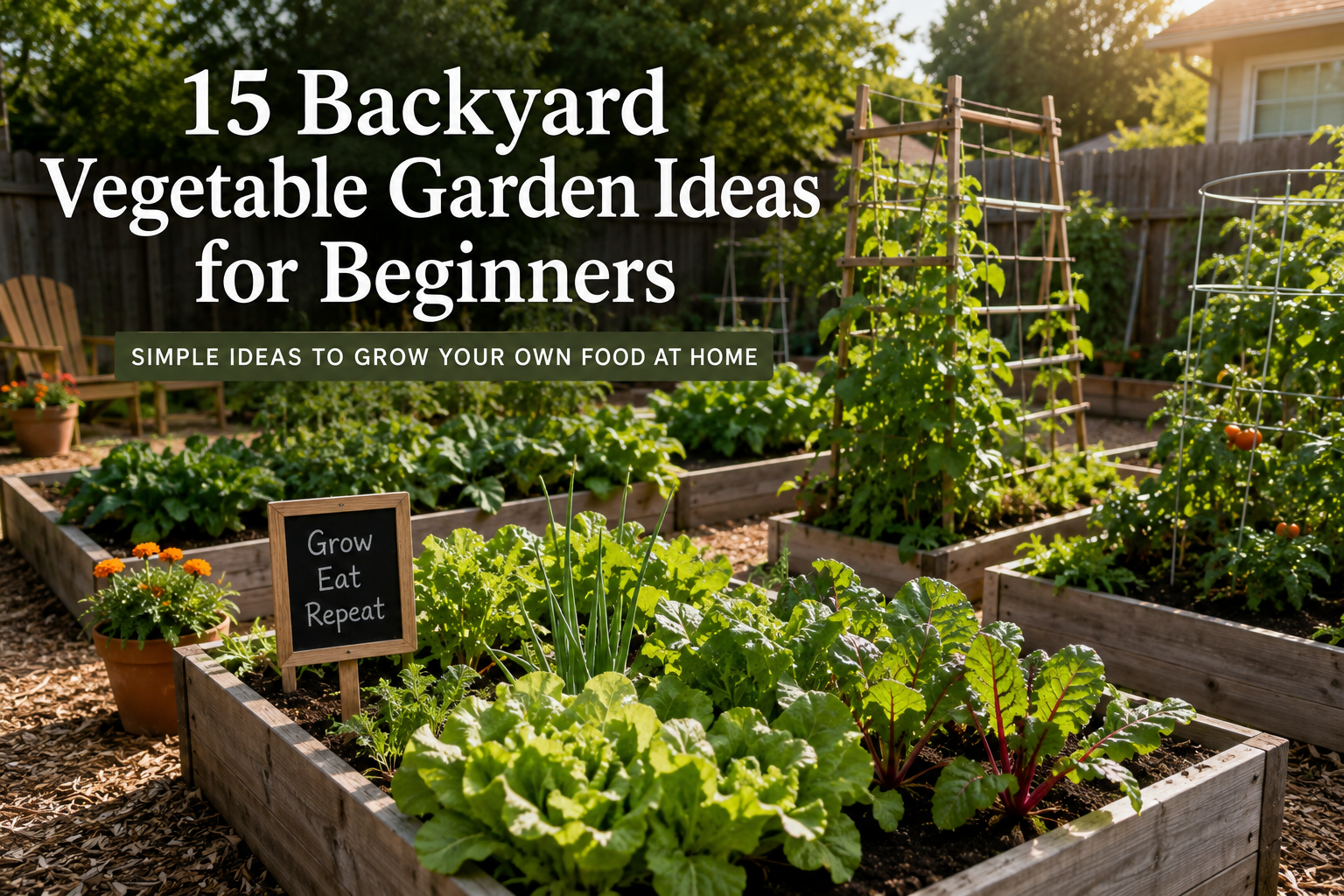
15 Backyard Vegetable Garden Ideas for Beginners
Growing your own vegetables is one of the most rewarding ways to save money, eat healthier, and become more self-sufficient. Whether you have a spacious backyard or a small corner with room for a few raised beds, starting a vegetable garden is easier than most people think.
The biggest mistake beginners make is believing they need expensive equipment or years of experience before planting their first seed. In reality, successful gardens are built through simple, consistent habits and smart planning—not perfection.
This guide shares 15 practical backyard vegetable garden ideas that are beginner-friendly, budget-conscious, and designed to help you enjoy a productive harvest from your very first season. By the end of this article, you’ll know how to create a garden that’s easier to maintain, healthier for your plants, and more enjoyable to grow year after year.
1. Start with Raised Garden Bed
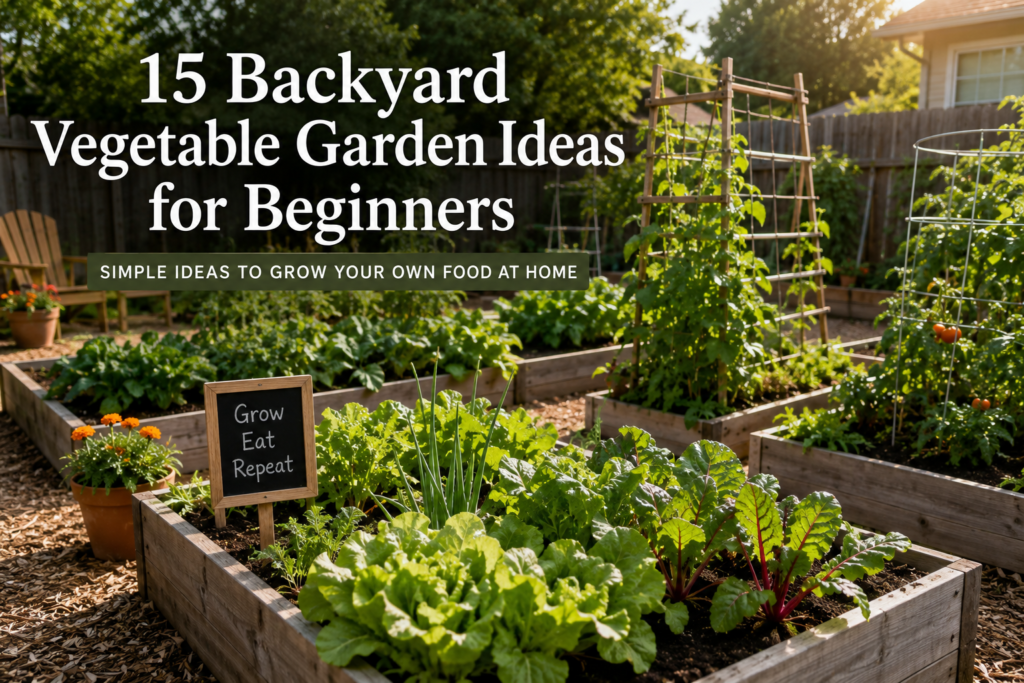
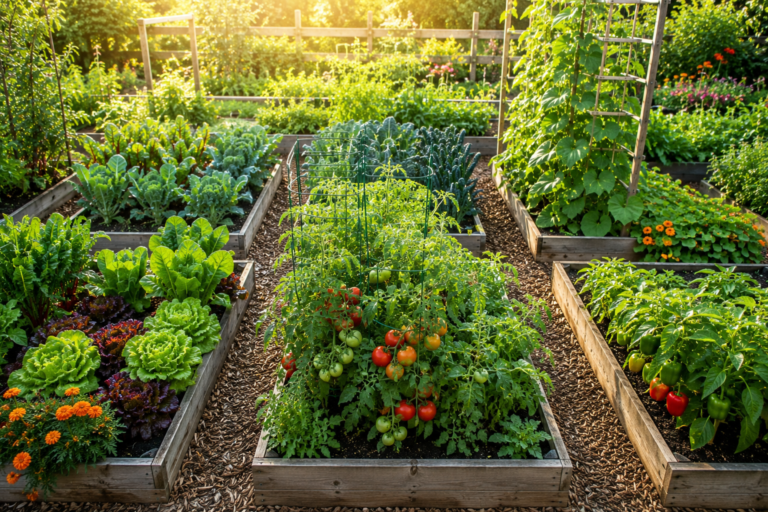
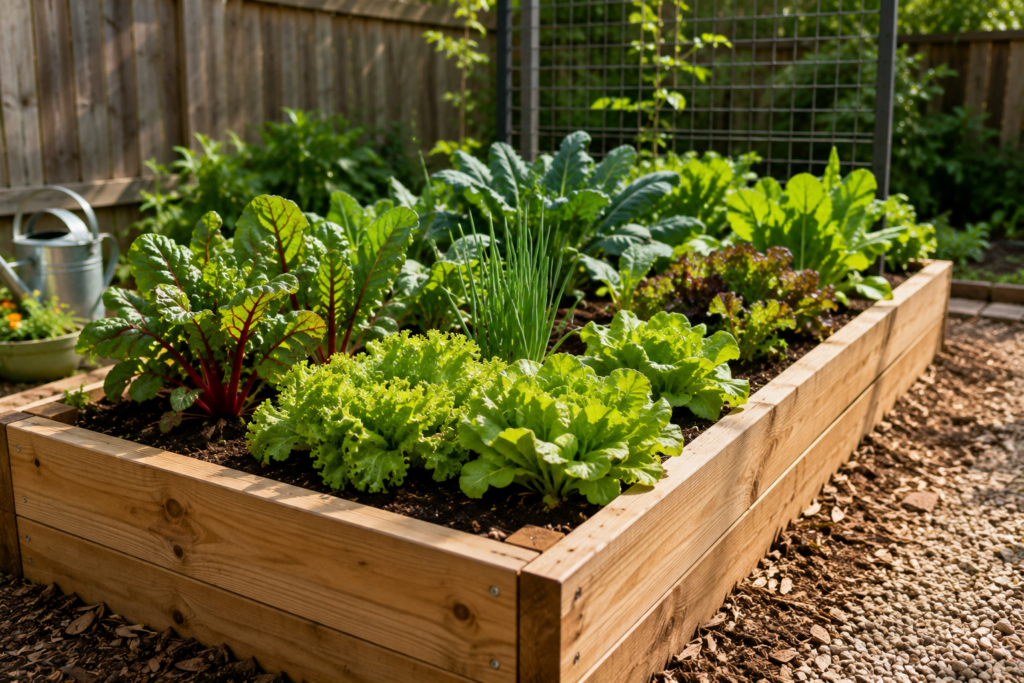
If you’re starting your first vegetable garden, raised beds are one of the smartest investments you can make. They provide better drainage, warm up faster in spring, and give you complete control over the quality of your soil.
Unlike traditional in-ground gardens, raised beds reduce soil compaction because you never need to walk where your vegetables are growing. This creates healthier root systems and often leads to stronger plants and better harvests.
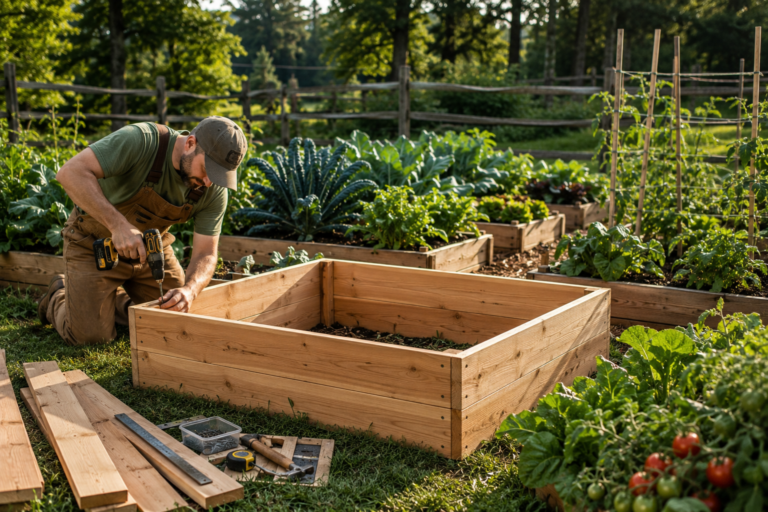
A simple wooden raised bed that measures 4 × 8 feet is large enough to grow a surprising amount of food while remaining easy to manage for beginners.
Benefits of Raised Beds
- Better soil quality
- Improved drainage
- Fewer weeds
- Easier harvesting
- Better pest control
- Less bending and kneeling
Pro Tip: Fill your raised bed with a mixture of quality topsoil, compost, and organic matter instead of using soil directly from your yard.
Ready to Grow More Food at Home?
Starting with raised beds is one of the smartest decisions for any beginner gardener. If you’re looking for a complete step-by-step guide to creating a productive backyard garden, The Self-Sufficient Backyard is an excellent resource.
👉 Explore The Self-Sufficient Backyard →
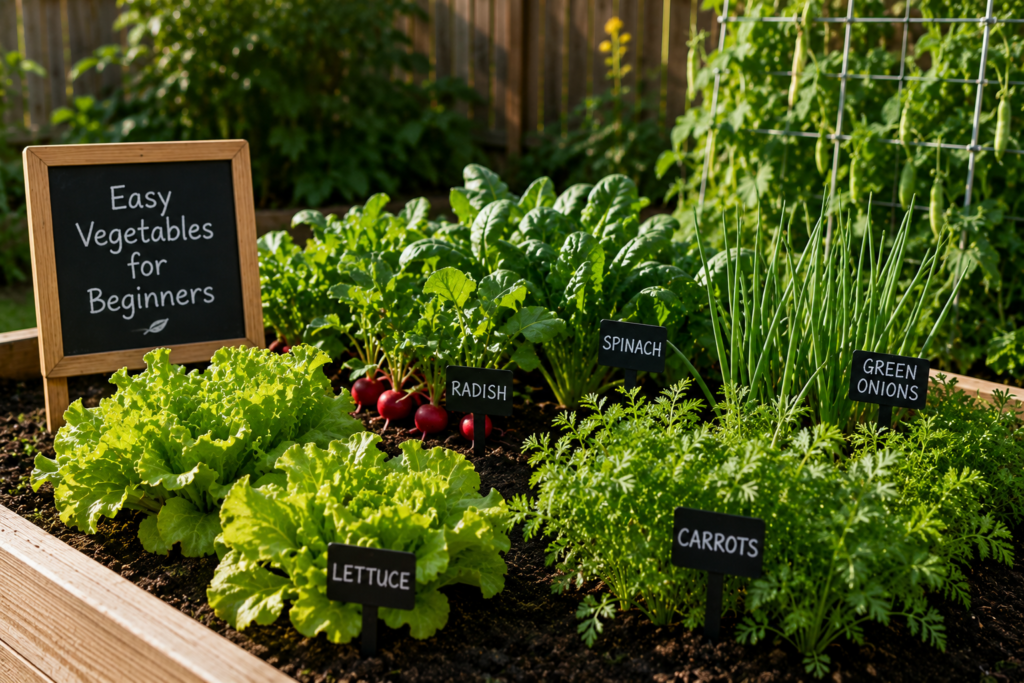
2. Choose Vegetables That Are Easy to Grow
One of the fastest ways to lose motivation is choosing difficult crops during your first gardening season. Instead, focus on vegetables that grow reliably and produce generous harvests with minimal maintenance.
Many beginner-friendly vegetables germinate quickly and give visible progress within just a few weeks, making gardening far more rewarding.
Excellent beginner vegetables include:
- Lettuce
- Radishes
- Bush beans
- Cherry tomatoes
- Zucchini
- Spinach
- Cucumbers
- Kale
These vegetables tolerate small mistakes better than more demanding crops and provide continuous harvests throughout the growing season.
Rather than planting dozens of different varieties, start with five or six vegetables you actually enjoy eating. A smaller, well-maintained garden almost always performs better than an oversized one that’s difficult to care for.
3. Plant Herbs Alongside Your Vegetables
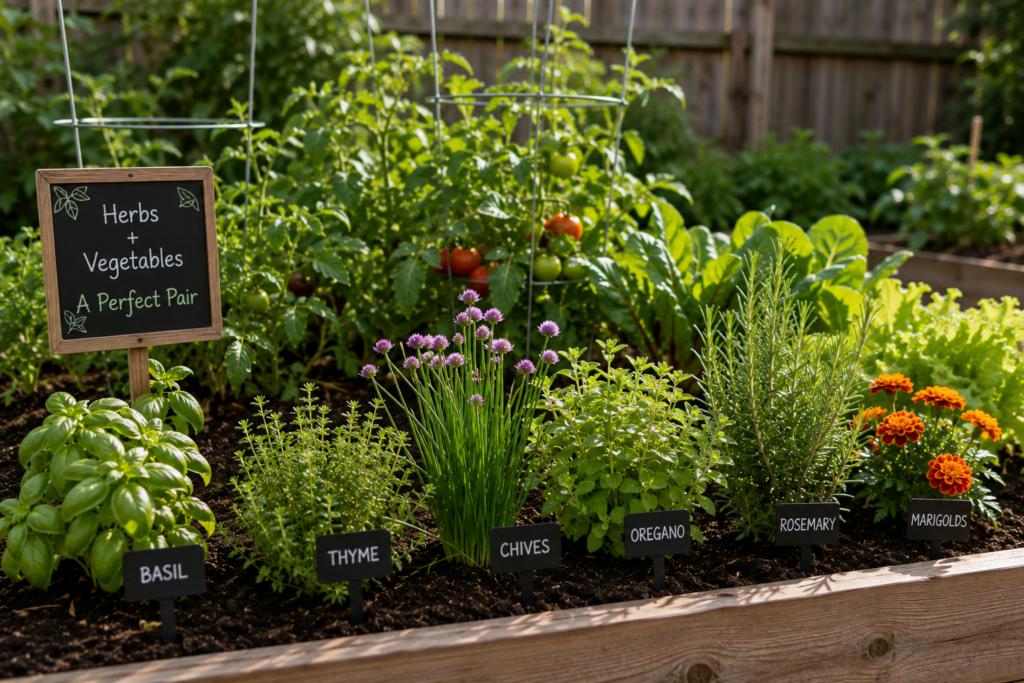
A productive vegetable garden isn’t just about vegetables. Herbs can improve biodiversity, attract beneficial insects, and make your meals even more flavorful.
Many herbs naturally repel certain garden pests while encouraging pollinators such as bees and butterflies to visit your plants.
Great companion herbs include:
- Basil
- Rosemary
- Thyme
- Chives
- Oregano
- Parsley
- Dill
For example, basil is often planted near tomatoes because many gardeners find they grow exceptionally well together, while dill and parsley attract helpful insects that prey on common garden pests.
Besides their gardening benefits, fresh herbs are among the most expensive items at the grocery store, making them one of the easiest ways to save money from your backyard garden.
If you’re also interested in becoming more self-sufficient, don’t miss our guide:
10 Easy Homestead Projects Anyone Can Start This Weekend.
4. Mulch Your Garden to Save Time and Water
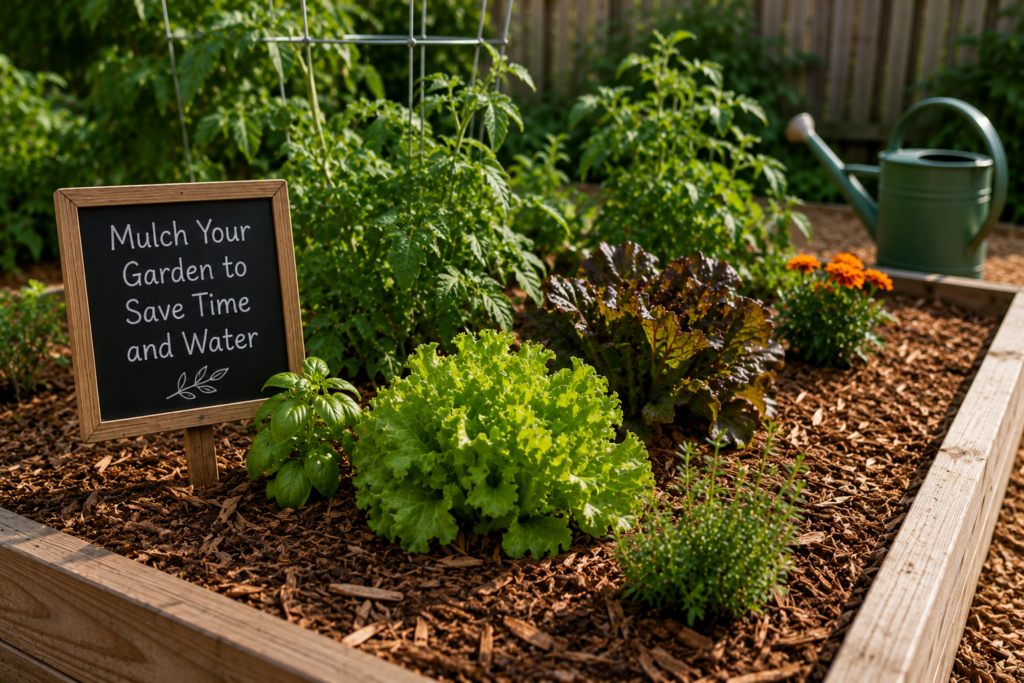
One of the simplest ways to improve your vegetable garden is by covering the soil with mulch. While many beginners focus only on watering and fertilizing, experienced gardeners know that healthy soil is the foundation of a productive garden.
Mulch acts as a protective blanket over the soil, helping it retain moisture during hot summer days while preventing weeds from competing with your vegetables for nutrients.
As organic mulch slowly breaks down, it also feeds the soil with valuable nutrients, improving its structure over time.
Popular mulch materials
- Straw
- Shredded leaves
- Pine needles
- Untreated wood chips
- Grass clippings (chemical-free)
Besides reducing maintenance, mulch helps keep vegetables cleaner by preventing soil from splashing onto leaves and fruits during heavy rain.
Pro Tip: Apply a 2 to 3-inch layer of mulch around your plants, but leave a small gap around each stem to reduce the risk of rot.
5. Install a Simple Drip Irrigation System
Many new gardeners underestimate the importance of consistent watering. Giving plants too much water one day and forgetting them for the next three days creates unnecessary stress that affects growth and harvest quality.
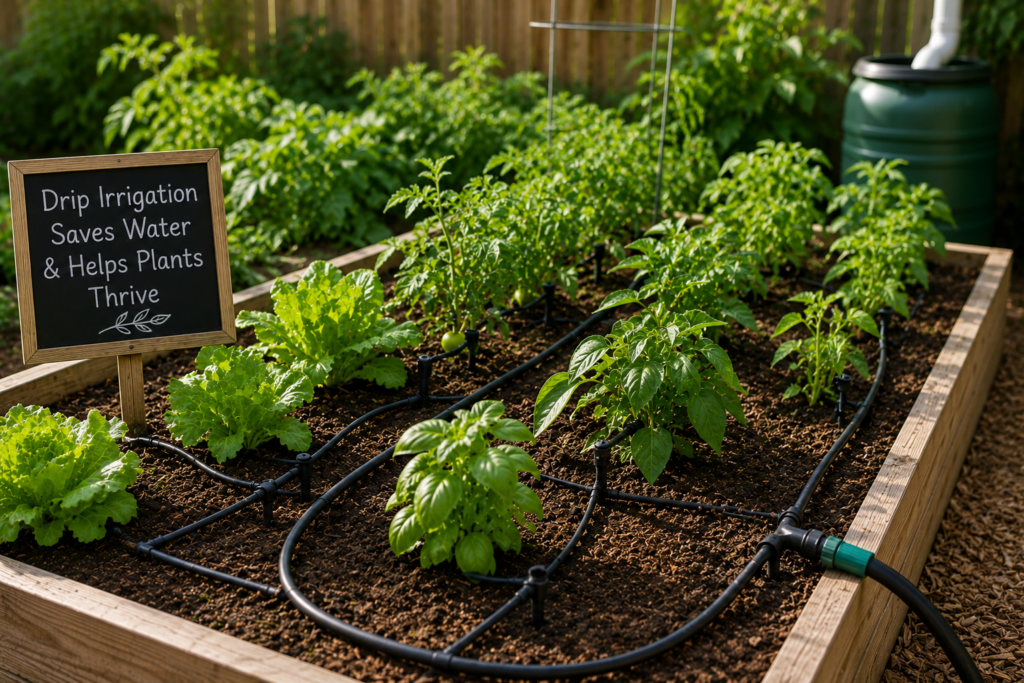
A drip irrigation system delivers water slowly and directly to the roots, where plants need it most.
Compared to overhead sprinklers, drip irrigation uses less water, reduces evaporation, and keeps leaves dry, lowering the chances of fungal diseases.
Why gardeners love drip irrigation
- Saves water
- Saves time
- Reduces weeds
- Prevents many plant diseases
- Encourages stronger root systems
Even a basic gravity-fed kit connected to a rain barrel can provide excellent results for a beginner’s garden.
If you’re planning to expand your vegetable garden in the future, installing drip irrigation early will save countless hours of manual watering.
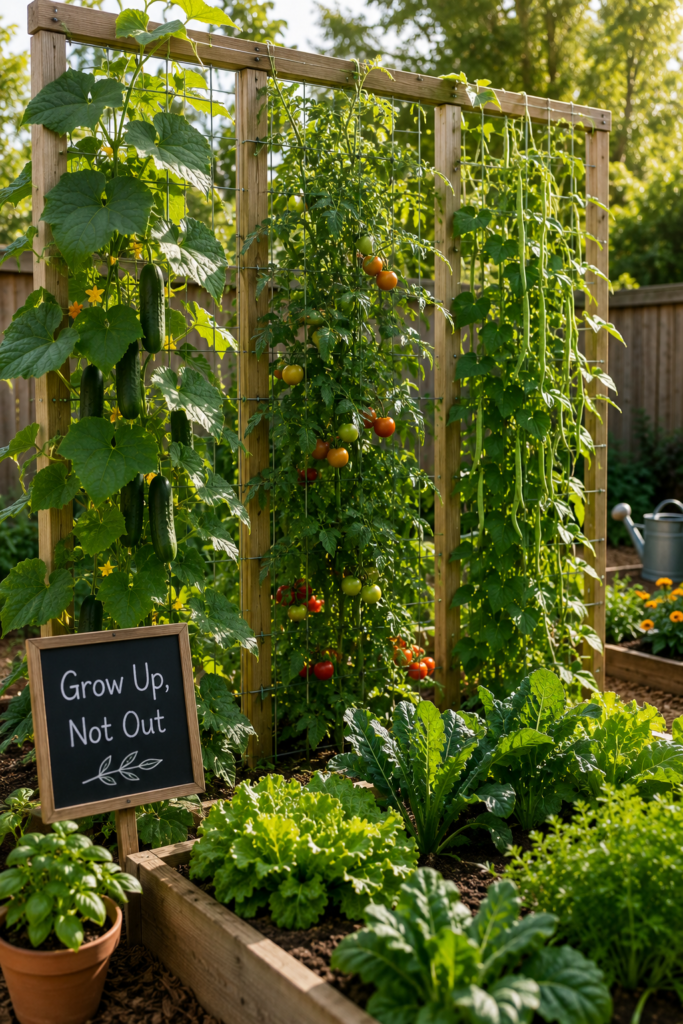
6. Grow Vertically to Maximize Space
You don’t need a huge backyard to grow an impressive amount of food.
One of the smartest gardening techniques is growing upward instead of outward.
Vertical gardening improves airflow around plants, reduces disease pressure, and makes harvesting much easier.
Vegetables that love vertical support include:
- Cucumbers
- Pole beans
- Peas
- Tomatoes
- Small pumpkins
- Melons (with strong supports)
Simple structures such as cattle panels, wooden trellises, tomato cages, or string systems can dramatically increase your growing space without taking up additional ground.
Another benefit is that fruits stay cleaner because they remain off the soil, making harvesting easier and reducing pest damage.
Make the Most of Every Square Foot
Even a small backyard can produce an impressive amount of fresh food with the right approach. The 5 Foot Farm shows practical ways to grow more while using less space.
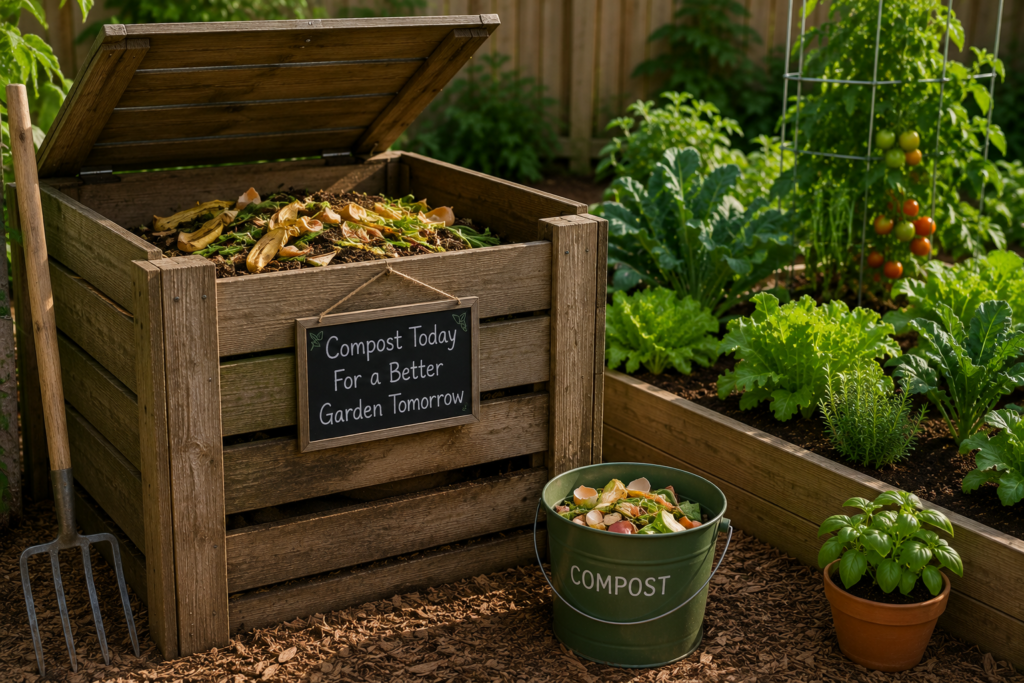
7. Build a Compost Bin
Every successful vegetable garden begins with healthy soil.
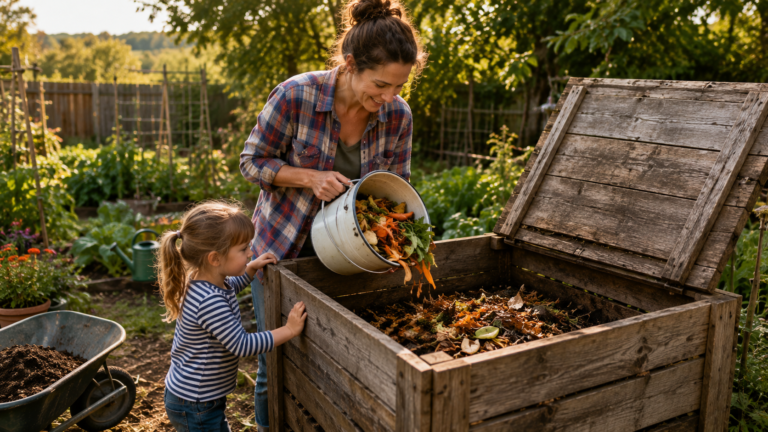
Instead of throwing away kitchen scraps, transform them into one of the most valuable resources your garden can have: compost.
Compost improves soil structure, increases water retention, encourages beneficial microorganisms, and provides a slow release of nutrients throughout the growing season.
Items perfect for composting include:
Green materials
- Fruit scraps
- Vegetable peels
- Coffee grounds
- Fresh grass clippings
Brown materials
- Dry leaves
- Cardboard
- Paper
- Small twigs
Avoid adding meat, dairy products, oily foods, or pet waste, as these can attract pests and create unpleasant odors.
A simple compost bin can produce rich organic fertilizer within a few months, reducing the need for expensive commercial products.
8. Attract Pollinators with Flowers
A vegetable garden becomes far more productive when it’s filled with life.
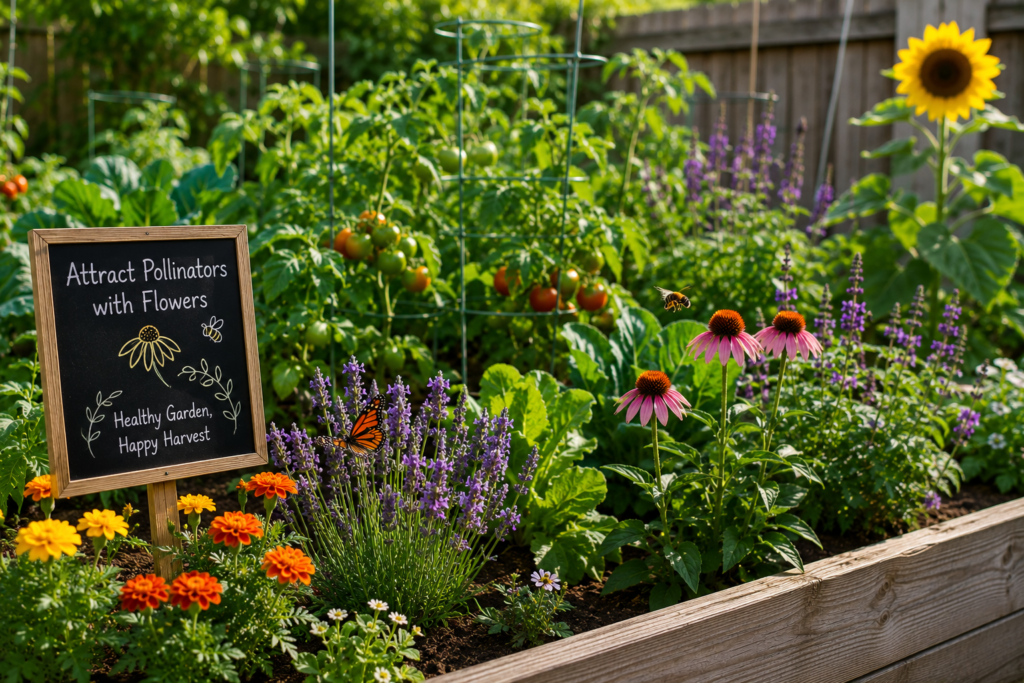
Pollinators such as bees, butterflies, and other beneficial insects play a vital role in helping many vegetables produce healthy fruits.
Planting flowers among your vegetables creates a balanced ecosystem while making your garden even more beautiful.
Excellent pollinator-friendly flowers include:
- Marigolds
- Zinnias
- Cosmos
- Sunflowers
- Lavender
- Nasturtiums
- Coneflowers
Many of these flowers also attract predatory insects like ladybugs and lacewings, which naturally help control aphids and other common garden pests.
Instead of treating flowers as decoration, think of them as hardworking partners that contribute to a healthier and more productive vegetable garden.
🌱 Quick Gardening Tip
Don’t feel like you need to implement all fifteen ideas at once.
Start with two or three improvements this season. As your confidence grows, you can continue adding new features each year until your backyard becomes a thriving, productive garden that provides fresh food for your family.
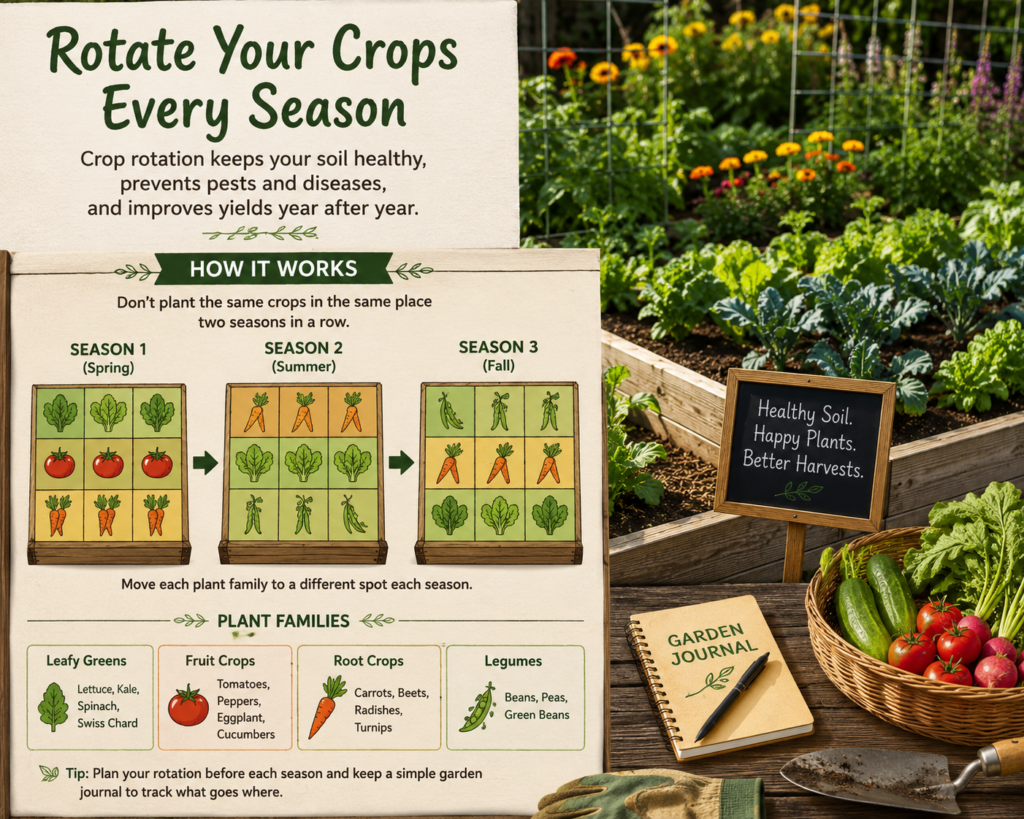
9. Rotate Your Crops Every Season
One of the most overlooked gardening practices is crop rotation. While it may sound like an advanced technique, it’s actually one of the easiest ways to keep your garden healthy over the long term.
Growing the same vegetables in the same location year after year gradually depletes specific nutrients and allows pests and soil-borne diseases to build up.
By rotating crops each season, you naturally reduce these problems while helping your soil recover.
A simple approach is to divide vegetables into families:
- Tomatoes, peppers, and eggplants (Nightshades)
- Beans and peas (Legumes)
- Cabbage, broccoli, and kale (Brassicas)
- Carrots, onions, and beets (Root crops)
Move each family to a different bed every year. Even in a small backyard garden, this simple habit can noticeably improve plant health and yields.
Pro Tip: Keep a garden journal or sketch your garden layout at the end of each season so you’ll remember where everything was planted.
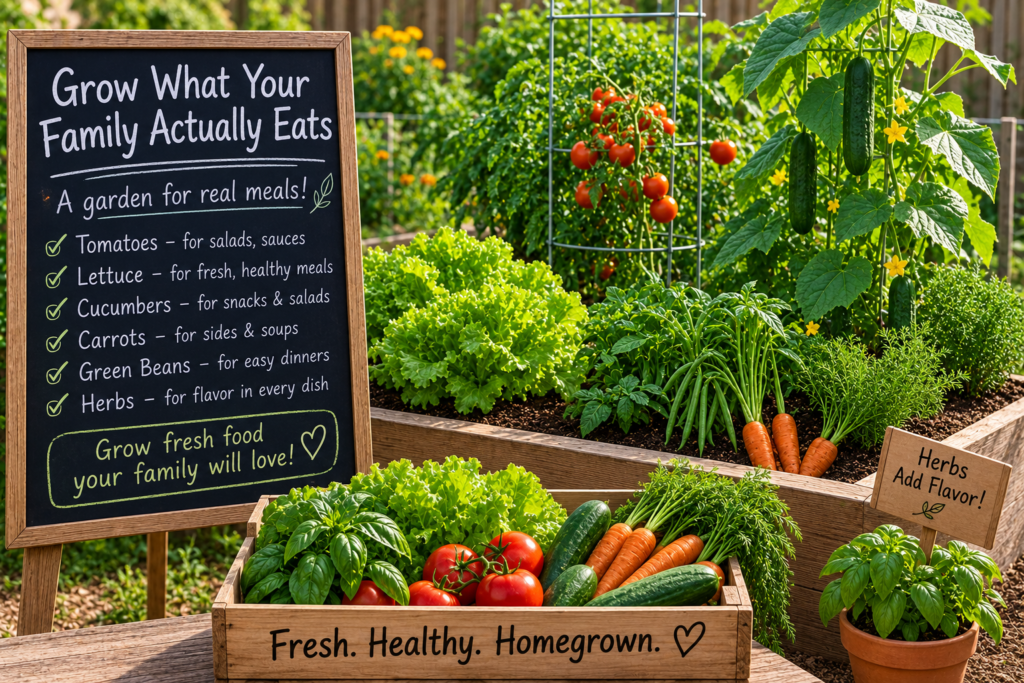
10. Grow What Your Family Actually Eats
Many beginners get excited and grow vegetables they’ve never cooked or don’t particularly enjoy.
Instead, build your garden around your family’s favorite meals.
If everyone loves fresh salads, grow lettuce, spinach, cucumbers, and tomatoes.
If homemade salsa is a staple in your kitchen, focus on tomatoes, peppers, onions, and cilantro.
Planning your garden around real eating habits means less food goes to waste and every harvest feels rewarding.
Ask yourself:
- Which vegetables do we buy every week?
- Which herbs do we use most often?
- What costs the most at the grocery store?
- What would we love to pick fresh outside our back door?
The answers will help you build a garden that’s both practical and satisfying.
11. Create Easy Garden Paths
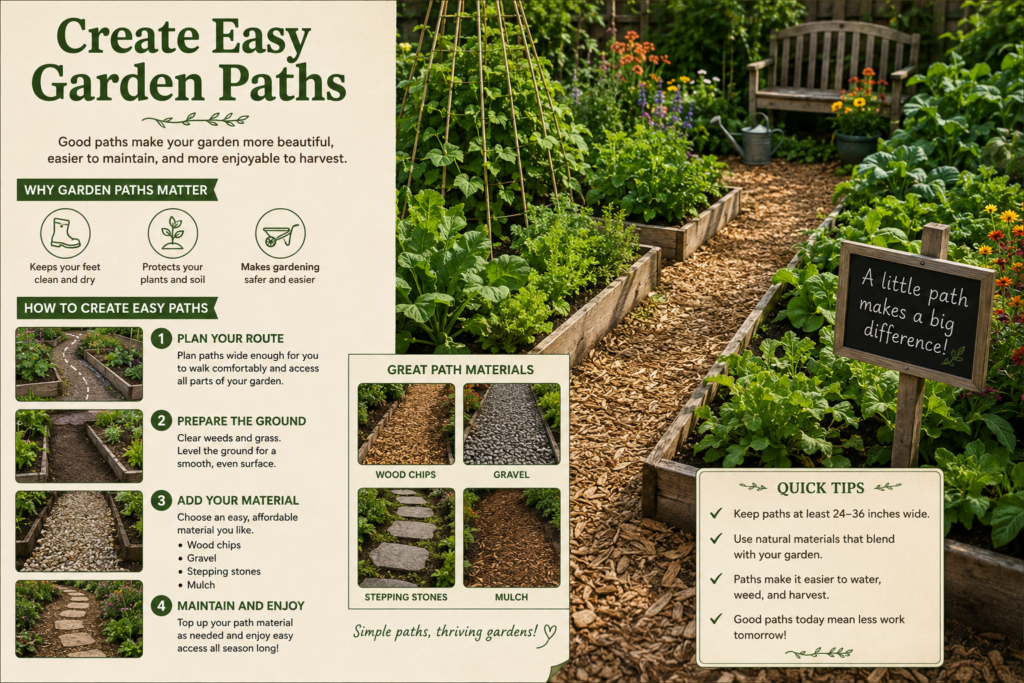
A productive garden isn’t just about where you plant—it’s also about how you move through it.
Without designated walkways, you’ll eventually step on the soil, compacting it and making it harder for roots to grow.
Simple garden paths also make maintenance much easier after rain and help keep shoes clean.
Popular materials include:
- Wood chips
- Gravel
- Straw
- Bark mulch
- Stepping stones
Wide, comfortable paths encourage regular maintenance, making you more likely to water, weed, and harvest consistently.
12. Keep a Garden Journal
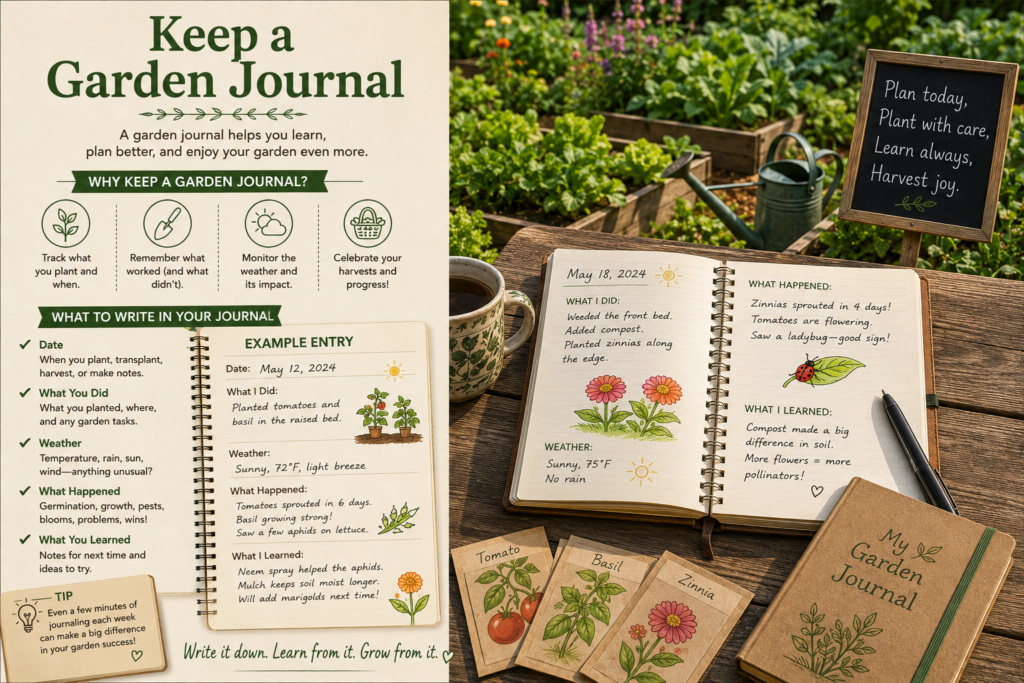
Every growing season teaches valuable lessons.
Keeping a simple notebook—or even a note on your phone—helps you remember what worked and what didn’t.
Record things like:
- Planting dates
- Weather conditions
- First harvest dates
- Fertilizers used
- Pest problems
- Favorite varieties
- Successful companion plants
After just one or two seasons, your journal becomes a personalized gardening guide that’s more useful than almost any generic advice online.
Over time, you’ll discover patterns unique to your climate and backyard.
13. Harvest Frequently
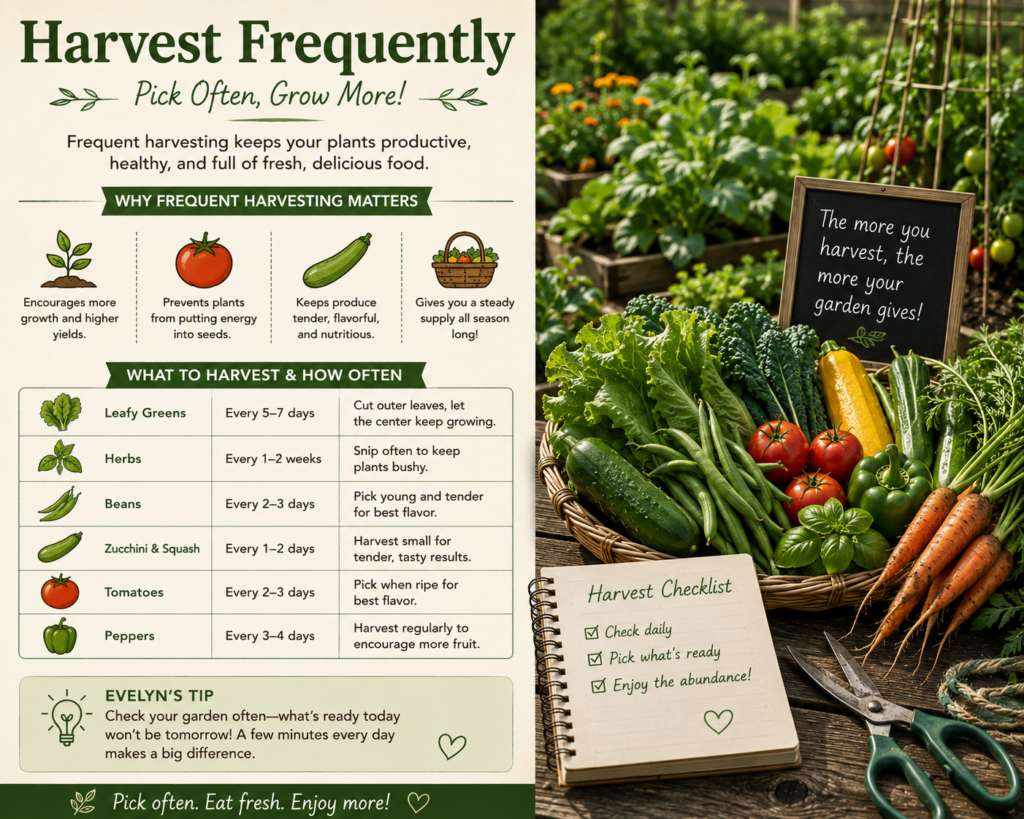
Many vegetables become even more productive when harvested regularly.
Beans, cucumbers, zucchini, peppers, and tomatoes continue producing because the plant senses it still needs to create more fruit.
Waiting too long often results in oversized vegetables that are tougher, less flavorful, and signal the plant to slow production.
Try walking through your garden every evening during peak season.
Frequent harvesting also gives you the chance to spot pests, remove damaged leaves, and enjoy watching your plants grow.
Think of harvesting as part of your gardening routine—not just the reward at the end.
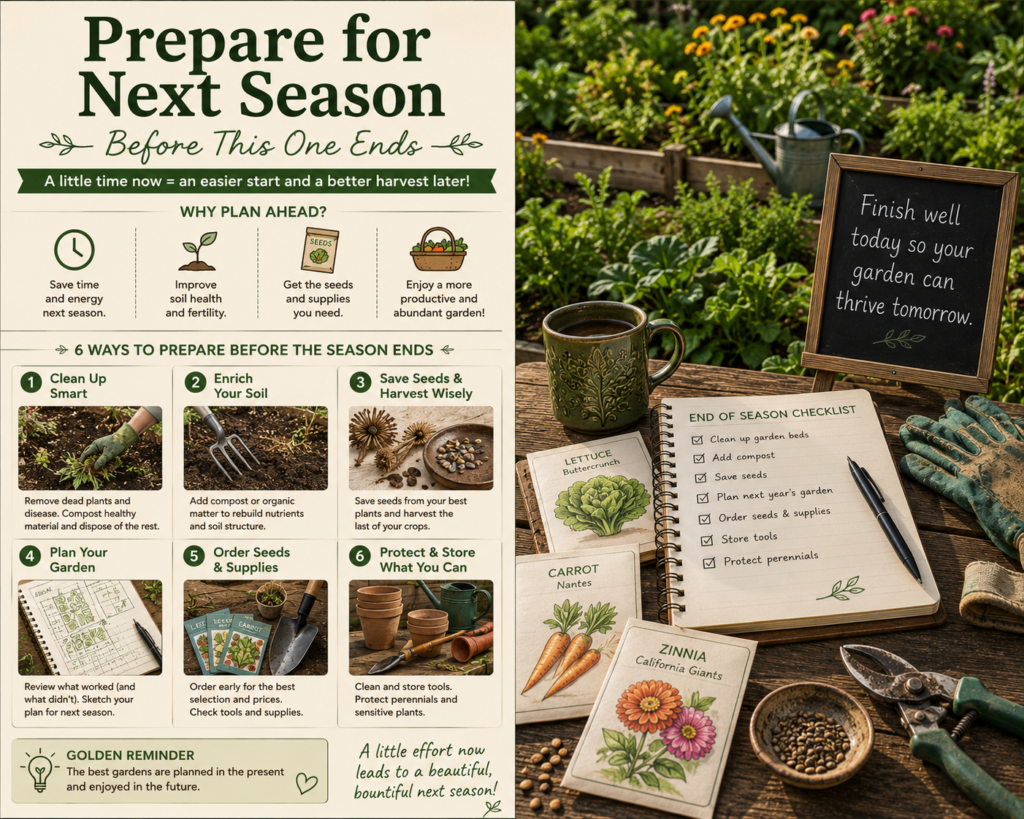
14. Prepare for Next Season Before This One Ends
Experienced gardeners are always thinking one season ahead.
As summer winds down, it’s the perfect time to plan improvements while everything is still fresh in your mind.
Ask yourself:
- Which vegetables performed best?
- Which varieties struggled?
- Did I have enough space?
- Was watering convenient?
- Where did weeds become a problem?
Taking notes now makes next year’s planning much easier and helps you avoid repeating mistakes.
A successful garden evolves a little every season.
15. Enjoy the Process
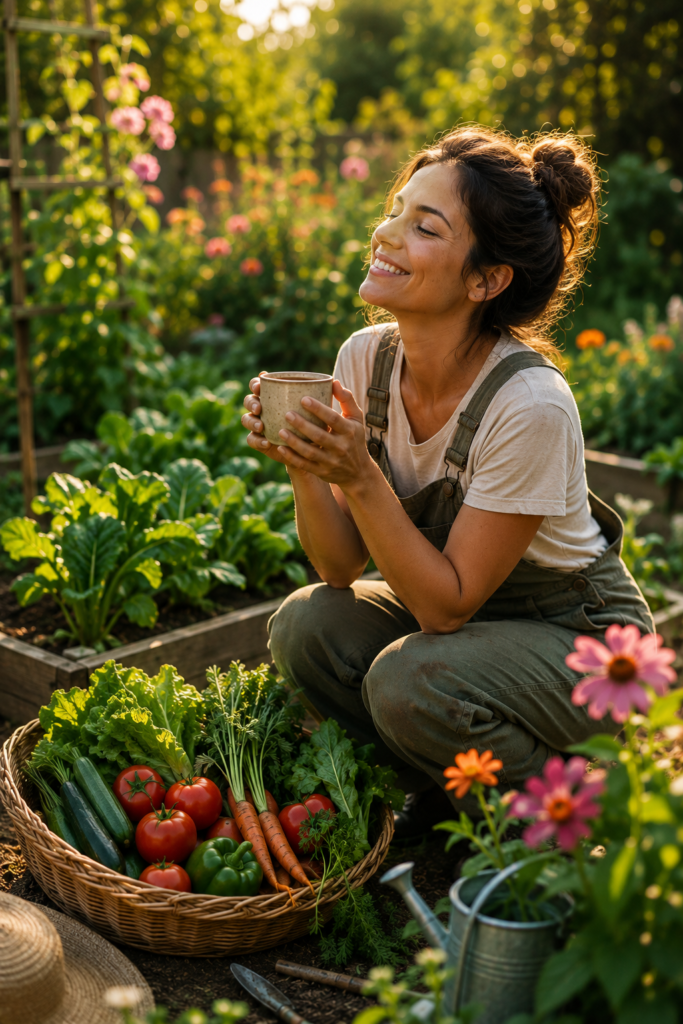
Perhaps the most important gardening idea has nothing to do with soil, seeds, or tools.
Gardening isn’t about growing perfect vegetables.
It’s about slowing down.
It’s about learning through trial and error, spending time outdoors, sharing fresh food with family, and reconnecting with nature.
Every gardener kills plants.
Every gardener makes mistakes.
Every gardener learns.
The people with the most beautiful gardens aren’t those who never failed—they’re the ones who kept planting.
So don’t wait until everything feels perfect.
Plant something.
Learn something.
Grow something.
Your future self will thank you.
Frequently Asked Questions
What vegetables are easiest for beginners?
Lettuce, radishes, bush beans, zucchini, cucumbers, spinach, cherry tomatoes, and kale are excellent choices because they’re productive, forgiving, and relatively easy to maintain.
How much sunlight does a vegetable garden need?
Most vegetables thrive with 6 to 8 hours of direct sunlight each day. Fruiting crops like tomatoes, peppers, and cucumbers perform best in full sun.
Is a raised bed necessary?
Not at all. Many vegetables grow successfully in traditional in-ground gardens. However, raised beds improve drainage, soil quality, and maintenance, making them especially helpful for beginners.
How often should I water my vegetable garden?
Most gardens need about 1 inch of water per week, either from rainfall or irrigation. Water deeply rather than lightly, and adjust based on weather and soil conditions.
What’s the easiest way to improve poor soil?
Adding compost every season is one of the most effective ways to improve soil fertility, structure, and moisture retention without relying heavily on synthetic fertilizers.
Ready to Take Your Garden to the Next Level?
A successful vegetable garden isn’t about having a huge backyard—it’s about using the right methods. These beginner-friendly resources can help you harvest more food, save money, and build a more self-sufficient lifestyle.
🌱 Explore The Self-Sufficient Backyard →
Final Thoughts
Starting a backyard vegetable garden doesn’t require a huge budget, expensive tools, or years of experience. What matters most is taking that first step and learning a little more each season.
Whether you begin with a single raised bed or transform your entire backyard, every seed you plant is an investment in healthier meals, valuable skills, and greater self-sufficiency.
Remember, the best gardens aren’t built in a weekend—they’re grown one season at a time.
So choose a few ideas from this guide, get your hands in the soil, and enjoy the journey.
Happy gardening!
📚 Recommended Resources
🌱 The Self-Sufficient Backyard
Practical backyard projects, gardening tips, and simple homesteading ideas designed for beginners.
🥕 The 5 Foot Farm
Learn how to grow an incredible amount of food—even if you only have a small backyard.
🥫 The Lost Superfoods
Learn traditional food preservation methods and build a pantry that lasts.
💧 Joseph’s Well
Explore practical water solutions for gardens, homesteads, and emergency preparedness.